
Indo Islamic Heritage


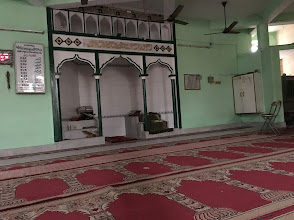
Masjid Huda is a serene mosque nestled in the historic city of Bareilly, Uttar Pradesh, serving as a vital center for the local Muslim community. Known for its role in fostering spiritual gatherings and daily prayers, it embodies the rich Islamic heritage of Rohilkhand, blending traditional architecture with contemporary functionality. Established as a place of worship amid Bareilly's diverse religious landscape, the mosque attracts devotees seeking tranquility and communal harmony.
In the heart of Bareilly, a city steeped in the layered history of Mughal and Rohilla influences, Masjid Huda stands as a understated yet enduring testament to India's vibrant Islamic architectural and cultural legacy. Bareilly, once the capital of the Rohilla Afghans in the 18th century and a key hub in the Rohilkhand region, has long been a mosaic of spiritual sites where Islamic traditions intertwine with the subcontinent's pluralistic ethos. Amidst grander landmarks like the iconic Jama Masjid and the revered Dargah Ala Hazrat, Masjid Huda emerges as a more intimate sanctuary, dedicated exclusively to the rhythms of prayer, reflection, and community life. The mosque's origins trace back to the mid-20th century, a period when Bareilly was evolving from its colonial past into a modern administrative and cultural center under independent India. While precise records of its founding are sparse—reflecting the organic growth of many local mosques during post-Partition reconstruction—it is believed to have been established around the 1950s or 1960s, aligning with the surge in community-driven initiatives to rebuild and fortify Muslim places of worship in northern Uttar Pradesh. This era saw Bareilly's Muslim population, enriched by its Rohilla heritage, channeling resources into modest yet resilient structures that prioritized accessibility over opulence. Masjid Huda, thus, was not born of imperial patronage like its Mughal-era counterparts but from the grassroots devotion of local families and scholars, ensuring its role as a neighborhood anchor rather than a monumental icon. Architecturally, Masjid Huda adheres to the pragmatic Indo-Islamic style prevalent in Uttar Pradesh's smaller urban mosques, eschewing the grand domes and minarets of larger edifices for a functional layout suited to daily congregational needs. The structure features a rectangular prayer hall oriented toward the qibla, with whitewashed walls that evoke purity and simplicity—hallmarks of post-Mughal regional adaptations. Arched entrances framed by subtle geometric motifs welcome worshippers, while the interior boasts a mihrab (prayer niche) adorned with modest Quranic calligraphy in elegant Thuluth script, a nod to the calligraphic traditions that flourished in Bareilly under the influence of scholars like Imam Ahmed Raza Khan. The courtyard, though compact, serves as an open-air extension for overflow prayers during Ramadan and Eid, fostering the communal spirit central to Islamic practice. High ceilings and latticed jaali windows allow natural light to filter through, creating a serene ambiance that harmonizes with Bareilly's tropical climate, much like the ventilation techniques refined in earlier mosques such as the 18th-century Jama Masjid of Pilibhit. What elevates Masjid Huda's historical significance is its quiet integration into Bareilly's narrative of religious coexistence. The city, often called "Nath Nagari" for its Hindu shrines, has hosted mosques since the Rohilla era, when Afghan migrants introduced Persianate elements to local building styles. Masjid Huda continues this legacy by hosting not only the five daily salah but also educational sessions on Quranic recitation and Hadith studies, echoing the scholarly vibrancy that made Bareilly a center for Barelvi Islam in the 19th and 20th centuries. Its location in the bustling Kotwali area, near Sadar Bazaar's vibrant markets, positions it as a bridge between the profane and the sacred—worshippers pause amid the city's trade in zari embroidery and agricultural goods to seek solace within its walls. Today, Masjid Huda remains a living archive of Bareilly's Islamic continuum, resilient against the tides of urbanization. It stands as a reminder that India's historical mosques, from the imperial to the intimate, are not mere relics but active vessels of faith, preserving rituals and stories passed down through generations. For visitors tracing the subcontinent's sacred geography, this unassuming edifice offers a profound glimpse into the everyday sanctity that has sustained Muslim communities in Uttar Pradesh for centuries.
Year of Built: Not Available
Address: 9F43+HM2, Khushboo Enclave, Bareilly, Uttar Pradesh 243006
Country: India
State: Uttar Pradesh
District: Barabanki
Pincode: 253006
Longitude: 79.4200° E
Latitude: 28.3622° N