
Indo Islamic Heritage


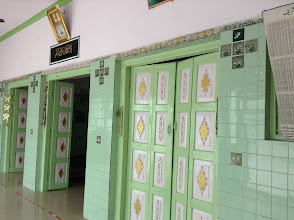
Hari Masjid Dawat-e-Islamia is a modest yet spiritually significant mosque nestled in the heart of Bareilly's old city, serving as a key center for the Dawat-e-Islami movement's outreach and education initiatives. Affiliated with the global Sunni organization dedicated to promoting Quranic teachings and Sunnah, it hosts daily prayers, madrasas, and community gatherings, reflecting Bareilly's enduring legacy as a hub of Islamic scholarship.
Nestled within the historic confines of Bareilly, Uttar Pradesh—a city renowned since the 16th century as a cradle of Sufi and Barelvi traditions—Hari Masjid Dawat-e-Islamia stands as a contemporary beacon of Islamic devotion and propagation. While Bareilly's Islamic heritage is epitomized by ancient shrines like the Dargah Ala Hazrat, established in the 19th century by the revered scholar Imam Ahmed Raza Khan, Hari Masjid represents a modern extension of this legacy, rooted in the non-political, missionary ethos of Dawat-e-Islami. Founded in 1981 in Pakistan by Maulana Muhammad Ilyas Attar Qadiri, the organization has since expanded globally, establishing over 6,000 madrasas and numerous mosques to foster education in line with Hanafi jurisprudence and Sufi principles. In India, particularly in Bareilly—a city synonymous with the Barelvi school of thought—Hari Masjid emerged as a vital outpost for these efforts, likely constructed in the late 20th or early 21st century to accommodate the growing need for accessible spaces of worship and learning amid the region's burgeoning Muslim population. The mosque's architecture, though unpretentious compared to the ornate minarets of Mughal-era structures like Delhi's Jama Masjid, embodies simplicity and functionality, with open prayer halls designed to welcome diverse congregations. Its six minarets, a distinctive feature noted in local records, symbolize the pillars of faith and serve as a visual landmark in the densely woven lanes of the old city. As part of Dawat-e-Islami's Madni Markaz, Hari Masjid functions not merely as a place of prostration but as a dynamic hub for spiritual and communal activities. Here, the Dar-ul-Madinah school system operates, educating thousands of children in Quranic recitation, Hadith studies, and moral upbringing, echoing the organization's mission to reform individuals and society through self-assessment (Naik Amal) and missionary caravans (Madani Qafila). Daily congregational prayers draw locals from surrounding neighborhoods, fostering a sense of unity in a city where Islamic sites have long been threads in the fabric of Rohilkhand's multicultural tapestry. Hari Masjid's significance deepens in the context of Bareilly's historical role in Islamic revivalism. During the British colonial era, the city became a fortress against reformist movements, with scholars like Ahmed Raza Khan defending traditional Sufi practices against Deobandi influences. Today, under Dawat-e-Islami's guidance, the mosque upholds this tradition by hosting lectures, charity distributions, and interfaith dialogues, ensuring the propagation of Sunnah in an era of rapid urbanization. Though not an ancient monument, its integration into Bareilly's network of over 500 mosques underscores the evolution of Islamic sites in India—from medieval powerhouses like the Qutub Minar complex to grassroots centers like this one, which prioritize accessibility over grandeur. Visitors often find solace in its serene courtyards, where the call to prayer resonates against the backdrop of the Ramganga River's gentle flow, a reminder of Islam's enduring footprint in Uttar Pradesh's spiritual landscape.
Year of Built: Not Available
Address: meera ki paith chauraha, Old City, Gulzar Nagar, Bareilly, Uttar Pradesh 243005
Country: India
State: Uttar Pradesh
District: Bareilly
Pincode: 243005
Longitude: 79.4420° E
Latitude: 28.3565° N