
Indo Islamic Heritage


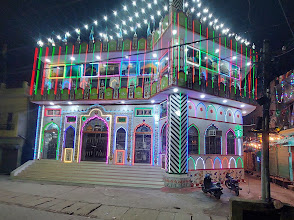
Masjid Ek Minar, a modest yet evocative 19th-century mosque in Swale Nagar, Bareilly, Uttar Pradesh, stands as a testament to the region's Islamic heritage. Known for its singular minaret that lends it its name, the structure exemplifies simple Mughal-influenced architecture, serving as a serene place of worship and a quiet reminder of Bareilly's historical role as a center of Rohilla Muslim culture.
Nestled in the quiet locality of Swale Nagar within the bustling city of Bareilly, Masjid Ek Minar emerges as a poignant relic of India's Islamic architectural legacy, particularly reflective of the Rohilla dynasty's influence in 18th- and 19th-century Uttar Pradesh. Built in 1857 amid the turbulent backdrop of the Indian Rebellion, the mosque was commissioned under the patronage of local Muslim nobility during a period when Bareilly served as a key stronghold for the Rohillas—a Pashtun-origin dynasty that had ruled the region since the mid-18th century. This era marked a fusion of Afghan architectural motifs with indigenous North Indian styles, resulting in structures that prioritized functionality and spiritual austerity over grandeur. The mosque's defining feature is its solitary minaret, or "Ek Minar," a slender, tapering tower rising modestly to about 25 meters, adorned with subtle geometric brickwork and arched openings that echo the elegance of earlier Mughal designs seen in nearby monuments like the Alaipura Fort. Constructed primarily from locally sourced red bricks and lime mortar, the edifice measures approximately 30 by 20 meters, enclosing a central prayer hall with a flat roof supported by robust stone pillars. Intricate jaali screens—perforated stone lattices—filter light into delicate patterns across the mihrab, the niche indicating the direction of Mecca, while the qibla wall bears faint traces of floral arabesques in faded plaster, hinting at the skilled craftsmanship of itinerant artisans from Lucknow and Delhi. Historically, Masjid Ek Minar functioned not merely as a site for daily namaz but as a communal hub during the post-rebellion reconstruction of Bareilly. Following the British suppression of the 1857 uprising, in which Bareilly's Muslim leaders played a prominent role, the mosque became a symbol of resilience for the displaced Rohilla community. It hosted scholarly gatherings and Sufi-inspired recitations, fostering a continuity of Islamic learning in the face of colonial upheaval. Though it escaped major damage during the rebellion—unlike many grander edifices in the region—subtle repairs in the late 19th century incorporated Victorian-era reinforcements, blending colonial pragmatism with traditional form. Today, Masjid Ek Minar retains its role as an active place of worship, drawing local devotees for its unpretentious sanctity and the panoramic views from its minaret over Swale Nagar's rooftops. Conservation efforts by the Uttar Pradesh State Archaeology Department in the 2000s have preserved its structural integrity, ensuring that future generations can appreciate this understated gem amid Bareilly's evolving urban landscape. As one of the quieter chapters in India's vast tapestry of Islamic sites, it underscores the enduring spirit of devotion that has shaped the subcontinent's cultural mosaic for centuries.
Year of Built: Not Available
Address: 99FV+FMR, NH-24, Swale Nagar, Bareilly, Uttar Pradesh 243003
Country: India
State: Uttar Pradesh
District: Bareilly
Pincode: 243003
Longitude: 79.4300° E
Latitude: 28.3675° N