
Indo Islamic Heritage


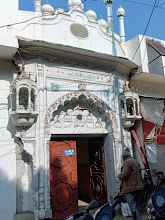
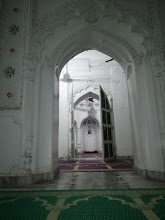
Nestled in the heart of Bareilly's Civil Lines, Kachhari Masjid stands as a modest yet enduring testament to the city's Mughal and colonial-era Islamic heritage. Constructed in the mid-19th century near the district courts (kachhari), this unassuming mosque features traditional Indo-Islamic elements like arched doorways and a simple dome, serving as a serene place of worship amid the bustle of administrative Bareilly. It reflects the resilient Muslim community that flourished in Rohilkhand under shifting rulers, offering a quiet architectural echo of the region's syncretic past.
Bareilly, once the vibrant capital of the semi-autonomous Rohilkhand kingdom in 18th-century northern India, has long been a crossroads of cultures, where Mughal grandeur intertwined with Rajput resilience and later British oversight. Amid this layered history, Kachhari Masjid emerges as a poignant emblem of continuity, embodying the understated elegance of Islamic architecture adapted to colonial urban planning. Built in the mid-19th century—likely around the 1850s, shortly after the British East India Company assumed direct control of Rohilkhand following the annexation of Awadh in 1856—this mosque occupies a strategic yet humble position on Court Road in the Civil Lines area, adjacent to the district courts from which it derives its name ("kachhari" meaning court or administrative office in Hindi and Urdu). The mosque's origins are rooted in the post-Rohilla era, when Bareilly transitioned from the rule of Afghan Pathan chieftains like Ali Muhammad Khan (who established Rohilkhand in the early 1700s) to British governance. The Rohillas, descendants of 16th- and 17th-century Mughal settlers, had fostered a thriving Muslim populace in the region, constructing numerous mosques that blended Persian influences with local motifs. Kachhari Masjid, however, bears the imprint of this transitional phase: its construction aligns with the British reorganization of Bareilly as a key administrative hub after 1801, when the city was ceded to the Company under the Treaty of Lahore's precedents. Positioned near the newly established courts, the mosque catered to the spiritual needs of Muslim officials, litigants, and residents in an era when colonial justice systems were superimposed on indigenous structures. Historical records from the period, including British gazetteers of the United Provinces, note the proliferation of such community mosques in Civil Lines, designed to maintain social order while accommodating local religious practices. Architecturally, Kachhari Masjid exemplifies restrained Indo-Islamic design, eschewing the opulent minarets and expansive courtyards of grander Mughal-era edifices like those in nearby Delhi or Agra. The structure comprises a single prayer hall oriented toward the qibla (Mecca), flanked by modest arched entrances that echo the pointed arches of Lodi and early Mughal styles. A low dome crowns the mihrab (prayer niche), supported by slender piers that allow for natural light to filter through latticed jaali screens—features that promote acoustic clarity for the imam's call to prayer (adhan) and communal recitations of the Quran. The facade, rendered in local Lakhuri bricks typical of Rohilkhand's 19th-century builds, is unadorned save for subtle geometric motifs in stucco, reflecting both budgetary pragmatism under colonial rule and the austere piety valued in the region's Sufi-influenced Barelvi tradition (named after Bareilly's own 19th-century scholar Ahmed Raza Khan). Though not as ornate as Bareilly's more famed shrines, such as the 20th-century Bareilly Sharif Dargah, Kachhari Masjid's significance lies in its everyday role as a living archive of resilience. During the 1857 Indian Rebellion (also known as the First War of Independence), Bareilly served as a fleeting capital for rebel forces under Khan Bahadur Khan Rohilla, and mosques like Kachhari became refuges for the faithful amid the chaos. Post-rebellion reprisals by the British further embedded such sites in the community's collective memory, symbolizing quiet defiance and adaptation.
Year of Built: Not Available
Address: 8CR9+WM5, Balwant Singh Marg, Civil Lines, Bareilly, Uttar Pradesh 243001
Country: India
State: Uttar Pradesh
District: Bareilly
Pincode: 243001
Longitude: 79.4360° E
Latitude: 28.3757° N