
Indo Islamic Heritage


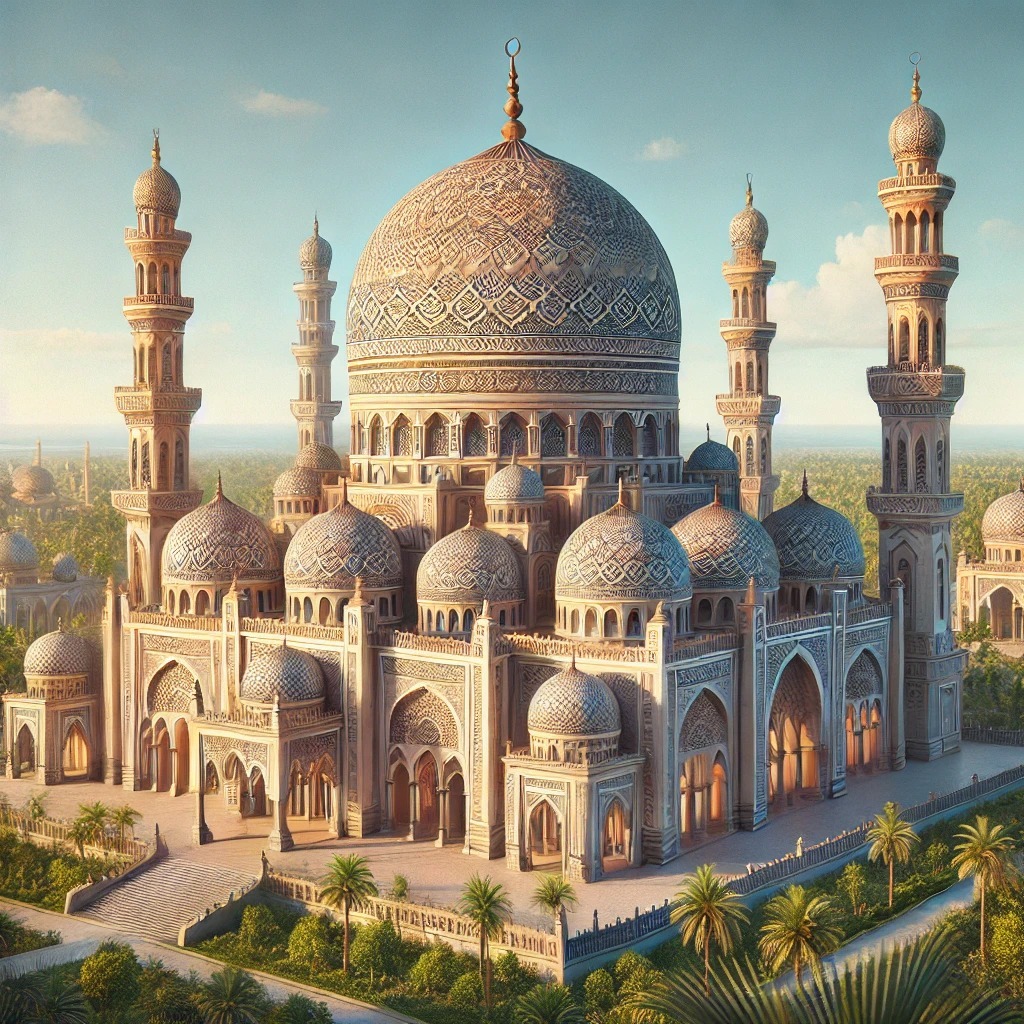
Mosque Hashmia stands as a modest yet significant local place of worship in the heart of Bareilly, Uttar Pradesh, embodying the city's enduring Islamic heritage. Nestled in the bustling Qureshi Chauraha area, this contemporary mosque serves as a community hub for daily prayers, Friday congregations, and religious gatherings, reflecting the simple yet functional architectural style typical of 20th-century mosques in northern India. With its central dome and minarets, it contributes to Bareilly's rich tapestry of historical Islamic sites, drawing devotees in a region steeped in Sufi traditions and Mughal-influenced legacy.
Nestled in the vibrant core of Bareilly—a city founded in 1537 CE by Mughal governor Makrand Rai and long renowned as a bastion of Islamic scholarship in the Rohilkhand region—Mosque Hashmia emerges as a poignant emblem of the area's living faith and architectural continuity. Bareilly, once the seat of the Rohilla Kingdom in the 18th century and a key center during the Indian Rebellion of 1857, has hosted numerous mosques since the Mughal era, with structures like the Jama Masjid exemplifying the blend of Persian and indigenous styles. Mosque Hashmia, though a more recent addition from the 20th century, fits seamlessly into this lineage, representing the evolution of Islamic worship spaces amid colonial transitions and post-independence urbanization. The mosque's location at Qureshi Chauraha, a lively intersection in central Bareilly (pincode 243001), places it at the crossroads of the city's historical and commercial life. Its coordinates—28.36223° N latitude and 79.41999° E longitude—position it approximately 250 kilometers southeast of New Delhi, along the Ramganga River, in a landscape that has witnessed the interplay of Mughal governance, Rohilla autonomy, and British administration. Built during a period when Bareilly was solidifying its identity as "Zari Nagari" (City of Embroidery) and a spiritual epicenter—home to the influential Barelvi movement founded by Imam Ahmed Raza Khan (1856–1921)—Mosque Hashmia was likely erected to accommodate the growing Muslim population in the urban core. While precise construction records remain elusive in archival sources, its design echoes the functional simplicity of mid-20th-century mosques: a rectangular prayer hall oriented toward Mecca, crowned by a modest dome and flanked by twin minarets that call the faithful to prayer five times daily. Architecturally, Mosque Hashmia eschews the grandeur of earlier Mughal-era edifices like Delhi's Jama Masjid (built 1656 CE) or even Bareilly's own Jama Masjid, opting instead for practical red-brick construction with whitewashed walls and arched gateways. The mihrab (prayer niche) and minbar (pulpit) are central features, adorned with subtle geometric motifs that nod to Islamic prohibitions on figurative art, while the courtyard provides space for wudu (ablution) and community iftars during Ramadan. This unpretentious form underscores its role not as a monumental landmark but as an intimate sanctuary, fostering the daily rhythms of salat (prayer) and fostering communal bonds in a diverse neighborhood. Historically, the mosque's significance lies in its quiet endurance amid Bareilly's turbulent past. The city, ceded to the British in 1801 following the Rohilla Wars, became a flashpoint during the 1857 uprising, where local Muslims under Khan Bahadur Khan briefly declared independence. Post-revolt, Bareilly's Islamic institutions, including mosques, became symbols of resilience, preserving Sufi practices and scholarly traditions that influenced India's Sunni reform movements. Mosque Hashmia, emerging in the 20th century, embodies this continuity, serving as a venue for Jumu'ah (Friday) sermons that often draw on the Barelvi emphasis on devotion to the Prophet Muhammad and veneration of saints—traditions deeply rooted in Bareilly Sharif, just a short distance away. Today, as Bareilly evolves into one of India's 100 Smart Cities, Mosque Hashmia remains a vital thread in the fabric of its Islamic patrimony. It stands as a testament to the adaptability of faith in modern India, where ancient spiritual currents flow alongside contemporary life. For visitors exploring Uttar Pradesh's historical Islamic sites—from the Taj Mahal's opulence to the scholarly aura of Lucknow's Asafi Mosque—Mosque Hashmia offers a grounded, authentic glimpse into the everyday sacred, inviting reflection on centuries of devotion in the heart of Rohilkhand.
Year of Built: Not Available
Address: 9F94+426, Pilibhit Bypass Rd, M.J.P Rohilkahand University, Bareilly, Uttar Pradesh 243006
Country: India
State: Uttar Pradesh
District: Bareilly
Pincode: 243006
Longitude: 79.41999° E
Latitude: 28.36223° N