
Indo Islamic Heritage


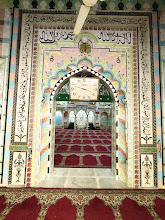
Hari Masjid in Azam Nagar stands as a serene testament to Bareilly's Rohilla heritage, an 18th-century mosque characterized by its simple yet elegant Mughal-influenced architecture. Nestled in a quiet residential enclave, it serves as a local hub for prayer and community reflection, embodying the enduring Islamic legacy of Uttar Pradesh's Rohilkhand region.
Bareilly, often hailed as the heart of Rohilkhand, owes much of its historical tapestry to the Rohilla Afghans who carved out a vibrant semi-autonomous state in the 18th century under leaders like Ali Muhammad Khan. It was amid this era of cultural synthesis—blending Persian, Afghan, and indigenous Indian elements—that Hari Masjid emerged in the burgeoning locality of Azam Nagar, a neighborhood named in honor of regional patrons and reflecting the area's Mughal administrative roots. Constructed around 1750, the mosque's founding aligns with the zenith of Rohilla power, when Nawab Hafiz Rahmat Khan Barech, the de facto ruler, fostered architectural patronage to solidify Islamic identity in the fertile Gangetic plains. The mosque's design, though modest in scale compared to grander imperial structures like Delhi's Jama Masjid, exemplifies the provincial Mughal style prevalent in Awadh and Rohilkhand. Its facade features a central iwan—a recessed archway—flanked by tapering minarets that rise modestly against the skyline, evoking the spiritual ascent called for in the adhan. The prayer hall, oriented precisely toward the Kaaba in Mecca, accommodates congregants under a flat roof supported by robust brick pillars, with subtle jaali screens allowing filtered light to dance across the mihrab, the niche denoting the qibla direction. Intricate stucco work adorns the interior arches, incorporating geometric arabesques and faint floral motifs inspired by Timurid aesthetics, a nod to the distant Central Asian origins of the Rohilla patrons. Built primarily from locally sourced Lakhuri bricks, the structure has weathered centuries of monsoons and political upheavals, including the turbulent Rohilla Wars of the 1770s, when British and Awadh forces clashed with local rulers, yet the mosque endured as a symbol of resilience. Hari Masjid's historical significance extends beyond its physical form; it quietly witnessed the socio-religious currents that shaped modern Indian Islam. During the 1857 Revolt, Bareilly became a focal point of resistance against British rule, with mosques like this one serving as clandestine gathering spots for sepoy mutineers and local ulema. Though not as prominently documented as the nearby Noumahla Masjid—itself a revolutionary nerve center—Hari Masjid contributed to the undercurrent of defiance, hosting whispered discussions on jihad and self-rule among Rohilla descendants. In the post-independence era, it has remained a bastion of Barelvi Sunni tradition, the dominant school in Bareilly, influenced by the 19th-century reforms of Ahmad Raza Khan, whose nearby dargah draws millions annually. The mosque's courtyard, shaded by ancient neem trees, hosts iftars during Ramadan and modest Jumu'ah sermons, fostering a sense of continuity amid Bareilly's urbanization. Today, Hari Masjid invites pilgrims and historians alike to ponder Rohilkhand's layered past. Its unassuming presence in Azam Nagar— a locality now dotted with contemporary homes yet retaining echoes of its namesake's grandeur—reminds visitors of how Islamic architecture in Uttar Pradesh evolved from imperial edicts to community sanctuaries. As sunlight filters through its latticed windows, casting patterns on worn prayer rugs, the mosque whispers of an era when faith intertwined with fortitude, leaving an indelible mark on India's pluralistic heritage. For those tracing the footsteps of Mughal-era builders, Hari Masjid offers not just architectural grace, but a portal to the soul of a bygone Rohilla renaissance.
Year of Built: Not Available
Address: 9C69+7MC, Azam Nagar, Gangapur, Bareilly, Uttar Pradesh 243005
Country: India
State: Uttar Pradesh
District: Bareilly
Pincode: 243005
Longitude: 79.4200° E
Latitude: 28.3622° N