
Indo Islamic Heritage


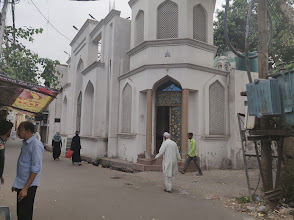
Masjid Baradari is a modest yet serene mosque nestled in the heart of Qureshi Nagar, a residential locality in Bareilly, Uttar Pradesh. Serving as a vital spiritual hub for the local Muslim community, it embodies the quiet resilience of Islamic heritage in northern India, offering a space for prayer and reflection amid the city's bustling urban landscape.
Masjid Baradari stands as a testament to the enduring Islamic architectural and cultural legacy in Uttar Pradesh, a region rich with Mughal-era influences that have shaped the subcontinent's religious tapestry. Located in Qureshi Nagar, a locality predominantly inhabited by the Qureshi community—descendants of the Prophet Muhammad's clan—this mosque reflects the deep-rooted Muslim presence in Bareilly, a city historically known as a center of Sufi learning and Barelvi scholarship since the 19th century. While grander monuments like the 17th-century Jama Masjid of Bareilly dominate the historical narrative of the area, Masjid Baradari represents the more intimate, community-driven expressions of faith that proliferated during the colonial and post-independence eras. The mosque's design adheres to traditional Indo-Islamic principles, featuring a simple prayer hall oriented toward the qibla, with arched doorways and minimalistic minarets that evoke the practicality of local craftsmanship rather than imperial opulence. Its name, "Baradari," draws from the Persian term for a pavilion with twelve doors, symbolizing openness and ventilation—common in Mughal pavilions for elite gatherings—but here adapted to a modest scale suitable for neighborhood worship. Though specific construction records are scarce, reflecting its status as a vernacular structure rather than a royal commission, local oral histories and community accounts suggest it was established in the mid-20th century, likely around the 1950s, during the post-Partition resettlement of Muslim families in Bareilly. This period saw a surge in such mosques as symbols of stability and identity amid the upheavals of independence and communal migrations. Unlike the ornate Sufi shrines of Bareilly, such as the renowned Dargah Ala Hazrat—tomb of Imam Ahmed Raza Khan, the founder of the Barelvi movement—Masjid Baradari prioritizes functionality over grandeur. Its unadorned brick facade and open courtyard facilitate daily congregational prayers, Jumu'ah observances, and Ramadan iftars, fostering a sense of communal solidarity. The mosque's role extends beyond rituals; it has quietly supported educational initiatives, hosting madrasa classes for children in the locality, thereby preserving Quranic recitation and Islamic jurisprudence in line with Bareilly's scholarly traditions. In a city that witnessed tensions during events like the 2025 Bareilly violence near the Baradari police area, the mosque remains a beacon of peaceful devotion, underscoring the resilience of India's syncretic heritage where Islamic sites have coexisted with diverse faiths for centuries. Today, Masjid Baradari continues to draw worshippers from Qureshi Nagar and adjacent neighborhoods, offering respite from Bareilly's rapid urbanization. Its preservation highlights the importance of grassroots Islamic architecture in Uttar Pradesh, where over 2.5 million mosques dot the landscape, each narrating a chapter of faith's quiet endurance.
Year of Built: Not Available
Address: Sailani Market Rd, Old City, Qureshi Nagar, Bareilly, Uttar Pradesh 243005
Country: India
State: Uttar Pradesh
District: Bareilly
Pincode: 243005
Longitude: 79.4300° E
Latitude: 28.3675° N