
Indo Islamic Heritage


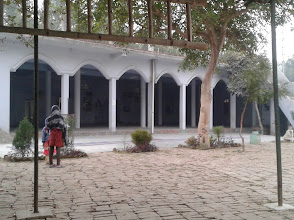
Barkati Jama Masjid stands as a serene place of worship in the heart of Gayatri Nagar, Bareilly, serving the local Muslim community with its modest yet inviting architecture. Nestled in a residential neighborhood, it embodies the everyday spiritual life of Rohilkhand's Islamic heritage, offering a tranquil space for prayer and reflection amid the bustling urban landscape of Uttar Pradesh.
In the verdant plains of Rohilkhand, where the legacy of Mughal and Nawabi influences intertwines with the rhythms of modern Indian life, Barkati Jama Masjid emerges as a humble yet vital emblem of enduring Islamic devotion. Located in the quiet enclave of Gayatri Nagar within Bareilly—a city renowned for its rich tapestry of historical mosques such as the 18th-century Ala Hazrat Dargah and the grand Asaf-ud-Daula Mosque—this unassuming edifice reflects the grassroots evolution of sacred spaces in Uttar Pradesh's Islamic tradition. Though precise archival details on its founding remain elusive, reflecting its status as a community-built structure rather than an imperial commission, Barkati Jama Masjid is believed to have been established in the mid-20th century to cater to the growing Muslim populace in Bareilly's expanding suburbs. Bareilly itself, once a strategic outpost under Rohilla chieftains in the 18th century, has long been a cradle for Islamic scholarship and architecture, with influences from Persian, Mughal, and local Awadhi styles. The mosque's name, "Barkati," evokes blessings and prosperity—a common invocation in South Asian Islamic nomenclature—suggesting it was named in honor of a revered local figure or spiritual benefactor, aligning with the region's tradition of endowing mosques as acts of piety. Architecturally, Barkati Jama Masjid adheres to the functional elegance typical of post-colonial Indian mosques: a simple rectangular prayer hall oriented toward the qibla, flanked by a modest minaret that calls the faithful to prayer five times daily. Constructed primarily from local brick and plaster, with subtle lime-washed walls that glow softly under the Rohilkhand sun, it eschews ornate domes or intricate jaali screens in favor of practicality suited to its residential setting. The courtyard, though compact, features a central ablution area, fostering a sense of communal intimacy during congregational prayers, especially on Fridays when the adhan resonates through the lanes of Gayatri Nagar and neighboring Kurmanchal Nagar. This design echoes the adaptive spirit of smaller urban mosques across Uttar Pradesh, where spiritual needs are met without the grandeur of sites like Delhi's Jama Masjid or Lucknow's expansive complexes. As a living historical site, Barkati Jama Masjid plays a pivotal role in preserving Bareilly's Islamic cultural continuum. It serves not only as a house of worship but as a neighborhood anchor, hosting educational sessions on Quranic recitation and community iftars during Ramadan—practices that trace back to the Sufi-influenced ethos of Rohilkhand's past. In an era of rapid urbanization, it stands as a quiet testament to the resilience of India's minority religious heritage, inviting visitors to appreciate the understated beauty of everyday sanctity. For those exploring Uttar Pradesh's mosaic of mosques, Barkati Jama Masjid offers a poignant reminder that history unfolds not just in marble monuments, but in the steadfast prayers of ordinary devotees.
Year of Built: Not Available
Address: CC6P+X8C, Gayatri Nagar, Kurmanchal Nagar, Bareilly, Uttar Pradesh 243002
Country: India
State: Uttar Pradesh
District: Bareilly
Pincode: 243002
Longitude: 79.4300° E
Latitude: 28.3680° N