
Indo Islamic Heritage


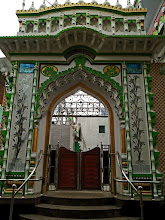
Dawat-E-Tableegh Markaz Khirni Wali Masjid, located in the tranquil village of Gangapur near Bareilly, Uttar Pradesh, serves as a vital regional hub for the Tablighi Jamaat—a global Islamic missionary movement emphasizing spiritual reform and outreach. This modest yet spiritually resonant mosque hosts regular gatherings for dawah (invitation to faith), fostering community bonds and devotion among devotees.
Nestled in the verdant outskirts of Bareilly, a city steeped in the cultural tapestry of Rohilkhand, Dawat-E-Tableegh Markaz Khirni Wali Masjid stands as a beacon of quiet piety and communal harmony. Known locally as Khirni Wali Masjid, this unassuming structure embodies the ethos of the Tablighi Jamaat, a Sunni revivalist movement founded in 1926 by Maulana Muhammad Ilyas Kandhlawi in the Mewat region of British India. Rooted in the Deobandi tradition, the movement prioritizes personal spiritual renewal through simple acts of faith, travel for preaching, and collective worship—principles that find vivid expression within the mosque's hallowed walls. The mosque's architecture reflects the understated elegance typical of regional Islamic sites in Uttar Pradesh: a simple prayer hall oriented toward the qibla, with whitewashed minarets piercing the skyline and an open courtyard that invites reflection under the sprawling neem trees. Though not adorned with the intricate Mughal-era motifs seen in grander monuments like Delhi's Jama Masjid, its design prioritizes functionality and serenity, accommodating large congregations during weekly ijtema (gatherings) and annual chilla (40-day retreats). Devotees from across northern India converge here, drawn by its role as a "markaz"—a central station for organizing short missionary tours that emphasize the six principles of Tablighi Jamaat: kalimah (affirmation of faith), salah (prayer), ilm-o-zikr (knowledge and remembrance of God), ikram-e-musalman (honoring fellow Muslims), ikhlas-e-niyat (sincerity of intention), and tafriq-e-din-o-dunya (time for faith). Historically, the site's significance ties directly to the Tablighi Jamaat's grassroots expansion beyond its Nizamuddin headquarters in Delhi. By the mid-20th century, as the movement gained momentum amid India's post-independence social upheavals, local markaz like Khirni Wali emerged to sustain its non-hierarchical, volunteer-driven mission. Bareilly, with its legacy of Islamic scholarship—home to institutions like Darul Uloom Deoband's influence—provided fertile ground for such centers. The mosque facilitates programs like gasht (street outreach) and ta'lim (religious instruction), where participants engage in humble dialogues on faith, echoing Ilyas Kandhlawi's vision of reforming the ummah (Muslim community) through everyday piety rather than political activism. Today, the markaz remains a living testament to enduring spiritual traditions, its minbar echoing sermons on humility and brotherhood. Visitors often describe a palpable sense of tranquility, enhanced by the surrounding agricultural landscapes of Gangapur, where the Ramganga River's gentle flow mirrors the mosque's call to inner peace. As a cornerstone of local Islamic life, Khirni Wali Masjid not only preserves the Tablighi legacy but also underscores the movement's quiet revolution in fostering global Muslim solidarity—one prayer at a time.
Year of Built: Not Available
Address: 9C69+PX8, Azam Nagar, Gangapur, Bareilly, Uttar Pradesh 243001
Country: India
State: Uttar Pradesh
District: Bareilly
Pincode: 243001
Longitude: 79.4200° E
Latitude: 28.3617° N