
Indo Islamic Heritage


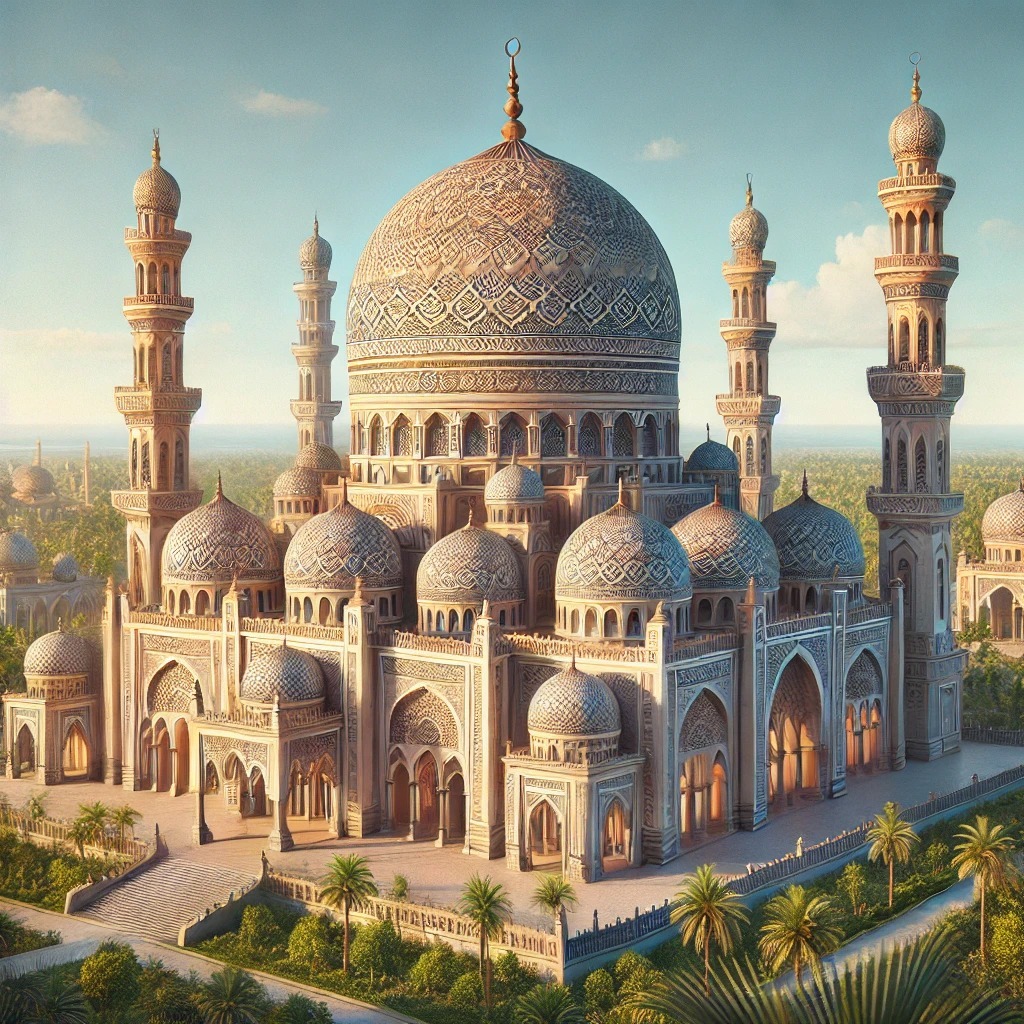
Sunni Masjid in Ram Vatika, Bareilly, stands as a modest yet integral part of the city's Islamic heritage, serving as a serene place of worship for the local Sunni community in the heart of Uttar Pradesh's Rohilkhand region.
Nestled within the bustling locality of Ram Vatika in Bareilly, Uttar Pradesh, Sunni Masjid emerges as a quiet testament to the region's deep-rooted Islamic legacy, particularly within the Sunni tradition that has long defined the spiritual and communal life of Rohilkhand. Bareilly, historically a stronghold of Sunni scholarship and piety—often hailed as the "southern Baghdad" for its contributions to Islamic learning—provides a fitting backdrop for this mosque, which, though unassuming in scale, plays a vital role in fostering daily prayers, community gatherings, and religious observances for residents of this vibrant urban pocket. The mosque's origins are not extensively documented in major historical archives, a common trait among many smaller neighborhood masjids in northern India that evolved organically amid the socio-religious upheavals of the 18th and 19th centuries. Bareilly itself rose to prominence under the Rohilla Nawabs, Afghan-origin rulers who established a semi-autonomous state in the mid-1700s, blending Persianate Islamic culture with local traditions. During this era, Sunni Islam, particularly the Barelvi school of thought founded by Ahmed Raza Khan in the late 19th century, flourished in the city, leading to the proliferation of masjids that served as centers for theological discourse and Sufi devotion. Sunni Masjid likely traces its roots to this period of consolidation, possibly constructed in the late 19th or early 20th century as part of the community's efforts to expand worship spaces amid growing urbanization and colonial influences. While the exact year of its building eludes precise verification—reflecting the oral histories preserved by local imams rather than grand inscriptions—it aligns with the broader wave of mosque constructions in Bareilly that supported the Barelvi movement's emphasis on love for the Prophet Muhammad and veneration of saints, contrasting with reformist Deobandi influences elsewhere in the district. Architecturally, Sunni Masjid adheres to the understated vernacular style prevalent in Rohilkhand: a simple rectangular prayer hall with whitewashed walls, arched mihrab, and a modest minaret that calls the faithful to salah five times a day. Its courtyard, shaded by neem trees, offers a tranquil respite from the surrounding residential bustle, where devotees gather not only for namaz but also for milads (celebrations of the Prophet's life) and qawwali sessions that echo the ecstatic Sufi heritage of the region. The mosque's interior, adorned with subtle geometric motifs and Quranic calligraphy, underscores its Sunni orientation, free from ornate excesses yet rich in spiritual resonance. Over the decades, it has weathered the partitions of 1947, the economic shifts of post-independence India, and the rapid modernization of Bareilly into an industrial hub, remaining a steadfast anchor for families tracing their lineage to the Rohilla era. Today, Sunni Masjid continues to embody Bareilly's syncretic ethos, where Islamic practices intertwine with the city's diverse Hindu-majority fabric, including nearby sites like the Ram Vatika locality's namesake temple grounds. Its role extends beyond worship to community welfare, hosting iftar during Ramadan and educational programs for youth, ensuring the transmission of Sunni values in an era of globalization. For visitors seeking an authentic glimpse of everyday Islamic life in Uttar Pradesh, this masjid offers a profound connection to history's quieter chapters—where faith, not fanfare, builds enduring legacies.
Year of Built: Not Available
Address: 9C3P+8F7, Unnamed Road, Ram Vatika, Bareilly, Uttar Pradesh 243005
Country: India
State: Uttar Pradesh
District: Bareilly
Pincode: 243005
Longitude: 79.4345° E
Latitude: 28.3529° N