
Indo Islamic Heritage


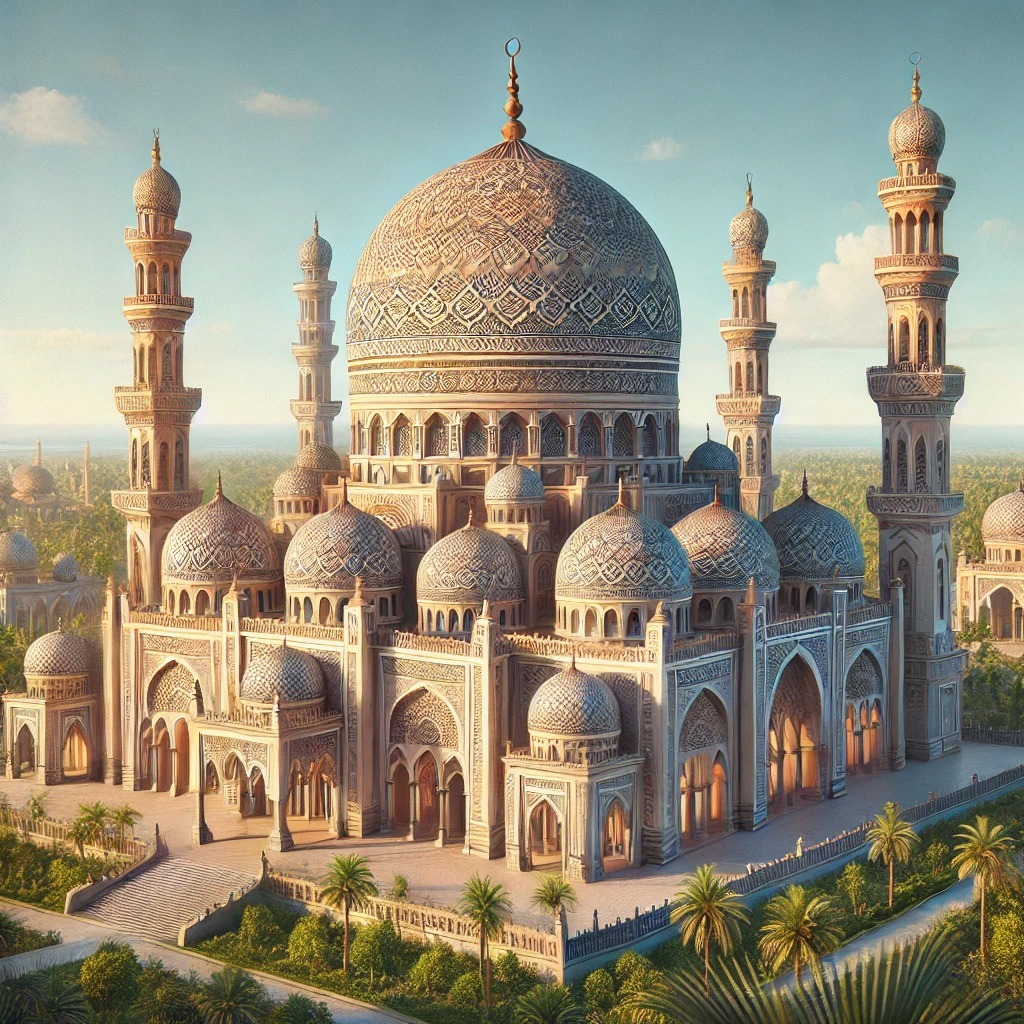
Azharee Masjid stands as a serene Islamic prayer hall in the heart of Izatnagar, a bustling locality in Bareilly known for its railway heritage and diverse community. Serving as a vital center for local Muslim worship and community gatherings, the mosque embodies the rich Sunni tradition prevalent in Rohilkhand, offering a tranquil space amid the area's modern development. Its modest architecture reflects everyday Islamic devotion, making it an understated yet essential part of Bareilly's historical Islamic fabric.
Nestled in the northern outskirts of Bareilly, a city steeped in the legacy of Mughal and Rohilla influences, Azharee Masjid emerges as a quiet testament to the enduring Islamic heritage of Uttar Pradesh's Rohilkhand region. Bareilly itself traces its origins to the 16th century, when Mughal governor Makrand Ray established the settlement in 1537, fostering a landscape where mosques and madrasas became symbols of cultural synthesis under Afghan Rohilla rule in the 18th century. Izatnagar, the mosque's home, developed as a key railway hub in the late 19th century—its station founded in 1875 under British engineer Alexander Izat—drawing migrant communities and spurring local Islamic institutions to meet spiritual needs. Though precise archival records on Azharee Masjid remain elusive, its presence aligns with the post-1947 expansion of Izatnagar, a period when Bareilly's Muslim population, rooted in Barelvi Sunni scholarship, constructed numerous prayer spaces to sustain traditions amid India's partition and modernization. The name "Azharee" evokes connections to the revered Azhari lineage of Bareilly's Barelvi movement, founded by the 19th-century scholar Ahmed Raza Khan Barelvi (1856–1921), whose emphasis on Sufi devotion and orthodox Hanafi jurisprudence profoundly shaped regional Islam. This movement, centered just a few kilometers away at Bareilly Sharif Dargah (built 1921), promoted mosques as hubs for not only salah (prayer) but also ilm (knowledge) and tasawwuf (spiritual purification), principles likely mirrored in Azharee Masjid's role. Architecturally, the mosque adheres to the understated Indo-Islamic style common in smaller UP locales: a rectangular prayer hall oriented toward the qibla, with whitewashed walls and arched mihrabs that echo the simplicity of Rohilkhand's vernacular mosques, distinct from the grand minarets of Mughal-era landmarks like Delhi's Jama Masjid. Its dome, if present, would be modest, topped perhaps with a green finial symbolizing paradise, while the minbar serves as a platform for Friday khutbahs that reinforce community bonds. Surrounding the structure, open courtyards facilitate wudu (ablution) and iftar during Ramadan, transforming the site into a living embodiment of Islamic communal life. Unlike ornate shrines, Azharee Masjid prioritizes functionality, hosting daily congregational prayers, taraweeh in Muharram, and modest celebrations of Milad-un-Nabi, honoring the Prophet Muhammad in line with Barelvi customs. Historically, the mosque's locale in Izatnagar—elevated at 179 meters above sea level and proximate to the Indian Veterinary Research Institute (established 1889)—positions it within a tapestry of progress and piety. During the 1857 Revolt, Bareilly served as a Rohilla stronghold against British forces, with local ulema rallying around Islamic ideals of justice; echoes of this resilience persist in Izatnagar's mosques, which quietly preserved Urdu-Persian scholarship through colonial and post-colonial eras. Today, Azharee Masjid continues this legacy, drawing residents from nearby colonies like Rajendra Nagar and Kurmanchal Nagar for Jumu'ah prayers, while fostering interfaith harmony in a diverse neighborhood. As Bareilly evolves into an educational and industrial node, the mosque remains a steadfast anchor, reminding visitors of India's pluralistic Islamic past—where faith, like the Ramganga River flowing nearby, nourishes the soul without fanfare. In an era of rapid urbanization, Azharee Masjid's unpretentious endurance underscores the vitality of grassroots Islamic sites in India. It invites reflection on how such spaces, far from grand narratives, sustain the daily rhythms of devotion, scholarship, and solidarity that have defined Rohilkhand's Muslim identity for centuries. For those tracing Uttar Pradesh's historical mosques—from the 16th-century Shahi Jama Masjid in Sambhal to Bareilly's own tapestry of prayer halls—Azharee Masjid offers a poignant, intimate chapter in this sacred continuum.
Year of Built: Not Available
Address: CCFH+QR9, Izatnagar, Karampur Chaudhary, Bareilly, Uttar Pradesh 243202
Country: India
State: Uttar Pradesh
District: Bareilly
Pincode: 243202
Longitude: 79.4250° E
Latitude: 28.4048° N