
Indo Islamic Heritage


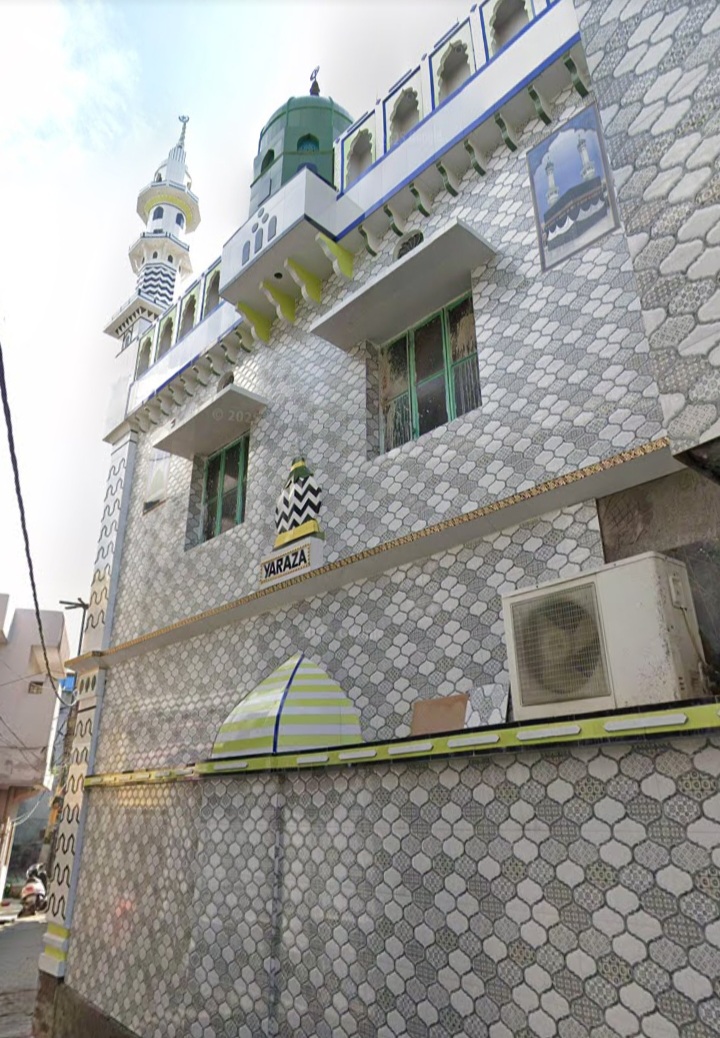
Masjid Kalaigaran is a modest yet cherished local mosque nestled in the heart of Brahampura Mohalla, Bareilly, embodying the quiet spiritual heritage of Uttar Pradesh's Rohilkhand region. Serving as a neighborhood place of worship for the Muslim community, it features simple Islamic architecture with a central prayer hall and minaret, fostering daily prayers and communal gatherings amid the bustling urban fabric of Bareilly.
In the culturally vibrant city of Bareilly, where the legacy of Mughal and Rohilla influences intertwines with the everyday rhythms of local life, Masjid Kalaigaran stands as a humble testament to the enduring Islamic traditions of northern India. Located in the densely populated Brahampura Mohalla—a historic residential enclave within Bareilly's old quarter—this local mosque has long served as the spiritual anchor for its surrounding community, offering solace and unity to residents through its unpretentious design and steadfast role in daily worship. Though specific records of its founding remain scarce, reflecting the often undocumented history of smaller community-built mosques in colonial-era Uttar Pradesh, Masjid Kalaigaran is believed to trace its roots to the 19th century, a period when Bareilly flourished under British administration following the Rohilla principalities' decline. The city's own origins, established in the mid-17th century by Mughal governor Mukrand Rai, set the stage for such structures: mosques erected by local artisans using locally sourced bricks and lime mortar, echoing the provincial Islamic style prevalent in Rohilkhand. Unlike grander edifices like Bareilly's Jama Masjid, Kalaigaran exemplifies the intimate scale of neighborhood masjids—compact spaces designed for accessibility rather than ostentation, with a single-domed prayer hall oriented toward Mecca, flanked by a slender minaret for the adhan, and an open courtyard for ablutions and informal assemblies. Architecturally, the mosque adheres to the functional elegance of Indo-Islamic vernacular traditions. Its facade, likely adorned with subtle geometric motifs in plaster, invites worshippers through arched doorways that prioritize light and ventilation in Bareilly's subtropical climate. Inside, the mihrab—a niche denoting the qibla—marks the focal point for salat, surrounded by walls that may bear faded inscriptions from the Quran, a common feature in such sites to inspire reflection. Over the decades, the mosque has weathered seasonal monsoons and urban expansion, its structure maintained through community efforts, underscoring the resilient spirit of Bareilly's Muslim populace, who form a significant part of the city's diverse demographic. For locals in Brahampura, Masjid Kalaigaran transcends mere architecture; it is a living repository of shared memory. Here, generations have gathered for Friday jumu'ah prayers, Eid celebrations, and quiet taraweeh during Ramadan, fostering a sense of belonging in a neighborhood shaped by trade, agriculture, and the Ramganga River's fertile banks. In Bareilly—known as the "Nath Nagari" for its Shiva temples yet equally rich in Sufi and Sunni landmarks—this mosque quietly contributes to the region's syncretic ethos, standing as one of many understated Islamic sites that dot Uttar Pradesh's historical landscape. Visitors seeking an authentic glimpse of India's grassroots religious life will find in Masjid Kalaigaran a serene reminder of faith's intimate scale, far from the crowds of monumental heritage.
Year of Built: Not Available
Address: 518/1, Brahampura, Bareilly, Uttar Pradesh 243003
Country: India
State: Uttar Pradesh
District: Bareilly
Pincode: 243003
Longitude: 79.4304° E
Latitude: 28.3670° N