
Indo Islamic Heritage


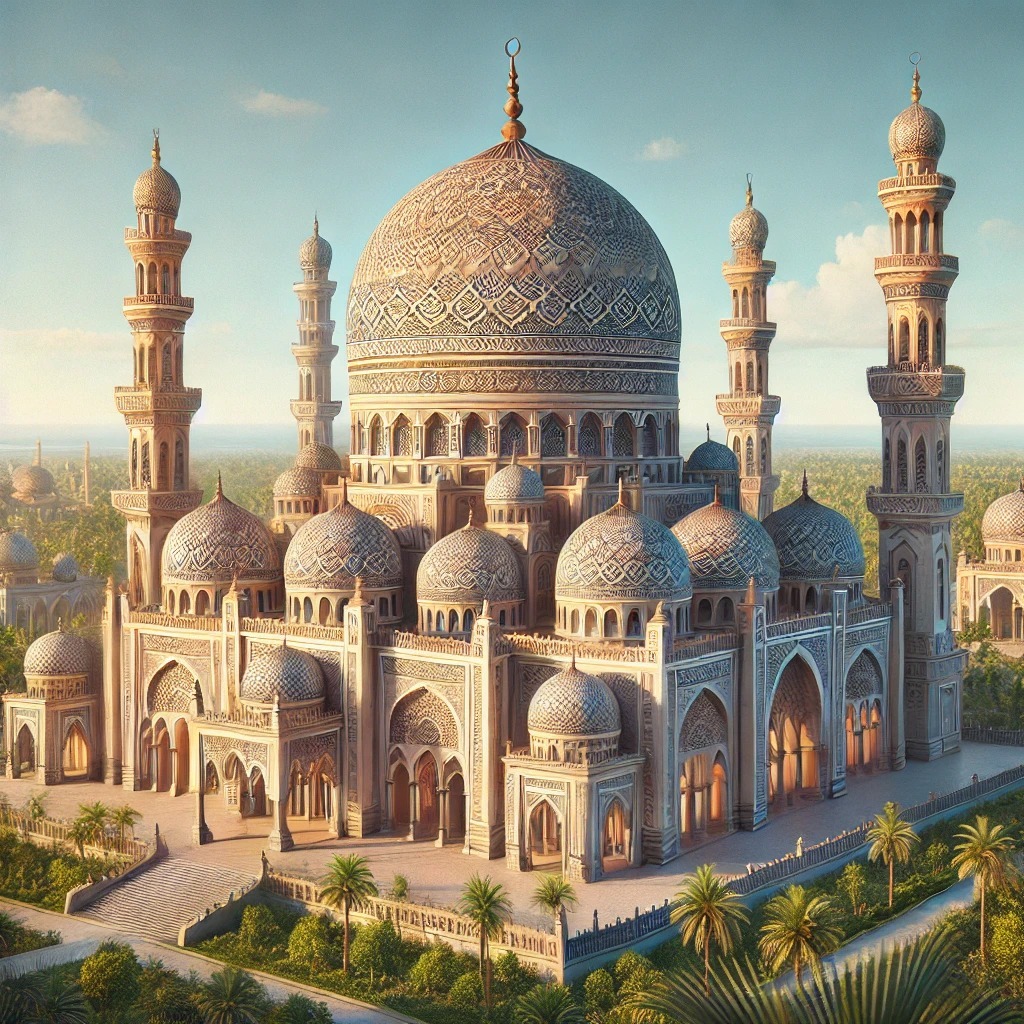
Razvia Masjid is a modest yet cherished local mosque in the bustling Izatnagar locality of Bareilly, Uttar Pradesh. Serving as a spiritual hub for the Sunni Muslim community, it embodies the quiet resilience of everyday Islamic worship in northern India. With simple architecture and a focus on community prayers, it stands as a testament to the enduring faith traditions in the Rohilkhand region, close to the historic railway heritage of Izatnagar.
Nestled in the heart of Izatnagar—a vibrant northern suburb of Bareilly known for its railway legacy and diverse residential fabric—Razvia Masjid emerges as a serene enclave of Islamic devotion amid the rhythm of daily life. Bareilly, often called the "cultural capital of Rohilkhand," has long been a cradle for Sunni scholarship and Sufi traditions, and this local mosque quietly contributes to that rich tapestry. Though not among the grand monuments of Mughal-era grandeur, Razvia Masjid holds its place as a vital community anchor, fostering prayer, reflection, and unity for generations of worshippers in Uttar Pradesh's Bareilly district. The mosque's origins trace back to the early 20th century, a period when Bareilly's Sunni Muslim population experienced steady growth, influenced by the broader revival of Sufi practices in the region. This era saw the establishment of several modest prayer spaces to accommodate local needs, as the city—strategically located on the banks of the Ramganga River—evolved from a colonial rail hub into a modern urban center. Razvia Masjid, named possibly in homage to the revered "Razvi" lineage associated with Bareilly's prominent Barelvi scholars, was constructed during this time to serve the immediate spiritual requirements of Izatnagar's residents. Historical records from local postal and administrative surveys confirm its presence as a longstanding fixture in the area, though precise construction dates remain tied to oral community histories rather than formal inscriptions. By the mid-20th century, it had become an integral part of the neighborhood, hosting daily salahs and occasional religious gatherings that reflect the inclusive ethos of Indian Islam. Architecturally, Razvia Masjid exemplifies the unpretentious style typical of regional mosques in post-colonial Uttar Pradesh: a single-domed prayer hall with whitewashed walls, arched mihrab, and minarets that rise modestly against the skyline. Built primarily with local brick and lime mortar, its design prioritizes functionality over ornamentation, featuring open courtyards for wudu (ablution) and shaded verandas for communal rest. The interior, oriented toward the qibla, accommodates around 200-300 devotees during peak times like Jumu'ah prayers, with simple geometric motifs adorning the walls—a subtle nod to Islamic artistry without the elaborate calligraphy of larger shrines. Over the decades, minor renovations have preserved its integrity, ensuring it remains a welcoming space resilient to the area's seasonal monsoons and urban expansion. Beyond its physical form, Razvia Masjid's significance lies in its role within Izatnagar's social and religious landscape. Located just a short distance from the iconic Izzatnagar Railway Station—established in 1875 as a key link in British India's northern network—the mosque draws a congregation of railway workers, families, and scholars from nearby institutions like the Indian Veterinary Research Institute. It serves as a microcosm of Bareilly's Sunni heritage, where traditions of the Barelvi school—emphasizing devotion to the Prophet Muhammad and Sufi saints—find everyday expression through taraweeh recitations during Ramadan and milad-un-nabi celebrations. In a region dotted with more famed sites like the Dargah Ala Hazrat (the mausoleum of scholar Ahmad Raza Khan, founded in the late 19th century), Razvia Masjid represents the grassroots pulse of faith: unassuming yet profound, bridging personal piety with collective identity. Today, as Bareilly navigates modernity with its blend of heritage and progress, Razvia Masjid continues to stand as a symbol of continuity. Its doors open five times daily, inviting reflection in a world of constant motion, and reminding visitors of the quiet sanctity embedded in India's local Islamic landmarks. For those exploring Uttar Pradesh's spiritual undercurrents, this mosque offers not spectacle, but a genuine encounter with the lived history of devotion.
Year of Built: Not Available
Address: CC37+75Q, Partapur Chaudhary, Izatnagar, Bareilly, Uttar Pradesh 243122
Country: India
State: Uttar Pradesh
District: Bareilly
Pincode: 243122
Longitude: 79.4250° E
Latitude: 28.4048° N