
Indo Islamic Heritage


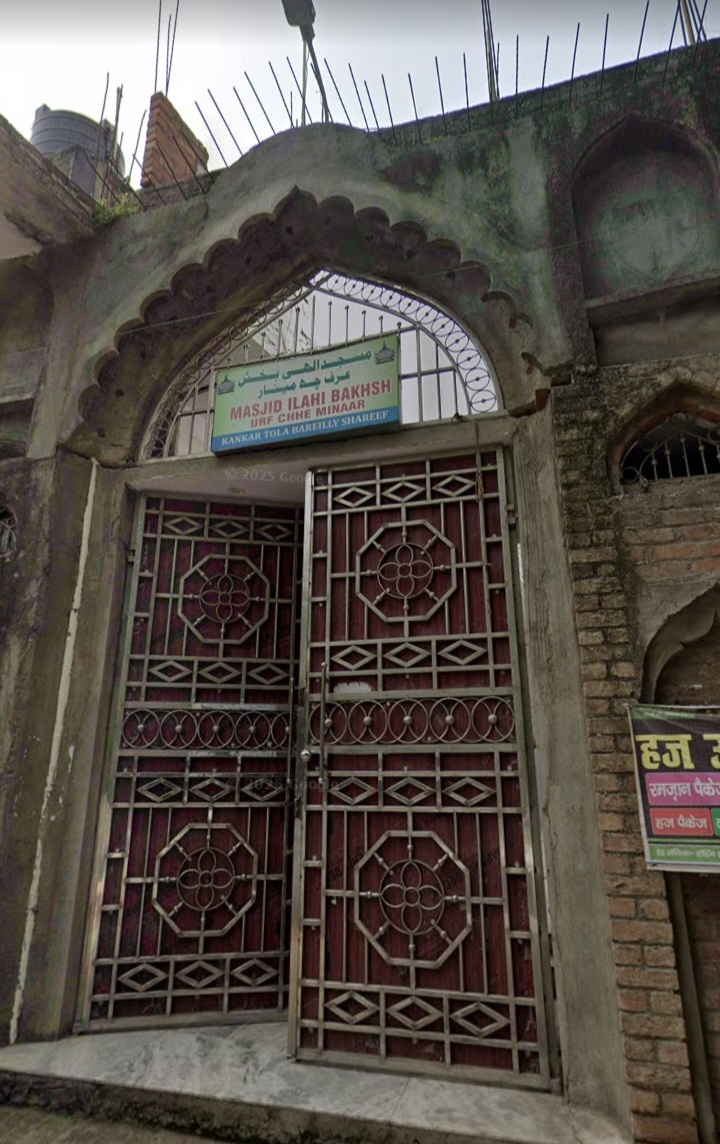
Masjid Ilahi Baksh stands as a modest yet enduring testament to Bareilly's rich Islamic heritage in Uttar Pradesh's Old City. This local mosque, nestled amid the bustling lanes of the historic quarter, exemplifies traditional Indo-Islamic architecture with its simple dome and minaret, serving as a serene hub for daily prayers and community gatherings. Built in the 19th century, it reflects the spiritual and cultural fabric of Rohilkhand, offering devotees a quiet space for reflection amid the city's vibrant tapestry.
Tucked away in the labyrinthine alleys of Bareilly's Old City—a historic enclave shaped by centuries of Mughal influence and Rohilla Nawab rule—Masjid Ilahi Baksh emerges as a poignant symbol of understated Islamic devotion. Erected in the 19th century during a transitional era when the fading echoes of Mughal grandeur mingled with emerging colonial shadows, the mosque was named in honor of a pious benefactor, "Ilahi Baksh," whose legacy of faith and charity continues to inspire the local Muslim community. Though precise records of its founding remain scarce, reflecting the oral traditions that often preserve such local landmarks, its construction aligns with the architectural surge in Bareilly under the Rohilla dynasty, which blended Persian elegance with regional simplicity. Architecturally, Masjid Ilahi Baksh embodies the unpretentious charm of provincial Indo-Islamic design. Its modest single dome, crowned with a finial that catches the afternoon sun, rises above a rectangular prayer hall supported by sturdy brick arches. Flanking the entrance is a slender minaret, its tapering form etched with subtle geometric motifs that evoke the intricate jaali work found in grander structures like the nearby Bareilly Sharif Dargah. The facade, rendered in local lakhori bricks and lime plaster, bears the patina of time—faint traces of red ochre paint lingering on the mihrab, which points resolutely toward Mecca. Inside, the qibla wall features understated calligraphy in Arabic script, quoting verses from the Quran that emphasize divine mercy, a subtle nod to the mosque's name, meaning "God's Gift." Unlike the opulent imperial mosques of Delhi or Agra, this structure prioritizes functionality over ornamentation: cool mihrabs for summer ablutions, shaded verandas for post-prayer repose, and an open courtyard that fosters communal iftars during Ramadan. Historically, Masjid Ilahi Baksh has been more than a place of worship; it has pulsed with the rhythms of Bareilly's socio-religious life. The city, once a bastion of the Rohilla Afghans in the 18th century, witnessed waves of Islamic scholarship and Sufi mysticism, influences that seeped into local mosques like this one. During the 1857 Revolt, when Bareilly became a fleeting center of resistance against British forces, such neighborhood masjids served as clandestine refuges for strategizing and solace amid upheaval. In the decades following, as Bareilly evolved into a textile and leather hub under British cantonment, the mosque adapted quietly—its imams leading not just salahs but also literacy drives and charitable endowments, echoing the waqf traditions that sustained it. Today, it remains a vital thread in the Barelvi movement's fabric, a Sunni Hanafi school pioneered by Ahmad Raza Khan Barelvi in Bareilly itself, where emphasis on love for the Prophet and saintly intercession finds quiet expression in the mosque's daily routines. For visitors tracing India's Islamic historical sites, Masjid Ilahi Baksh offers an intimate counterpoint to more famed monuments. Its location in the Old City—mere steps from bazaars hawking attar and zardozi—invites exploration on foot, revealing how faith intertwines with everyday commerce. Devotees frequent it for Fajr prayers at dawn, when the call of the muezzin mingles with the first stirrings of the market, or for Jumu'ah congregations that spill into the surrounding galis. Restoration efforts in recent years, supported by local trusts, have preserved its structural integrity without diluting its authenticity, ensuring that future generations can connect with this slice of Rohilkhand's soul. In an age of rapid urbanization, Masjid Ilahi Baksh endures as a humble guardian of history, whispering of piety, resilience, and the timeless quest for the divine.
Year of Built: 19th Century
Address: 9C7M+W3G, Old City, Bareilly, Haziyapur, Uttar Pradesh 243005
Country: India
State: Uttar Pradesh
District: Bareilly
Pincode: 243005
Longitude: 79.4304° E
Latitude: 28.3670° N