
Indo Islamic Heritage


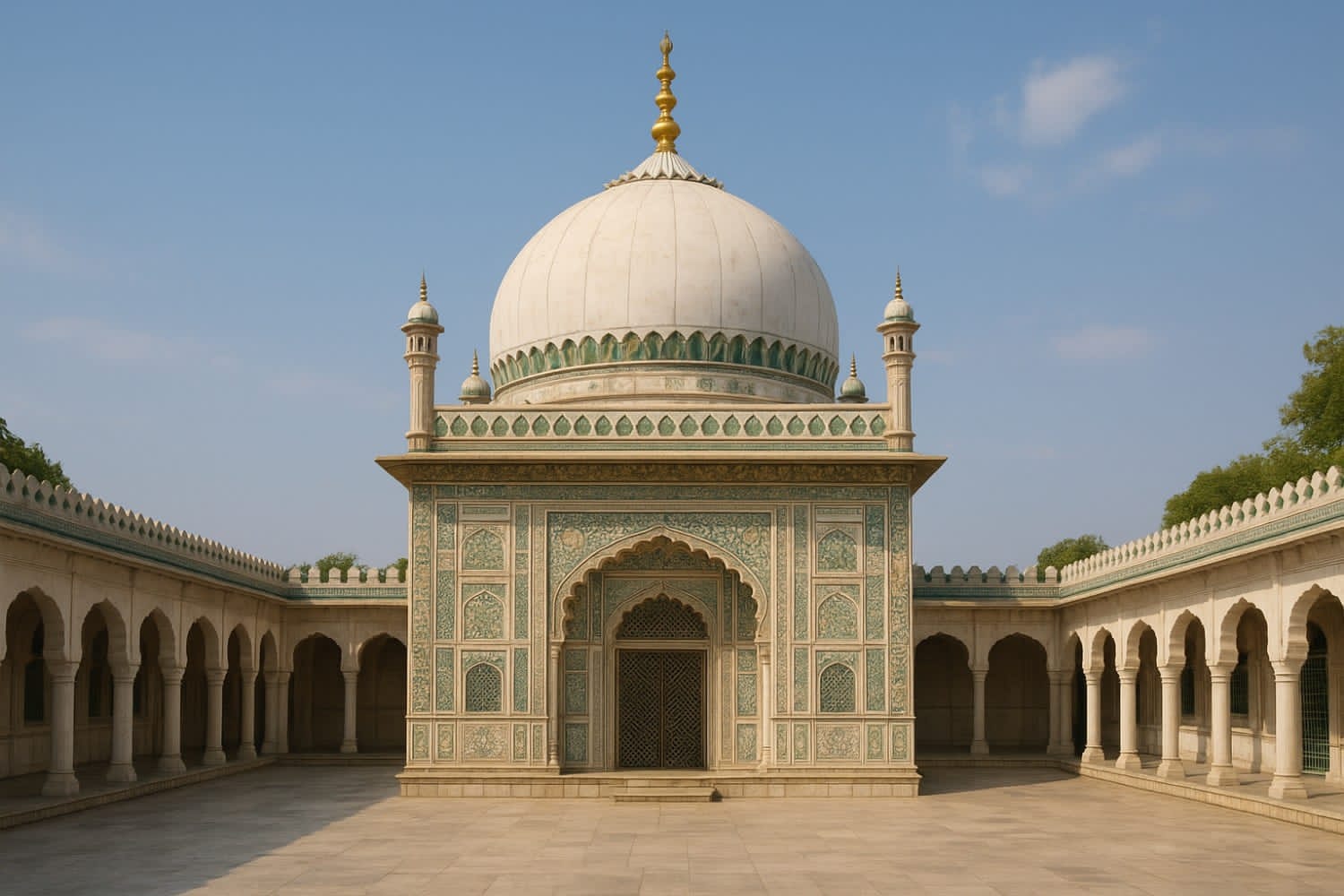
Dargah Hzt Dada Miyan Huzur, a modest local Sufi shrine in Qureshi Nagar, Bareilly, Uttar Pradesh, serves as a place of quiet devotion for the community. Dedicated to a revered local Sufi figure, it embodies the Barelvi tradition of Sunni Islam, attracting nearby residents for prayers and spiritual reflection. The site features simple architecture typical of smaller regional dargahs, with a focus on the tomb (mazar) and surrounding prayer area.
Nestled in the heart of Qureshi Nagar, a residential neighborhood in Bareilly, the Dargah Hzt Dada Miyan Huzur stands as a humble yet spiritually significant local shrine within Uttar Pradesh's rich tapestry of Islamic heritage. Bareilly, known as a cradle of the Barelvi movement—a Sunni Islamic school emphasizing devotion, love for the Prophet Muhammad, and Sufi practices—hosts this dargah as one of its understated gems, distinct from larger sites like the nearby Bareilly Sharif Dargah. The shrine is dedicated to Hazrat Dada Miyan Huzur, a local Sufi saint whose life and teachings aligned with the Barelvi ethos of spiritual purity and community harmony. Though specific biographical details on Dada Miyan Huzur remain primarily oral within local traditions (as is common for many regional Sufi figures), the dargah's establishment reflects the 19th- and early 20th-century surge of Sufi shrines in Rohilkhand, the historical region encompassing Bareilly. These sites were often built by disciples to honor masters who propagated Islamic mysticism amid British colonial influences, fostering interfaith tolerance and ethical living. Architecturally, the dargah exemplifies simplicity in Indo-Islamic design, suited to its local character. The central mazar, or tomb, is enclosed in a modest structure with whitewashed walls and subtle Islamic motifs, such as geometric patterns and Quranic calligraphy, evoking serenity rather than grandeur. Adjacent to it is a small mosque (masjid) area for daily prayers, featuring a mihrab (prayer niche) oriented toward Mecca and space for congregational salah, particularly on Fridays. The compound includes a courtyard for qawwali sessions during Urs (the saint's annual death anniversary), though on a smaller scale than major shrines, drawing families from Qureshi Nagar and surrounding wards for intimate gatherings of naat recitations and dua. Historically, the dargah was erected around 1911, immediately following the saint's demise, by his devoted followers from the Qureshi community—a lineage often associated with prophetic descent in Sufi lore. This timing coincides with a broader wave of shrine-building in Bareilly, inspired by figures like Ahmed Raza Khan Barelvi (d. 1921), whose nearby mausoleum amplified the city's status as a Sunni scholarly hub. As a local site, it avoids the elaborate domes or minarets of prominent dargahs, prioritizing accessibility for everyday worshippers over tourism. Today, the dargah functions as a vital community mosque-shrine hybrid, hosting five daily prayers and special observances like Milad-un-Nabi. Its role in promoting spiritual solace amid urban life underscores Bareilly's enduring Sufi legacy, where such locales reinforce faith through quiet piety rather than spectacle. Visitors, mainly locals, find respite in its unpretentious ambiance, making it a poignant reminder of Islam's grassroots expressions in northern India.
Year of Built: Not Available
Address: 9C6P+GV3, Unnamed Road, Qureshi Nagar, Bareilly, Uttar Pradesh 243005
Country: India
State: Uttar Pradesh
District: Bareilly
Pincode: 243005
Longitude: 79.433°E
Latitude: 28.367°N