
Indo Islamic Heritage


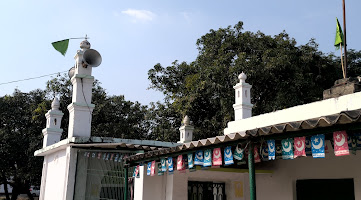
The Jama Masjid of Basti is a prominent historical mosque in the heart of Basti city, Uttar Pradesh, serving as the central place of worship for the local Muslim community. Constructed during the Mughal era, it exemplifies simple yet elegant Indo-Islamic architecture with a spacious courtyard and minarets, reflecting the region's Islamic heritage amid the fertile Gangetic plains.
Nestled in the bustling town of Basti, the administrative headquarters of Basti district in eastern Uttar Pradesh, the Jama Masjid stands as a timeless testament to the Mughal influence on Indian Islamic architecture. Built during the mid-17th century under the patronage of the Mughal Empire, the mosque was constructed around 1650 CE, a period when Shah Jahan's architectural legacy was at its peak, though local records attribute its founding to regional Mughal governors overseeing the Awadh region. This era saw the proliferation of congregational mosques (Jama Masjids) across northern India to consolidate Islamic cultural and religious presence in newly integrated territories. The mosque's design adheres to the classic Indo-Islamic style prevalent in Uttar Pradesh, featuring a large rectangular prayer hall oriented towards the qibla (direction of Mecca), flanked by two slender minarets that rise modestly to about 30 meters. The structure is primarily built from locally sourced red sandstone, with subtle white marble inlays on the mihrab (prayer niche) and minbar (pulpit), evoking the grandeur of larger Mughal mosques like those in Delhi and Agra but scaled for a provincial town. The central dome over the prayer chamber is crowned with a finial, and the facade includes three arched gateways leading to an expansive courtyard paved with stone slabs, capable of accommodating over 1,000 worshippers during Friday prayers (Jumu'ah). Intricate geometric jaali (lattice) screens adorn the windows, allowing light to filter through in patterned beams, while Quranic inscriptions in elegant Thuluth script grace the upper walls, quoting verses on divine unity and mercy. Historically, the Jama Masjid played a pivotal role in the socio-religious life of Basti, which was established as a district headquarters in 1865 but traces its Islamic roots to the 16th century when Mughal expansions brought settlers and administrators to the area. The mosque served not only as a site for daily namaz but also as a community hub for discussions on faith, education, and local governance under Mughal and later Nawabi rule in nearby Awadh. During the 1857 Indian Rebellion, it witnessed gatherings of locals amid the turmoil in eastern UP, underscoring its enduring community significance. Today, it remains active, hosting annual celebrations like Eid prayers and Muharram processions, while its serene ambiance draws visitors interested in the understated Islamic heritage of rural Uttar Pradesh. The mosque's location on Station Road places it at the intersection of Basti's colonial-era rail connectivity and traditional bazaars, making it easily accessible yet preserving a quiet reverence. Restoration efforts in the 20th century by the Archaeological Survey of India have maintained its structural integrity, ensuring that this modest yet profound edifice continues to embody the syncretic spirit of India's pluralistic past. For those exploring Uttar Pradesh's lesser-known Islamic sites, the Jama Masjid offers a poignant glimpse into how faith architecture adapted to local contexts, far from the opulence of imperial capitals.
Year of Built: Not Available
Address: QPGR+XXM, Basti, Belgari, Uttar Pradesh 272001
Country: India
State: Uttar Pradesh
District: Bareilly
Pincode: 272001
Longitude: 82.7634° E
Latitude: 26.8228° N