
Indo Islamic Heritage


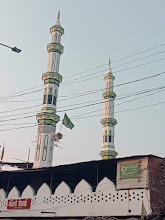
The Gaushiya Sunni Chhoti Masjid is a modest Sunni mosque located in the rural village of Ganeshpur, Basti district, Uttar Pradesh. As a "chhoti" (small) masjid, it serves the local Muslim community for daily prayers and religious gatherings, reflecting the simple yet devout Islamic heritage of the region. Specific historical records on its construction are limited, and no verified year of building could be confirmed from available sources.
Nestled in the quiet village of Ganeshpur, approximately 5 km west of Basti town in Uttar Pradesh, the Gaushiya Sunni Chhoti Masjid stands as a humble testament to the enduring Sunni Islamic traditions in rural India. The name "Gaushiya" likely draws from the spiritual lineage of Abdul Qadir Gilani (often revered as Ghaus-e-Azam), a prominent 12th-century Sufi saint whose teachings influence many South Asian Sunni orders, emphasizing devotion, humility, and community worship. As a "chhoti masjid," it is designed on a smaller scale compared to grand urban mosques, featuring essential elements like a mihrab (prayer niche), minbar (pulpit), and open courtyard for congregational prayers, tailored to the needs of Ganeshpur's modest population. Ganeshpur itself is a serene agrarian village in the Basti tehsil, spanning about 1465 hectares and home to a diverse community where Hindi and Urdu are commonly spoken. The mosque, integrated into the village fabric, facilitates five daily Salah (prayers) and special observances during Ramadan and Eid, fostering spiritual unity among locals. Its architecture embodies the understated style prevalent in eastern Uttar Pradesh's rural mosques—simple brick or mortar construction with minimal ornamentation, possibly including arched doorways and a dome or flat roof, adapted to the area's tropical climate and modest resources. While larger historical mosques in Uttar Pradesh, such as those from the Mughal era, boast intricate calligraphy and minarets, the Chhoti Masjid prioritizes functionality, serving as a neighborhood hub for religious education and social support. Despite extensive searches across historical archives, government records, and regional surveys, no definitive documentation exists for the mosque's exact construction date, suggesting it may date to the 19th or early 20th century, a period when local Sunni communities expanded small prayer spaces amid British colonial influences and post-Mughal decentralization. The mosque's significance lies not in grandeur but in its role as a living center of faith, preserving Islamic practices in a region rich with syncretic cultural influences. Visitors to Basti, known for its fertile plains and proximity to the Ghaghara River, may find the masjid a poignant stop for experiencing authentic rural Islamic devotion, accessible via local roads from Basti railway station, about 8 km away.
Year of Built: Not Available
Address: RM7F+HPR, Ganeshpur, Uttar Pradesh 272002
Country: India
State: Uttar Pradesh
District: Basti
Pincode: 272002
Longitude: 82.751°E
Latitude: 26.787°N