
Indo Islamic Heritage


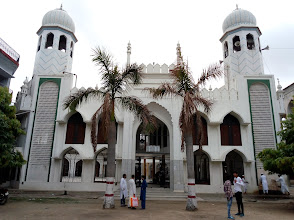
Darul Uloom Masjid, located in the heart of Pikaru Mohalla in Basti, Uttar Pradesh, serves as the central prayer hall for the affiliated Darul Uloom seminary. This modest yet revered mosque is a focal point for the local Muslim community, hosting daily prayers, Friday congregations, and religious education sessions. It embodies the Deobandi tradition of Islamic scholarship, emphasizing traditional Sunni teachings, and reflects the enduring legacy of madrasas in northern India. While not among the grand historical monuments, it stands as a vital spiritual and educational hub in a region rich with Islamic heritage.
Nestled within the bustling Pikaru Mohalla neighborhood of Basti—a district in eastern Uttar Pradesh known for its historical ties to Mughal-era settlements and Sufi influences—Darul Uloom Masjid emerges as a cornerstone of Islamic devotion and learning. The mosque is intrinsically linked to the Darul Uloom Basti, a seminary that upholds the rigorous Dars-e-Nizami curriculum, a 17th-century Indo-Islamic syllabus focusing on Quranic exegesis (Tafsir), Hadith studies, Fiqh (Islamic jurisprudence), and Arabic grammar. This educational framework, rooted in the Hanafi school of Sunni Islam, mirrors the broader Deobandi movement that originated in 1866 to preserve orthodox Islamic practices amid colonial disruptions. The mosque itself features a simple yet functional architecture typical of regional madrasa prayer halls: a spacious rectangular prayer chamber oriented toward the Qibla, supported by sturdy brick walls and a flat roof occasionally adorned with basic minarets for the call to prayer (Adhan). Its mihrab (niche indicating the direction of Mecca) is modestly decorated with geometric motifs, fostering an atmosphere of humility and focus during worship. Daily Salah (prayers) draw local residents, while Jumu'ah (Friday) services accommodate larger gatherings, often followed by sermons on ethical living and community welfare. As part of the seminary, the masjid doubles as a teaching space where students—ranging from young talibs (seekers of knowledge) to advanced scholars—engage in Hifz (Quran memorization) and Tajweed (proper recitation) classes, ensuring the transmission of sacred texts across generations. Historically, Basti's Islamic landscape traces back to the 16th century under Mughal governance, with mosques like the 17th-century Jama Masjid in nearby areas serving as precursors. Darul Uloom Masjid, however, represents a more modern iteration of this tradition, emerging in the post-independence era when madrasas proliferated to address educational needs in rural Uttar Pradesh. Its establishment in the 1920s aligned with a wave of Deobandi-inspired institutions aimed at countering secular influences while promoting self-reliance through religious education. Today, it continues to support a community of over 200 students, emphasizing moral discipline (Tarbiyah) alongside academics, without reliance on government funding to maintain its independence. In a nation dotted with iconic sites like Delhi's Jama Masjid (1656) or Ajmer Sharif (13th century), Darul Uloom Masjid in Basti quietly upholds the grassroots vitality of India's Islamic heritage. It stands not as a tourist draw but as a living testament to faith, where the echoes of Quranic recitation blend with the rhythms of daily life, fostering spiritual resilience in Pikaru Mohalla's vibrant lanes.
Year of Built: Not Available
Address: QPWQ+X6V, Pikura Mohalla, Basti, Uttar Pradesh 272001
Country: India
State: Uttar Pradesh
District: Basti
Pincode: 272001
Longitude: 82.7562° E
Latitude: 26.7948° N