
Indo Islamic Heritage


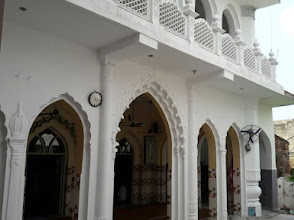
Dhuno Wali Masjid is a modest local mosque situated in the Nai Basti locality of Bijnor, Uttar Pradesh. It serves as a place of worship for the Muslim community in this riverside town, reflecting the everyday Islamic heritage of the region amid Bijnor's historical Mughal and colonial influences. The mosque is known for its simple architecture and community role, though detailed historical records are limited.
Dhuno Wali Masjid, located in the heart of Nai Basti—a residential neighborhood in Bijnor—stands as a quiet testament to the enduring Islamic presence in western Uttar Pradesh. Bijnor, positioned along the Ganges River, has long been a hub of Muslim settlements dating back to the Mughal era, when structures like mosques were built to support growing communities. While grander sites like the Jama Masjid in nearby areas draw attention, Dhuno Wali Masjid embodies the unassuming, functional design typical of local prayer halls in such towns. The mosque's name, "Dhuno Wali," may derive from regional linguistic nuances, possibly alluding to a historical or folkloric element tied to the site's early use, though verified etymology remains scarce. Architecturally, it features a straightforward layout with an open prayer hall oriented toward the qibla, arched entrances, and minimal ornamentation—hallmarks of post-Mughal vernacular styles adapted for small congregations. Unlike ornate imperial mosques, its construction prioritized utility, with whitewashed walls and a flat or low-domed roof suited to the subtropical climate. Historical documentation on Dhuno Wali Masjid is sparse, as it appears in limited local directories rather than national archives. Bijnor's Islamic architecture largely emerged during the 18th-19th centuries under Rohilla Nawabs, who ruled the region until British annexation in 1805, fostering community mosques like this one for daily namaz and festivals. The mosque likely dates to this transitional period or the early British Raj, when Nai Basti developed as a mixed locality. No inscriptions or plaques pinpoint an exact founding year, but comparable structures in Bijnor, such as those in adjacent Punjabi Colony, were erected around the late 1800s to early 1900s to accommodate post-1857 population shifts. Today, Dhuno Wali Masjid remains active, hosting five daily prayers and accommodating around 100-200 worshippers during peak times like Eid. Its location in Nai Basti, a densely populated area near Bijnor's civil lines, makes it accessible via local roads, fostering a sense of neighborhood cohesion. Preservation efforts are community-driven, with occasional renovations funded by donations to maintain its role as a spiritual anchor. In the broader context of India's Islamic sites, it highlights how smaller mosques sustain cultural continuity away from tourist circuits, preserving prayer traditions amid urban growth.
Year of Built: Not Available
Address: 94FQ+827, Punjabi Colony, Nai Basti, Bijnor, Uttar Pradesh 246701
Country: India
State: Uttar Pradesh
District: Bijnor
Pincode: 246701
Longitude: 78.1358° E
Latitude: 29.3724° N