
Indo Islamic Heritage


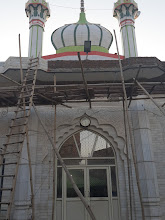
Jama Masjid Qassaban is a modest congregational mosque located in the village of Mirdgan, a small rural settlement in the Bijnor district of Uttar Pradesh. Serving the local Muslim community, it functions as the primary site for Friday prayers and daily worship. The mosque reflects simple Indo-Islamic architectural elements typical of regional village mosques, with a focus on functionality rather than grandeur. Its precise historical details, such as construction date, remain undocumented in available records, suggesting it may date to the 18th or 19th century during the Mughal or Nawabi period, when many such local mosques were established in the Doab region.
Jama Masjid Qassaban stands as a quiet testament to the enduring Islamic heritage in rural Uttar Pradesh, nestled in the verdant fields of Mirdgan village. This mosque primarily caters to the residents of the Qassaban locality—a term often denoting a community of traditional butchers or artisans with historical ties to Islamic trades—making it a vital spiritual hub for daily salah and communal gatherings. Unlike grand urban mosques such as Delhi's Jama Masjid, this structure embodies the understated elegance of village architecture, featuring a rectangular prayer hall oriented toward Mecca, supported by basic arched openings and a flat or low-pitched roof constructed from local bricks and lime plaster. The mihrab (prayer niche) and minbar (pulpit) are simple yet functional, adorned with minimal geometric motifs that echo broader Indo-Islamic influences from the Mughal era. The mosque's origins are rooted in the historical fabric of Bijnor district, part of the Rohilkhand region that saw waves of Muslim settlement from the 12th century onward, accelerating under Mughal governors and later Rohilla Nawabs in the 18th century. While specific records of its construction are scarce—likely due to its local scale—similar mosques in nearby villages like Jhanjhari (built in the 15th century) indicate a pattern of community-funded builds during periods of regional stability. Jama Masjid Qassaban likely emerged in the late Mughal or early colonial period (circa 1700–1850), as Bijnor transitioned from Nawabi rule to British administration, with locals pooling resources for places of worship amid agricultural prosperity along the Ganga and Ramganga rivers. Today, the mosque hosts around 200–300 worshippers on ordinary days, swelling to over 1,000 during Eid celebrations. Its courtyard, shaded by neem trees, serves as a space for community discussions and iftar during Ramadan, fostering social cohesion in Mirdgan's diverse agrarian populace. Though not a protected monument, it remains well-maintained by the local waqf committee, underscoring its role in preserving Islamic traditions in one of Uttar Pradesh's quieter corners. Visitors seeking an authentic glimpse of rural devotion will find serenity here, far from tourist crowds, with the call to prayer echoing across the surrounding farmlands.
Year of Built: Not Available
Address: 948M+C7W, Mirdgan, Bijnor, Uttar Pradesh 246701
Country: India
State: Uttar Pradesh
District: Bijnor
Pincode: 246701
Longitude: 78.1339° E
Latitude: 29.3685° N