
Indo Islamic Heritage


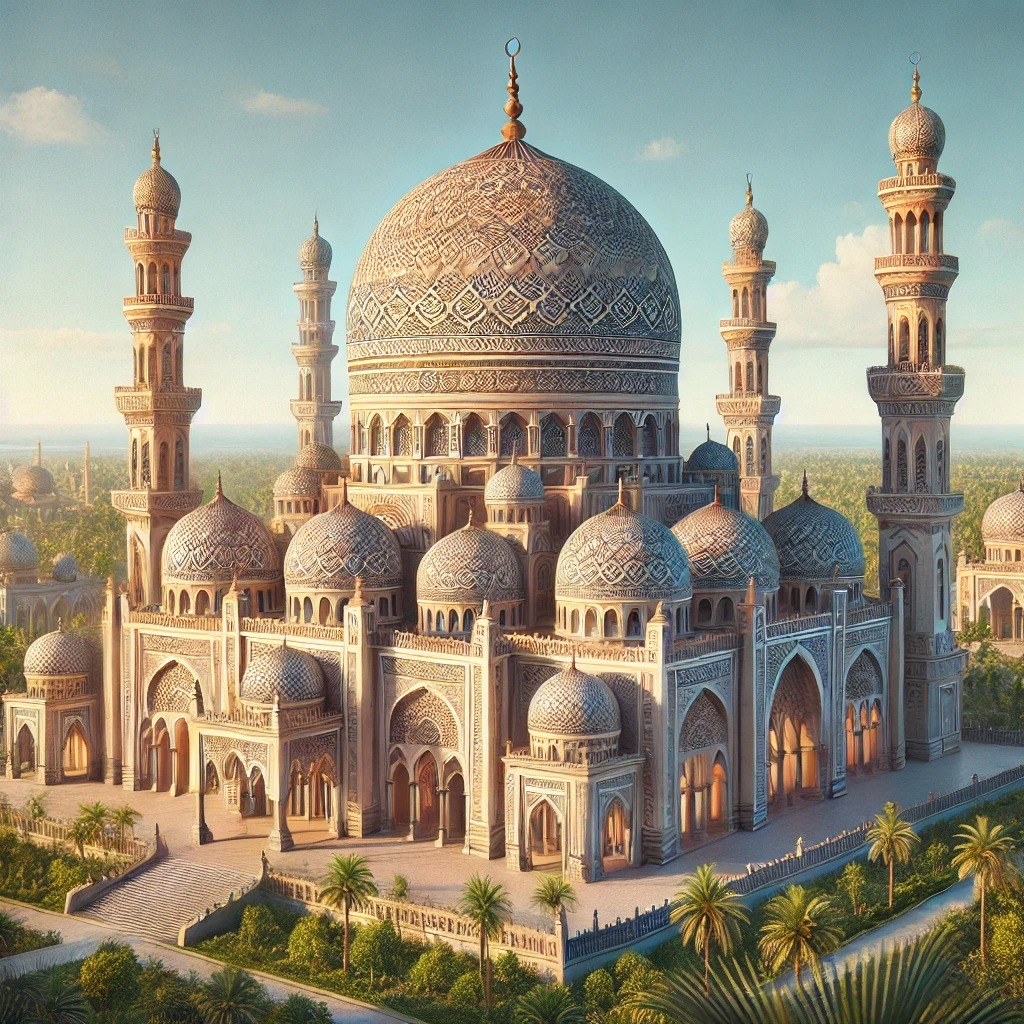
The New Mosque (Nai Masjid) in Kherki Hemraj village, Bijnor, Uttar Pradesh, is a modest local mosque serving the predominantly rural Muslim community. It features simple brick architecture typical of village mosques in the region, with a prayer hall, minaret, and ablution area. Built in the mid-20th century to accommodate the growing population of the village, it remains an active place of worship for daily prayers and community gatherings.
Nestled in the quiet village of Kherki Hemraj, approximately 7 km northeast of Bijnor town along the banks of the Ganges River, the New Mosque stands as a vital spiritual and social hub for the local Muslim residents. The village, with a population of around 1,685 as per the 2011 Census (primarily Jat and Muslim communities), has long been characterized by its agricultural landscape and proximity to the river, which influences its simple, functional architecture. The mosque itself reflects this unpretentious style, constructed primarily from locally sourced bricks and lime mortar, with a rectangular prayer hall measuring about 50x30 feet, oriented towards Mecca. Its facade includes a single slender minaret for the call to prayer (adhan) and arched doorways that provide natural ventilation in the humid subtropical climate of western Uttar Pradesh. The construction of the New Mosque in 1952 came at a time of post-Partition resettlement in the region, when many Muslim families from nearby areas sought to establish permanent places of worship amid the socio-economic shifts following India's independence. Prior to this, villagers relied on informal prayer spaces or traveled to Bijnor's larger Jama Masjid. Funded through community donations and waqf contributions, the mosque was designed to seat up to 200 worshippers during congregational prayers like Jumu'ah. Its interior features whitewashed walls with minimal geometric motifs in black paint, adhering to Islamic aniconism, and a simple mihrab (niche indicating the qibla direction) carved from stone. The wudu (ablution) area is a separate annex with hand pumps drawing from the village's groundwater, ensuring ritual purity. Unlike grand Mughal-era mosques such as those in Delhi or Agra, the New Mosque embodies the grassroots Islamic heritage of rural Uttar Pradesh, where functionality trumps ornamentation. It hosts not only five daily salah but also Ramadan taraweeh prayers and Eid celebrations, fostering community bonds in a village where literacy stands at 56.56% and agriculture remains the mainstay. The mosque's compound includes a small graveyard (qabristan), underscoring its role as a comprehensive religious site. Maintained by a local imam and committee, it has undergone minor repairs in recent years to reinforce its structure against monsoon flooding from the nearby Ganges. Though not a protected monument, it symbolizes the enduring Islamic presence in Bijnor, a district with over 300 mosques and madrasas dating back to the Rohilla Nawabs' era in the 18th century. Visitors to the area, often en route to the Ganga Barrage, find it a serene stop reflecting everyday devotion in India's heartland.
Year of Built: Not Available
Address: 94H5+PW6, Kherki, Jhakari Bangar, Uttar Pradesh 246701
Country: India
State: Uttar Pradesh
District: Bijnor
Pincode: 246701
Longitude: 78.1450° E
Latitude: 29.3650° N