
Indo Islamic Heritage


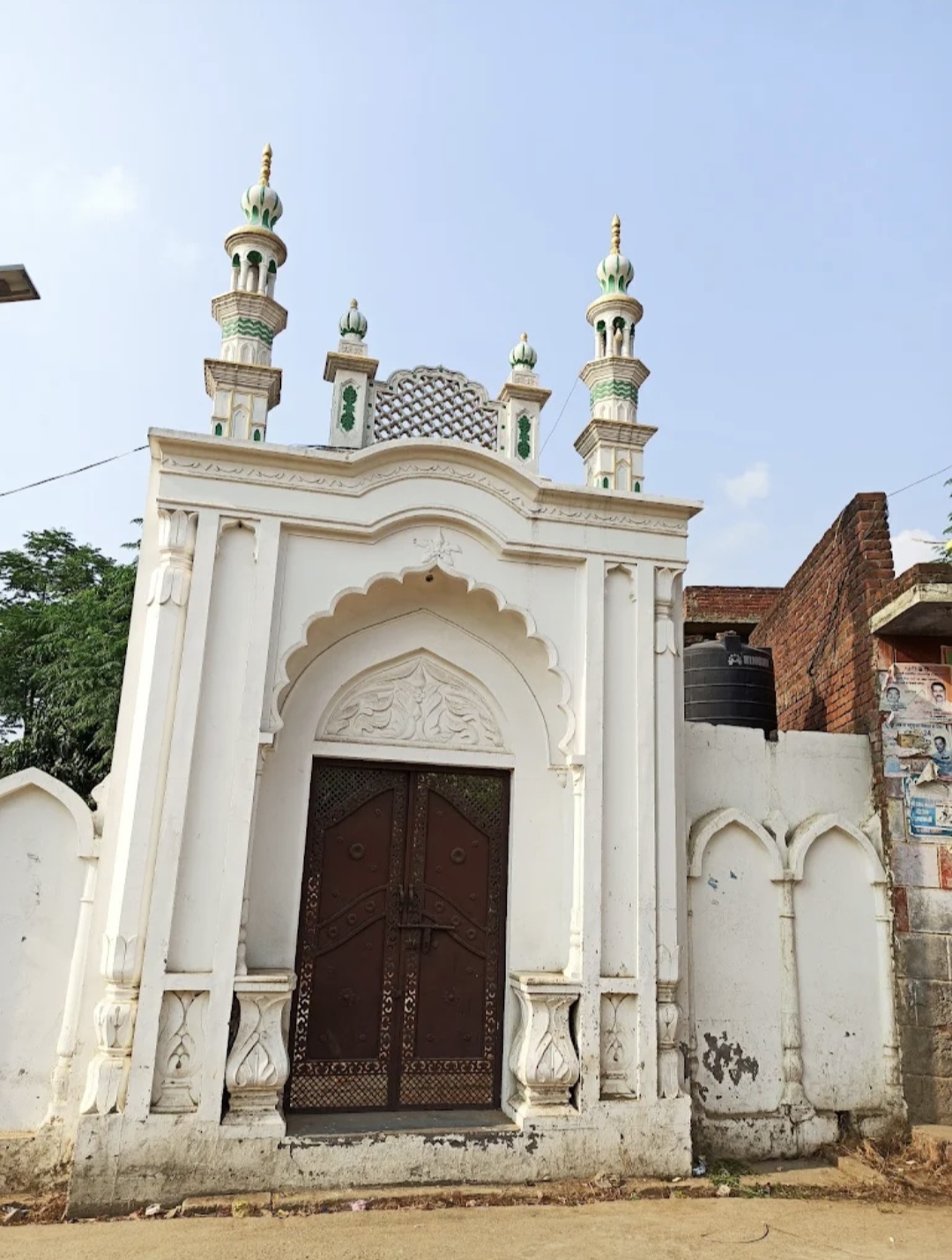
Sadaat Masjid, located in the village of Sirdhani Bangar (also spelled Sardhani Bangar), is a modest yet historically significant mosque in Bijnor district, Uttar Pradesh. Named after the Sayyids (descendants of Prophet Muhammad), it serves as a central place of worship for the local Muslim community in this rural setting along the Ganges riverbanks. While specific construction details remain scarce in historical records, it reflects the enduring Islamic architectural and cultural legacy in the region.
Sadaat Masjid Sirdhani stands as a serene emblem of Islamic heritage in the verdant landscapes of Sirdhani Bangar village, nestled within the Haldaur (Khari Jhalu) block of Bijnor tehsil. This rural mosque, dedicated to the Sadaat lineage—revered in Islamic tradition as direct descendants of Prophet Muhammad—functions primarily as a Friday prayer site and a hub for daily namaz, fostering spiritual unity among the village's predominantly agrarian Muslim population. Architecturally, the mosque embodies the understated elegance of vernacular Indo-Islamic design prevalent in Uttar Pradesh's Doab region. Its structure likely features a central prayer hall with arched mihrab (niche indicating the direction of Mecca), supported by simple brickwork and lime-plastered walls that withstand the area's humid subtropical climate. A modest minaret or dome, if present, would echo influences from nearby Mughal-era mosques like those in Bijnor town, though scaled down for village use. The surrounding courtyard, typical of such sites, provides space for wudu (ablution) and community iftars during Ramadan, underscoring the mosque's role in sustaining local Islamic customs. Historically, Sirdhani Bangar village traces its roots to the broader socio-cultural fabric of Bijnor district, which came under Mughal influence from the 16th century onward and was ceded to British control in 1805 following Rohilla Nawab rule. While precise records of the mosque's founding remain elusive—absent from colonial gazetteers or ASI listings—it aligns with the proliferation of community mosques built during the late Mughal or early colonial era (circa 1700-1850), when Sadaat families settled in the fertile Ganges-Yamuna Doab for land grants and religious patronage. This period saw Bijnor as a transitional zone between Rohilla Afghan strongholds and Awadh Nawabi territories, where mosques like Sadaat Sirdhani emerged as symbols of piety and social cohesion amid shifting political landscapes. Today, the mosque remains integral to village life, hosting taraweeh prayers and milads (prophetic birthday celebrations) that draw families from adjacent hamlets like Jhandapur and Bakherpur Garhi. Its quiet endurance highlights the enduring legacy of Islamic sites in rural Uttar Pradesh, where faith intertwines with the rhythms of farming and seasonal floods from the nearby Ganges. Visitors seeking historical Islamic architecture in Bijnor may find it a poignant, offbeat stop, accessible via local roads from Bijnor railway station, evoking the unpretentious devotion that defines India's countryside mosques.
Year of Built: Not Available
Address: 84PX+927, Bijnor - Uledha Rd, Shahpur, Uttar Pradesh 246701
Country: India
State: Uttar Pradesh
District: Bijnor
Pincode: 246701
Longitude: 78.2167° E
Latitude: 29.3833° N