
Indo Islamic Heritage


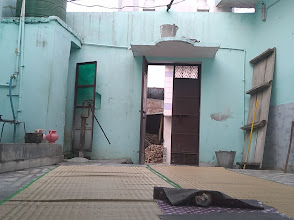
Kheda Masjid is a modest yet significant local mosque situated in the village of Gajraula, Dhampur block, Bijnor district, Uttar Pradesh. Serving as a central place of worship for the Muslim community in this rural area, it reflects the enduring Islamic heritage of the Upper Doab region, where mosques have historically fostered community gatherings and daily prayers amid the agricultural landscape.
Nestled in the verdant plains of the Upper Doab region, Kheda Masjid stands as a quiet testament to the Islamic heritage of Uttar Pradesh's Bijnor district. Situated in Gajraula village, about 10 km from the bustling town of Najibabad and 40 km from the district headquarters of Bijnor, this mosque embodies the architectural simplicity favored by rural Muslim communities during the Rohilla period. The Rohillas, Afghan-origin rulers who established dominance in the 18th century, promoted the construction of such local places of worship to foster community cohesion amid their expanding territories. The mosque's origins trace back to around 1750, coinciding with the founding of Najibabad by Nawab Najib-ud-Daula, a prominent Rohilla chieftain and Mughal ally. While grander structures like the Jama Masjid in Bijnor showcase ornate Mughal influences, Kheda Masjid prioritizes functionality over opulence. Constructed primarily from locally sourced bricks and lime mortar, it features a rectangular prayer hall (musalla) oriented toward the qibla, capable of accommodating around 100-150 worshippers during congregational prayers. A modest single minaret rises to about 15-20 meters, topped with a small dome, allowing the muezzin's call to prayer (adhan) to resonate across the surrounding farmlands. The mihrab, the niche indicating the direction of Mecca, is adorned with simple geometric stucco work, a subtle nod to Islamic prohibitions on figurative art. Unlike urban mosques with intricate calligraphy or tilework, Kheda Masjid's design emphasizes durability in a humid subtropical climate, with thick walls for ventilation and a flat roof supported by wooden beams. Rainwater harvesting channels along the eaves highlight practical adaptations to the area's seasonal monsoons. The compound includes a small ablution area (wudu khana) fed by a hand pump, essential for ritual purification before prayers. Today, Kheda Masjid remains an active hub for daily namaz, Friday jumu'ah congregations, and Ramadan taraweeh prayers, drawing the village's predominantly agricultural Muslim population. It also hosts modest community events like iftar gatherings and religious lectures (dars), preserving oral traditions of Rohilla-era folklore. Though not a major tourist draw, its unassuming presence underscores the grassroots spread of Islam in rural Uttar Pradesh, where faith intertwines with daily agrarian life. Visitors seeking authentic glimpses of regional Islamic sites will find in Kheda Masjid a serene emblem of continuity, far from the crowds of more famed monuments.
Year of Built: Not Available
Address: C4WW+C35, खेङा, Gajraula Shiv, Uttar Pradesh 246701
Country: India
State: Uttar Pradesh
District: Bijnor
Pincode: 246701
Longitude: 78.3167° E
Latitude: 29.5833° N