
Indo Islamic Heritage


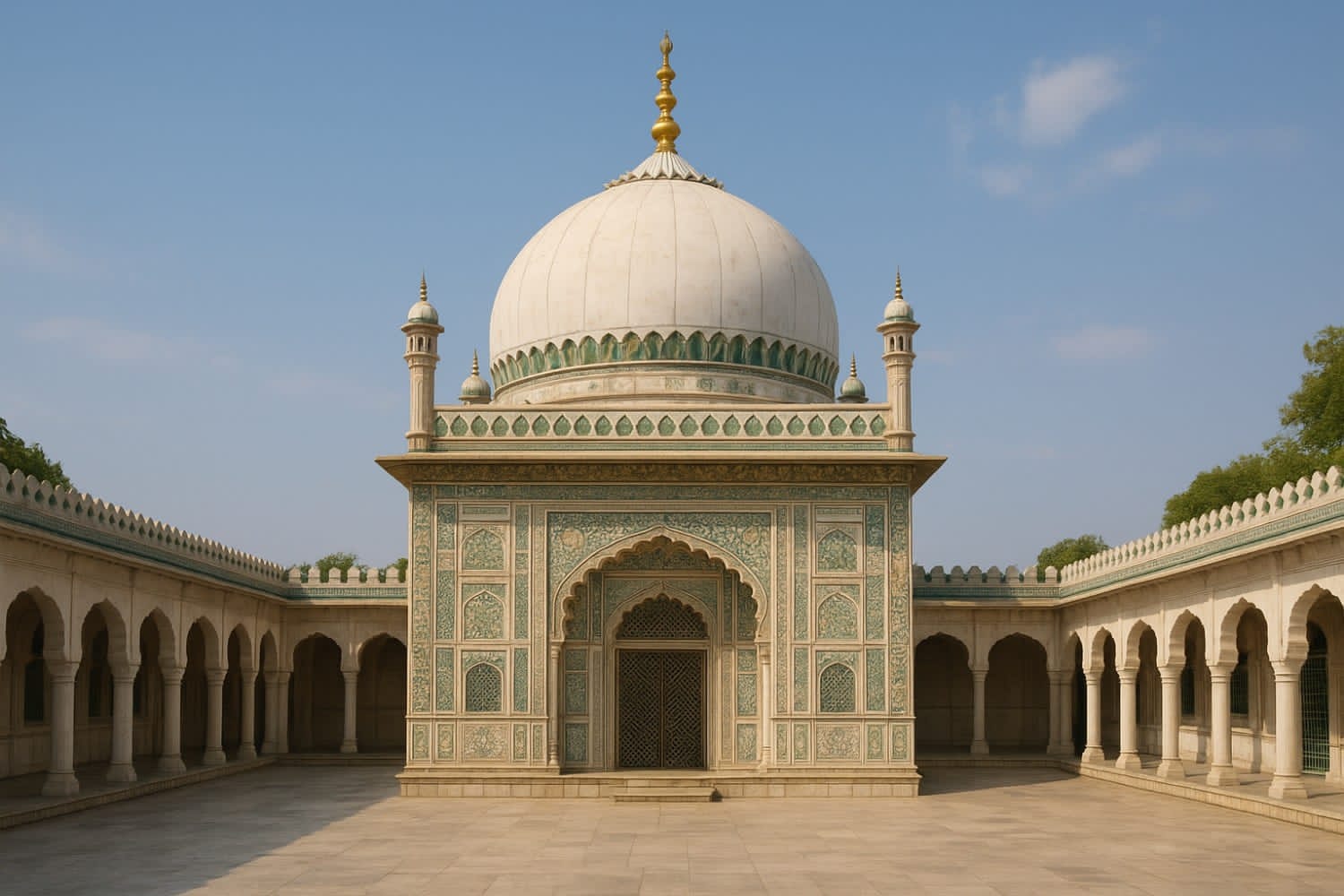
The Shia Imambara in Jamdarpur, Bijnor, Uttar Pradesh, is a modest yet significant congregation hall for the local Shia Muslim community, serving as a place for Muharram observances and religious gatherings. Constructed in the 19th century during the Nawabi era, it reflects the architectural influences of Shia heritage in Rohilkhand, featuring simple arched entrances and an open prayer space typical of smaller imambaras in rural Uttar Pradesh.
The Shia Imambara of Jamdarpur stands as a quiet testament to the enduring Shia presence in the Rohilkhand region of Uttar Pradesh, a historically diverse area shaped by Mughal, Rohilla, and Nawabi influences. Nestled in the rural village of Jamdarpur, approximately 5-7 km northeast of Bijnor town along the banks of the Ganges, this imambara functions primarily as a husayniya—a dedicated space for Shia rituals, particularly the annual commemoration of Muharram, where devotees gather to mourn the martyrdom of Imam Husayn at the Battle of Karbala in 680 CE. Built around 1850, during the waning years of Nawabi rule in nearby Awadh and the consolidation of British influence in the Doab region, the imambara was likely commissioned by local Shia landowners or merchants as part of the broader 19th-century surge in Shia religious architecture across Uttar Pradesh. This period saw the proliferation of imambaras following the examples of grander structures like Lucknow's Bara Imambara (1784), but in smaller towns and villages like Jamdarpur, designs were more utilitarian, emphasizing community assembly over opulence. The structure employs local brickwork with lime mortar, featuring a central rectangular hall flanked by arched verandas and a modest dome or flat roof supported by wooden beams—hallmarks of vernacular Indo-Islamic style adapted for rural settings. Inside, the space accommodates a mihrab (prayer niche) oriented toward Mecca and temporary setups for tazias (processional replicas of Imam Husayn's tomb) during Ashura processions. Historically, Bijnor and its surrounding villages, including Jamdarpur, fell under Rohilla Pashtun control in the 18th century before British annexation in 1805. The Rohillas, though predominantly Sunni, coexisted with Shia communities influenced by Awadh's Shia Nawabs, fostering such sites as centers for cultural and religious life. The imambara's construction aligns with this syncretic environment, where Shia practices blended with local traditions, providing not just spiritual solace but also social cohesion in agrarian communities reliant on the Ganges for irrigation and trade. Today, the imambara remains an active site for the village's Shia population, hosting majlis (mourning assemblies) and nohas (lamentation recitations) during Muharram, as well as daily prayers and community events. Its unassuming facade belies its role in preserving Shia oral histories and rituals, making it a vital link to India's pluralistic Islamic heritage. Visitors to Bijnor, drawn by the district's Indo-Saracenic landmarks, often overlook such village gems, yet the Jamdarpur Imambara offers an intimate glimpse into the lived faith of Uttar Pradesh's Shia heartland.
Year of Built: Not Available
Address: C4MJ+FWH, Jamdarpur, Uttar Pradesh 246701
Country: India
State: Uttar Pradesh
District: Bijnor
Pincode: 246701
Longitude: 78.1358° E
Latitude: 29.385°N