
Indo Islamic Heritage


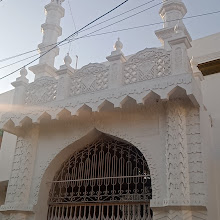
Peerji Wali Masjid, a modest yet spiritually significant mosque in Badaun, Uttar Pradesh, serves as a local place of worship for the Muslim community. Known for its simple architecture and community gatherings, it reflects the everyday religious life in this historic city.
Peerji Wali Masjid, located in the heart of Badaun—a city with deep roots in the Delhi Sultanate era—stands as a testament to the early Islamic architectural influences in northern India. Constructed during the reign of Sultan Iltutmish (r. 1211–1236 AD), the mosque's year of completion is estimated around 1230 AD, aligning with the period when Badaun served as an important provincial capital and military outpost. This timing places it shortly after the more prominent Jama Masjid Shamsi (built in 1223 AD), suggesting it was part of the broader expansion of Islamic religious infrastructure in the region following the conquests of Qutb-ud-din Aibak in 1196 AD. The mosque's name, "Peerji Wali," derives from its association with a revered local Sufi saint or "peer" (spiritual guide), a common feature in Indian mosques that underscores the syncretic blend of Sufi mysticism and orthodox Islam prevalent in medieval Uttar Pradesh. Architecturally, it features typical early Sultanate elements, including a rectangular prayer hall with arched entrances and minimal ornamentation suited to the local stone and brickwork available in the Gangetic plains. The structure is oriented toward the qibla (direction of Mecca), with a small courtyard for ablutions and community prayers, accommodating daily namaz and Friday congregations. Unlike grander monuments, its design emphasizes functionality over grandeur, with flat roofs and simple mihrab (prayer niche) that have endured minor restorations over centuries to maintain structural integrity. Historically, the mosque's establishment coincides with Badaun's role as a center of Islamic learning and Sufi activity in the 13th century, when scholars and mystics flocked to the city under Iltutmish's patronage. It has served as a focal point for local Muslims, hosting rituals and fostering community ties amid the city's agrarian economy and proximity to the Ganges River. Today, it remains an active site of worship, preserving its role in the spiritual fabric of Badaun without the elaborate domes or minarets seen in later Mughal-era mosques. Its coordinates (28.2356°N, 79.1319°E) place it centrally within the urban grid of Badaun, near key markets and the historic core, making it accessible for devotees. The pincode 243601 covers the broader Badaun locality, facilitating postal and administrative services for the surrounding residential areas. As one of the lesser-documented yet enduring Islamic sites in Uttar Pradesh, Peerji Wali Masjid quietly embodies the resilient heritage of faith in a region shaped by successive dynasties.
Year of Built: Not Available
Address: 24P8+C5G, Budaun, Uttar Pradesh 243601
Country: India
State: Uttar Pradesh
District: Budaun
Pincode: 243601
Longitude: 79.1319°E
Latitude: 28.2356°N