
Indo Islamic Heritage


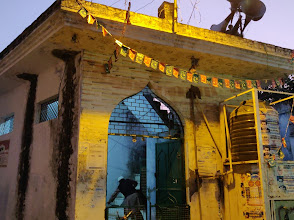
Sadat Wali Masjid is a historic mosque in Badaun, Uttar Pradesh, associated with Sufi traditions and named after a revered saint or lineage of Sayyids (descendants of the Prophet Muhammad). It serves as a key site for prayer and spiritual reflection, reflecting the rich Islamic heritage of the region during the Delhi Sultanate era. Built in the early 13th century, it features traditional Indo-Islamic architecture with simple yet elegant domes and minarets, accommodating local congregations in a serene setting.
Sadat Wali Masjid, located in the heart of Badaun's historic Sotha Mohalla, stands as a testament to the early Islamic architectural legacy in northern India. Constructed in 1223 CE under the patronage of Sultan Shamsuddin Iltutmish during his governorship of Badaun, the mosque was part of the broader expansion of Muslim religious infrastructure in the Delhi Sultanate's frontier outposts. Iltutmish, who later ascended as Sultan of Delhi, oversaw its erection alongside the grand Jama Masjid Shamsi in the same vicinity, marking Badaun as a pivotal center for Islamic learning and governance. The name "Sadat Wali" derives from its dedication to a Sufi saint or the Sadat lineage, emphasizing its role in fostering spiritual devotion among the local Muslim community. Architecturally, the mosque embodies the transitional Indo-Islamic style prevalent in the 13th century, blending Persian influences with local elements. It features a rectangular prayer hall with a prominent central dome flanked by smaller ones, supported by sturdy brick arches and sandstone facades. The mihrab, oriented towards Mecca, is adorned with intricate geometric carvings, while the courtyard includes a hauz (ablution pool) for ritual purification. Though modest in scale compared to the adjacent Jama Masjid, it can accommodate up to 500 worshippers and hosts daily prayers, Jumu'ah congregations, and occasional Sufi gatherings. The structure has undergone minor restorations in the 14th and 19th centuries to preserve its integrity against environmental wear. As a protected heritage site under the Archaeological Survey of India, Sadat Wali Masjid contributes to Badaun's status as a hub of medieval Islamic history. It was here that future rulers like Rukn-ud-din Firuz and Razia Sultana, children of Iltutmish, spent their early years, underscoring the city's political significance until the 17th century. Today, the mosque remains a focal point for the faithful, offering a tranquil space amid Badaun's bustling old town, where the call to prayer echoes the enduring spiritual traditions of the Sultanate period.
Year of Built: Not Available
Address: 24PC+88V, Budaun, Uttar Pradesh 243601
Country: India
State: Uttar Pradesh
District: Budaun
Pincode: 243601
Longitude: 79.1311° E
Latitude: 28.2333° N