
Indo Islamic Heritage


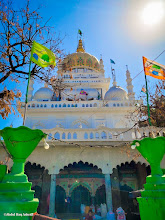
The Holy Shrine of Bade Sarkar, also known as the Dargah of Sayyed Hassan (Bade Sarkar), is a revered 13th-century Sufi mausoleum in Badaun, Uttar Pradesh. It honors Sayyed Hassan, a descendant of Imam Ali ibn Abi Talib and a key figure in the Suhrawardi order of Sufism in India. The shrine, located on the banks of the Sot River, attracts devotees for its spiritual legacy and annual Urs celebrations, serving as a center for interfaith harmony and pilgrimage.
The Holy Shrine of Bade Sarkar stands as one of Badaun's most sacred Islamic sites, embodying the city's deep-rooted Sufi heritage. Badaun, a medieval center in Uttar Pradesh's Rohilkhand region, emerged as a hub of Islamic spirituality in the 13th century under the Delhi Sultanate. The shrine commemorates Sayyed Hassan, affectionately called Bade Sarkar (Elder Saint), born around 1215 CE in Yemen to a royal Arab lineage. From a young age, he immersed himself in religious pursuits, eventually migrating to India where he became a pivotal propagator of the Suhrawardi Sufi order. Prior to his arrival, this mystical tradition was largely confined to Bengal and Nagaur; Hassan's efforts firmly established it in northern India, particularly in Badaun, influencing the spread of Sufism across the subcontinent. The dargah, constructed in the mid-13th century following Hassan's death, houses his grave alongside that of his brother, Sayyed Shah Vilayat (Chhote Sarkar), in a complex that reflects early Indo-Islamic architecture. Positioned on the eastern bank of the Sot River—a tributary of the Ganges—the site was chosen for its serene riverside location, enhancing its role as a place of contemplation and devotion. The mausoleum features simple yet elegant Sufi design elements, including arched entrances and a central tomb chamber, typical of the era's unadorned spiritual spaces that prioritize inner reflection over opulence. Devotees visit for ziyarat (pilgrimage), offering prayers and seeking blessings, with the atmosphere fostering a sense of peace and communal unity. Annually, the shrine hosts the Urs—Hassan's death anniversary—on the 24th of Ramadan, drawing thousands for qawwali recitations, prayers, and feasts that underscore Sufi principles of love and tolerance. Legends enrich its lore; Mughal Emperor Akbar is said to have visited the nearby Chhote Sarkar shrine, praying for a male heir, which ties the site to broader imperial history. As a protected heritage spot, the dargah continues to symbolize Badaun's identity as a "city of saints," preserving the legacy of Sufi saints who bridged cultural divides in medieval India. Today, it remains a vital local mosque and pilgrimage center, open daily for namaz and spiritual gatherings.
Year of Built: 13th Century
Address: 24J4+9XM, Budaun, Uttar Pradesh 243601
Country: India
State: Uttar Pradesh
District: Budaun
Pincode: 243601
Longitude: 79.1205° E
Latitude: 28.0337° N