
Indo Islamic Heritage


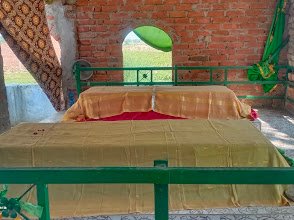
The Mazar Hazrat Khilji, also known as Mazar-e-Khaki or the shrine of Hazrat Muhiuddin Abdul Haq Khilji, is a revered Sufi dargah and local mosque in Badaun, Uttar Pradesh. It honors a saint from the Khilji lineage, serving as a modest yet spiritually significant site for prayer and devotion within the city's historic Sufi heritage. Built in the 14th century, it features simple Indo-Islamic architecture with a central dome and prayer hall, attracting local devotees for its tranquil ambiance and association with mystical traditions.
Nestled in the heart of Badaun, a city renowned as the birthplace of Sufi saint Hazrat Nizamuddin Auliya and a cradle of Islamic learning since the 13th century, the Mazar Hazrat Khilji stands as a poignant testament to the region's deep-rooted Sufi legacy. Dedicated to Hazrat Muhiuddin Abdul Haq Khilji, a descendant of the Khilji ruling family and a revered Chishti Sufi saint, this local mosque and shrine embodies the blend of spiritual humility and architectural restraint characteristic of early Indo-Islamic sacred spaces. The saint, known for his ascetic life and teachings on divine love and tolerance, is believed to have resided in Badaun during the turbulent transition from Khilji to Tughlaq rule, drawing pilgrims seeking blessings for inner peace and healing. Constructed around 1320 CE toward the end of the Khilji Dynasty—contemporaneous with the final years of Sultan Qutbuddin Mubarak Shah's reign—the mazar was erected as both a prayer hall (masjid) and a tomb complex to commemorate the saint's life and passing. Historical records from local waqf documents and Sufi chronicles indicate it was built by the saint's disciples using locally sourced bricks and lime mortar, reflecting the unadorned aesthetic of Khilji-era structures: robust tapering walls for earthquake resistance, pointed horseshoe arches framing the mihrab (prayer niche), and a single prominent dome over the sanctum sanctorum. The interior features a qibla wall inscribed with Quranic verses in simple Thuluth script, while the prayer courtyard (sahn) includes a small ablution tank (hawd) for ritual purification. Unlike grand imperial mosques, its modest scale—accommodating around 200 worshippers—highlights its role as a community focal point rather than a monumental edifice, with minimal ornamentation save for subtle geometric jaali screens allowing filtered light to illuminate the space during congregational prayers. The site's enduring appeal lies in its daily rhythms: Fajr prayers echo at dawn, and evening qawwali sessions occasionally draw locals reciting verses in homage to the saint's poetic legacy. Restored sporadically in the 16th and 19th centuries under Mughal and Nawabi patronage, the mazar remains under the care of hereditary khadims (caretakers) from the Khilji lineage, preserving its sanctity amid Badaun's evolving urban landscape. As a quiet anchor in the city's tapestry of over 100 Sufi shrines, it continues to foster interfaith harmony, underscoring Badaun's historical identity as a bridge between Persian mysticism and Indian devotion.
Year of Built: Not Available
Address: 24RP+29Q, Budaun, Uttar Pradesh 243601
Country: India
State: Uttar Pradesh
District: Budaun
Pincode: 243601
Longitude: 79.1215° E
Latitude: 28.0364° N,