
Indo Islamic Heritage


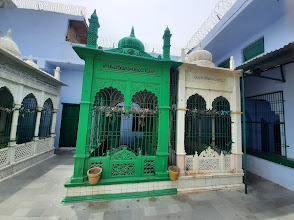
The Mazar of Hazrat Shah Nasir-ud-din Hasan Sahab, also revered as Bade Sarkar or Sultan ul Arfeen, is a historic Sufi shrine and local mosque complex in Badaun, Uttar Pradesh. Dedicated to the 13th-century Chishti saint, it serves as a serene place of worship and spiritual reflection, featuring a mosque for daily prayers and the saint's tomb. Built in 1230 CE, it attracts devotees for its annual Urs celebrations and remains a key site for the local Muslim community.
The Mazar Hazrat Shah Nasir-ud-din Hasan Sahab, commonly known as Bade Sarkar Dargah, stands as one of the oldest Sufi shrines in northern India, embodying the Chishti order's emphasis on devotion, humility, and spiritual guidance. Located on the banks of the Sot River in Badaun, the site functions primarily as a local mosque and mausoleum, where the faithful gather for namaz (prayers) in its simple yet elegant prayer hall and to pay respects at the saint's grave. The complex includes the central mazar (tomb) enclosed in a domed structure, adjacent to the mosque's mihrab (prayer niche) and minbar (pulpit), fostering a space for both ritual worship and quiet contemplation. Hazrat Shah Nasir-ud-din Hasan Sahab, born in 1188 CE and passing in 1230 CE, was a prominent Sufi mystic and scholar from Badaun. Originally named Hasan, he earned the title "Sultan ul Arfeen" (King of the Knowers of God) from his spiritual mentor, Khwaja Qutbuddin Bakhtiar Kaki, a key figure in the Chishti silsila (lineage). He pledged allegiance to Hazrat Qazi Hamiduddin Nagori and received spiritual succession (khilafat) and the Sufi cloak (khirqah) from him. Guided by his master, he settled in Badaun, dedicating his life to teaching and ascetic practices, which drew seekers from across the region. His younger brother, Shah Vilayat Badruddin (Chote Sarkar), became his disciple and successor, further extending the spiritual legacy at a nearby site. The present structure of the mazar and mosque was constructed in 628 Hijri (1230 CE), coinciding with the saint's wafat (demise), under the patronage of Sultan Nasiruddin Mahmud—the fifth son of Delhi Sultan Iltutmish. This royal involvement underscores the shrine's early prominence during the Delhi Sultanate era, when Sufi centers like this one bridged imperial courts and local communities. The architecture reflects early Indo-Islamic influences, with a modest brick-and-lime build featuring arched entrances, a central dome over the tomb, and open courtyards for congregational prayers. The mosque within the complex, though not elaborately ornamented, includes traditional elements like qibla-aligned walls and space for wudu (ablution), making it a functional hub for Badaun's residents. Today, the site hosts the annual Urs (death anniversary commemoration) of Bade Sarkar, marked by qawwali (devotional music), prayers, and communal feasts, drawing pilgrims while serving as an everyday mosque for the neighborhood. Its location along NH 21 ensures accessibility, reinforcing its role as a living testament to Badaun's Islamic heritage. Devotees observe the "chilla"—a 40-day spiritual retreat—offering roses at the mazar for intercession, preserving the saint's tradition of divine proximity. As a verified historical landmark, the mazar-mosque complex highlights the enduring Chishti influence in Uttar Pradesh, focused solely on worship, reflection, and the saint's legacy of gnosis (arif).
Year of Built: 1230 C.E
Address: 24VF+274, Budaun, Uttar Pradesh 243601
Country: India
State: Uttar Pradesh
District: Budaun
Pincode: 243601
Longitude: 79.10771° E
Latitude: 28.03117° N