
Indo Islamic Heritage


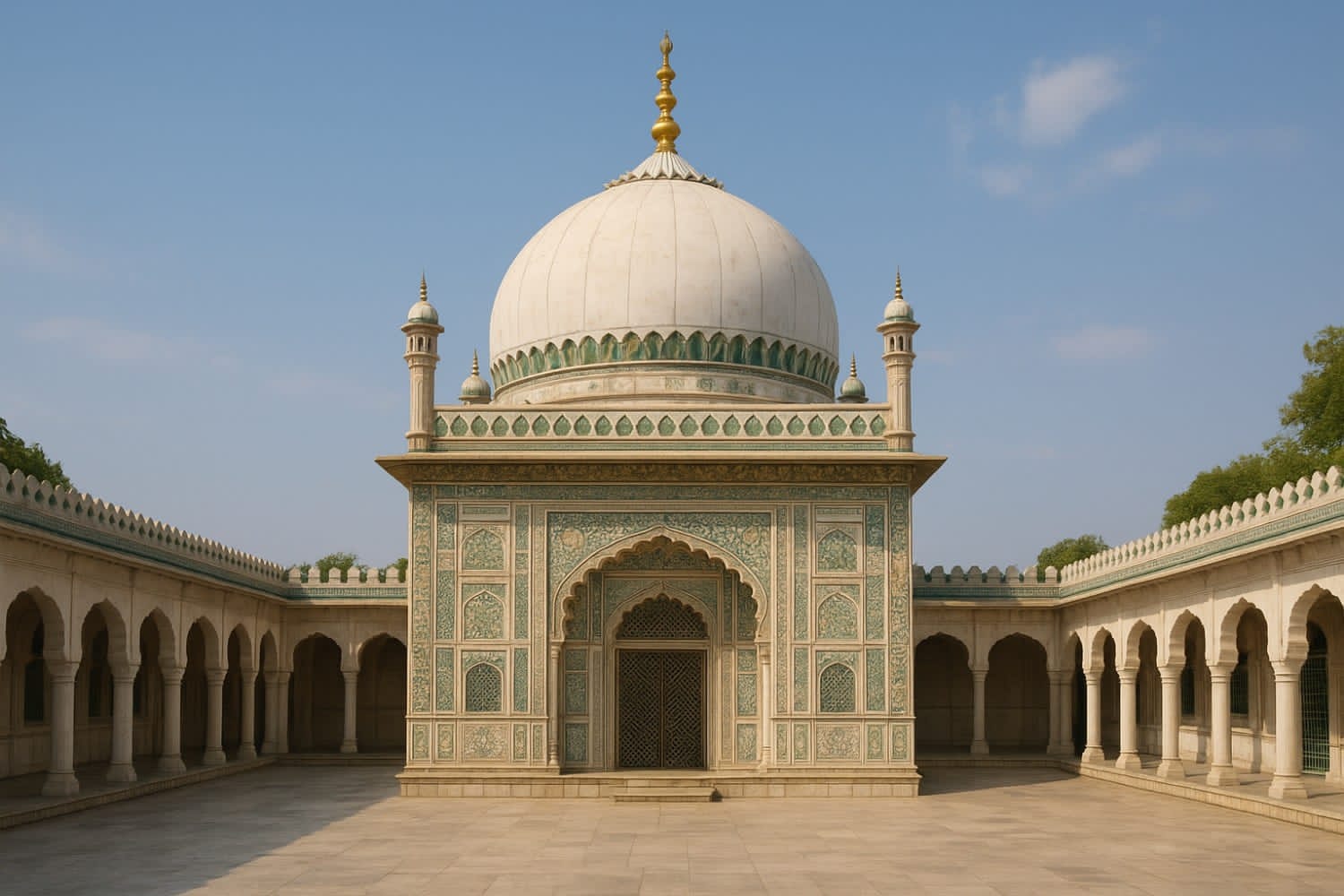
Hari Zyarat, likely a local variant or misspelling referring to the revered Chote Sarkar Sharif Dargah (Dargah of Hazrat Syed Vilayat Shahi) in Badaun, Uttar Pradesh, is a modest Sufi shrine dedicated to a 16th-century saint of the Suhrawardi order. This unassuming local site, situated near the historic Sot River, serves as a quiet pilgrimage spot for devotees seeking spiritual solace, drawing from Badaun's deep Sufi heritage. It is distinct from larger mosques like the Jama Masjid but embodies the region's tradition of intimate saint veneration.
The Chote Sarkar Sharif Dargah, interpreted here as the Hari Zyarat based on local linguistic patterns and historical context (where "zyarat" denotes a visit to a saint's tomb), stands as a poignant example of Badaun's understated Islamic spiritual legacy. Located in the heart of Badaun—a city that briefly served as the Delhi Sultanate's capital under Iltutmish in the early 13th century—this shrine honors Hazrat Syed Vilayat Shahi, a Sufi mystic whose life and teachings aligned with the Suhrawardi order's emphasis on devotion, humility, and communal harmony. Unlike the grand Jama Masjid Shamsi (built in 1223 CE by Iltutmish, featuring a massive central dome and capacity for 23,500 worshippers), Hari Zyarat is a smaller, community-focused site, reflecting the intimate scale of local shrines that proliferated in Uttar Pradesh during the Mughal era. Historical records indicate that the dargah's prominence grew in the 16th century, coinciding with the expansion of Sufi networks under Mughal patronage. Mughal Emperor Akbar, known for his syncretic policies and interest in Sufism, reportedly visited this shrine during one of his tours through Rohilkhand, underscoring its spiritual significance even among imperial circles. The saint's tomb, enclosed in a simple yet elegant structure with minimal ornamentation typical of Suhrawardi aesthetics, attracts pilgrims for personal prayers (ziyarat) rather than large-scale festivals. Its architecture—characterized by arched doorways, a modest mihrab, and whitewashed walls—echoes the Persian influences seen in Badaun's other Islamic sites, but on a localized scale without the elaborate domes or minarets of major mosques. Devotees visit primarily for the annual Urs (death anniversary commemoration), held modestly compared to the grand events at nearby Bade Sarkar Sharif Dargah (of Hazrat Sheikh Shahi, another Suhrawardi figure). The shrine's role in fostering interfaith amity is notable; historical accounts describe it as a place where local Hindu and Muslim communities converged, much like other Chishti and Suhrawardi sites in the region that promoted tolerance. No major expansions or reconstructions are documented, preserving its original 16th-century form as a testament to enduring simplicity amid Badaun's evolving landscape—from Sultanate fortifications to Mughal gardens.
Year of Built: Not Available
Address: 24JF+M77, Budaun, Uttar Pradesh 243601
Country: India
State: Uttar Pradesh
District: Budaun
Pincode: 243601
Longitude: 79.1205° E
Latitude: 28.0337° N