
Indo Islamic Heritage


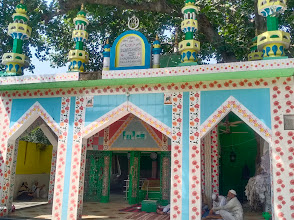
The Dargah of Hazrat Shah Vilayat Badruddin, also known as Chote Sarkar, is a revered local Sufi shrine in Badaun, Uttar Pradesh, dedicated to the 13th-century saint Shah Vilayat Badruddin Chishti. As a prominent spiritual successor in the Chishti order, the shrine serves as a center for devotion, drawing pilgrims for its annual Urs celebrations and emphasis on Sufi teachings of love and unity. Built in the early 13th century, it embodies Badaun's legacy as a hub of Islamic mysticism.
Nestled on the banks of the Sot River in the historic city of Badaun, the Dargah of Hazrat Shah Vilayat Badruddin—affectionately called Chote Sarkar (Younger Saint)—stands as a quiet testament to the Sufi heritage that has defined Uttar Pradesh's spiritual landscape for centuries. This local shrine honors Shah Vilayat Badruddin Chishti, a distinguished disciple and spiritual heir of his elder brother, Khwaja Hasan Chishti (known as Bade Sarkar or Sultan ul Arfeen), who was himself a key figure in propagating the Chishti order in northern India during the Delhi Sultanate era. Shah Vilayat Badruddin, born into a family tracing descent from Prophet Muhammad through Hazrat Ali ibn Abi Talib, was a contemporary of influential Sufi masters like Khwaja Qutbuddin Bakhtiyar Kaki. Under his brother's guidance, he embraced the path of mysticism, focusing on devotion, humility, and service to humanity—core tenets of the Chishti silsila (lineage). He also received direct spiritual succession from Khwaja Qutbuddin Bakhtiyar Kaki, strengthening the order's foothold in Badaun, which was then a vital frontier post of the Delhi Sultanate. The saint's life and teachings emphasized tawhid (unity of God) and interfaith harmony, attracting devotees from diverse backgrounds, a tradition that persists today with visitors of all faiths seeking blessings at the site. The shrine's construction dates to 1230 CE (628 Hijri), commissioned by Sultan Nasiruddin Mahmud, the fifth son of Sultan Iltutmish, who held deep reverence for the Chishti saints. This places it among Badaun's earliest Sufi monuments, contemporaneous with the city's grand Jama Masjid Shamsi, built in 1223 CE. The dargah complex features a simple yet evocative Indo-Islamic architecture, with a central tomb (mazar) draped in green chadar, surrounded by a serene courtyard ideal for zikr (remembrance of God) and quiet reflection. Though modest compared to larger shrines, its riverside location enhances its tranquil ambiance, evoking the humility of early Sufi khanqahs. Annually, the Urs of Chote Sarkar on the 22nd of Ramadan draws thousands for qawwali sessions, langar (communal feasts), and prayers, commemorating the saint's union with the divine. As part of Badaun's constellation of Sufi sites—including the adjacent Dargah of Bade Sarkar—this shrine underscores the city's medieval role as "Madinat ul Awliya" (City of Saints), fostering a legacy of spiritual inclusivity amid the Rohilkhand region's turbulent history. Today, it remains a vital local beacon for those pursuing inner peace through Sufi praxis, preserving verified traditions without embellishment.
Year of Built: Not Available
Address: 24P5+M23, Budaun, Uttar Pradesh 243601
Country: India
State: Uttar Pradesh
District: Budaun
Pincode: 243601
Longitude: 79.1205° E
Latitude: 28.0337° N