
Indo Islamic Heritage


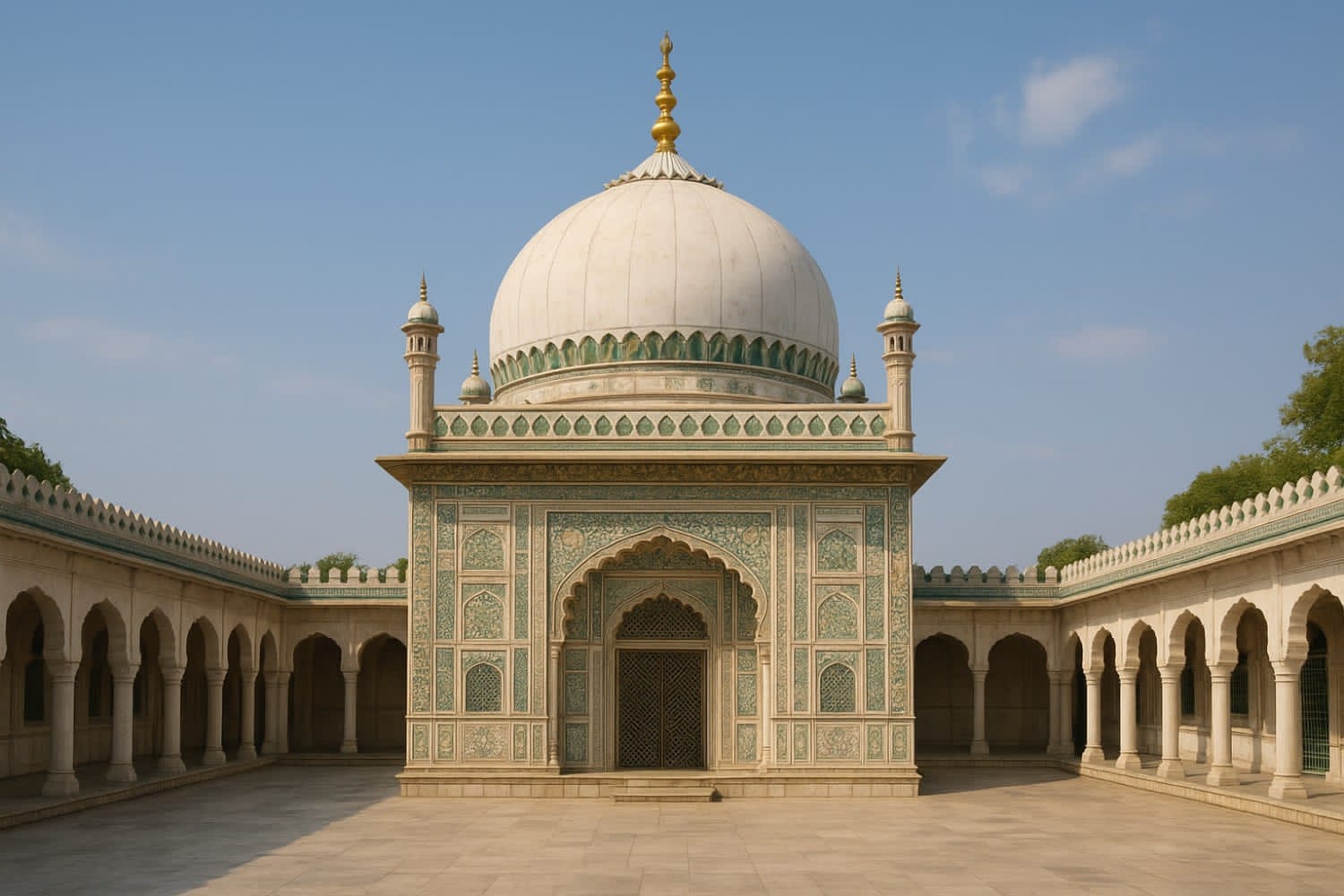
The Dargah of Hazrat Banne Miyan Shah Baba, also known as Banno Bi, is a revered local Sufi shrine in Badaun, Uttar Pradesh, dedicated to the sister of the prominent 13th-century saints Sayyed Hassan (Bade Sarkar) and Shah Vilayat (Chhote Sarkar). Situated under a canopy of ancient banyan trees, it forms part of the historic cluster of mid-13th-century ziyarats that highlight Badaun's significance as a center of Islamic mysticism. Devotees visit for spiritual solace, particularly during ecstatic rituals like assar, where pilgrims circumambulate the graves in trance-like devotion.
Badaun, a medieval city in western Uttar Pradesh, holds profound historical importance in Indian Sufism, with its shrines tracing back to the mid-13th century during the Delhi Sultanate era. Among these sacred sites, the Dargah of Hazrat Banne Miyan Shah Baba—affectionately called Banno Bi—stands as a poignant testament to familial spiritual legacy and communal devotion. As the sister of the esteemed Sufi brothers Sayyed Hassan (titled Sultan ul Arfeen or Bade Sarkar, born 1188 CE in Bukhara and passed in 1230 CE) and Shah Vilayat Saheb (Chhote Sarkar), Banno Bi's shrine is an integral part of this trio of graves, symbolizing the intertwined paths of divine love and asceticism in the Chishti and Suhrawardiyya traditions. The shrine's origins are rooted in the arrival of the saintly siblings in Badaun around the early 13th century. Sayyed Hassan, a descendant of Prophet Muhammad through Hazrat Ali, was initiated into Sufism under masters like Hazrat Qutbuddin Bakhtiar Kaki and Hazrat Kazi Hamiduddin Nagori. Guided by divine inspiration, he settled in Badaun, where he spent his final years in contemplation and service. His brother Shah Vilayat, a disciple of the same lineage, joined him, and their sister Banno Bi shared in their spiritual pursuits. The mausoleum complex, including Banno Bi's grave, was constructed in 1230 CE under the patronage of Sultan Nasiruddin Mahmud, the fifth son of Sultan Iltutmish, who held deep reverence for the Chishti order. This structure, built on the banks of the Sot River, reflects early Indo-Islamic architecture with simple yet enduring elements like arched canopies and stone enclosures, emphasizing humility over opulence. Hazrat Banne Miyan Shah Baba's dargah, shaded by sprawling banyan trees, evokes an atmosphere of timeless serenity. It is slightly offset from her brothers' more prominent tombs, underscoring her role as a quiet pillar of familial piety. Devotees, drawn from diverse backgrounds, frequent the site for ziyarat (pilgrimage), offering prayers and chadar (offerings) at the grave. The shrine is particularly vibrant during the annual Urs celebrations commemorating the saints' union with the divine, held in the Islamic month of Ramadan, where qawwali sessions and communal feasts foster interfaith harmony. Rituals like assar—prolonged ecstatic circumambulations linking Banno Bi's grave with those of Bade Sarkar, Chhote Sarkar, and contemporaries such as "Compounder Sahib" and "Doctor Sahib"—highlight the shrine's living tradition of mystical immersion, where participants enter meditative states lasting hours. Today, the dargah remains a modest yet magnetic local beacon, preserving the essence of 13th-century Sufi ethos amid Badaun's evolving landscape. Its location by the Sot River enhances its spiritual aura, inviting reflection on themes of unity, endurance, and transcendence central to Islamic heritage in India.
Year of Built: Not Available
Address: 24MF+F5X, Budaun, Uttar Pradesh 243601
Country: India
State: Uttar Pradesh
District: Budaun
Pincode: 243601
Longitude: 79.1313° E
Latitude: 28.2363° N