
Indo Islamic Heritage


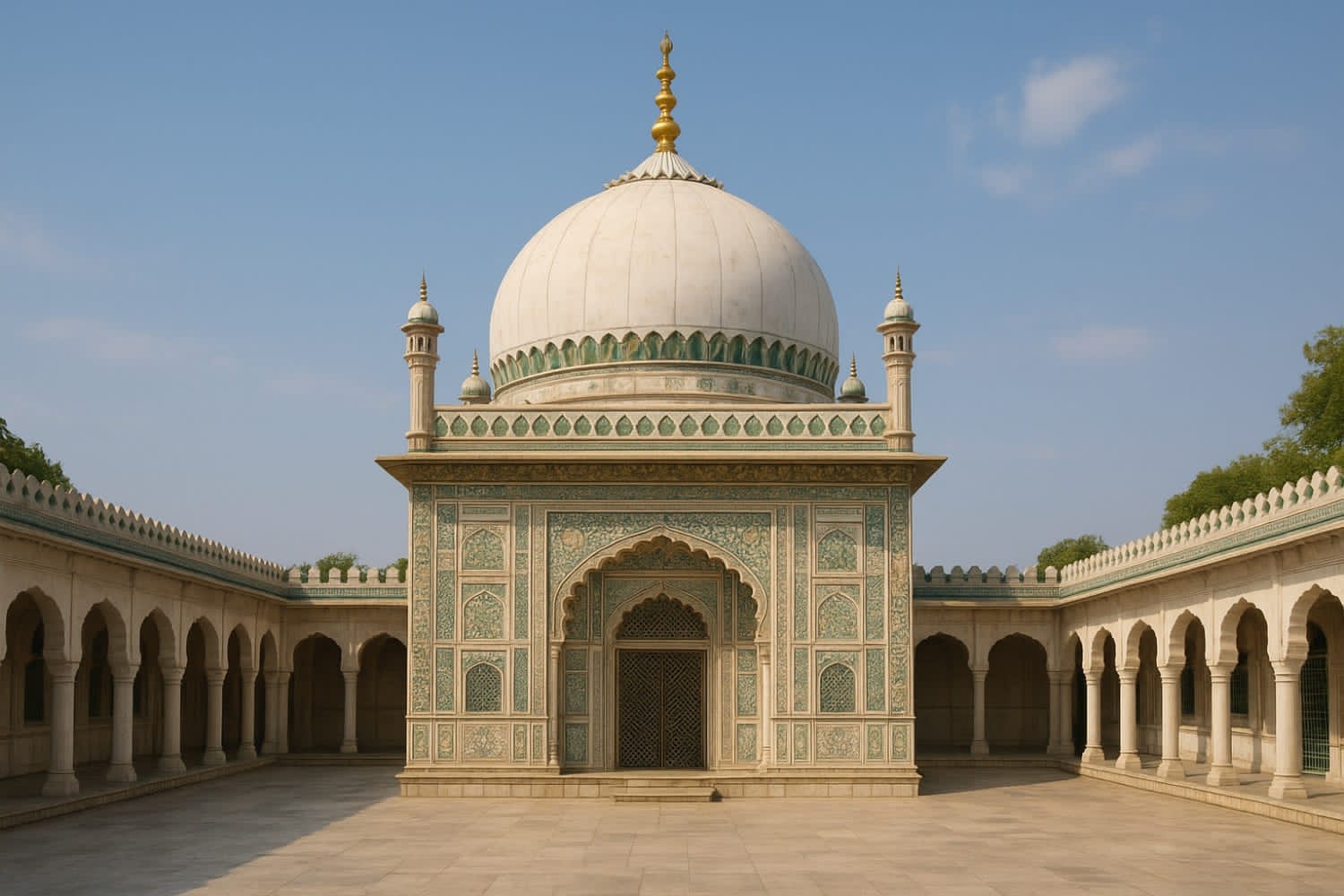
The Dargah of Hazrat Banne Miyan Shah Baba (also referred to as Banke Miyan in local traditions) is a revered local Sufi shrine in Badaun, Uttar Pradesh, associated with the city's cluster of 13th-century Islamic holy sites. It serves as a modest mausoleum and place of devotion, drawing pilgrims for its spiritual ambiance amid the graves of contemporary saints. The shrine emphasizes quiet reflection, prayer, and the Sufi practice of assar (ecstatic trance), reflecting Badaun's enduring legacy as a center of Islamic mysticism.
Nestled in the historic city of Badaun—one of India's holiest Muslim locales in western Uttar Pradesh—the Dargah of Hazrat Banne Miyan Shah Baba stands as a poignant testament to the region's Sufi heritage. Dating to the mid-13th century, this local shrine is part of a sacred complex that includes the prominent tombs of Sayyed Hassan (Bade Sarkar) and his brother Shah Vilayat Saheb (Chhote Sarkar), both erected around 1230–1250 CE during the Delhi Sultanate era under Iltutmish's influence. Badaun, known anciently as "Bedamouth" in inscriptions now housed in Lucknow Museum, emerged as a key hub for Islamic learning and mysticism by the 1200s, attracting scholars and saints from Central Asia, Yemen, and beyond. The shrine's construction aligns with this period, when Sufi orders like the Chishti silsila flourished, fostering khanqahs (spiritual hospices) and madrasas along the Sot River. Hazrat Banne Miyan Shah Baba's dargah, though smaller and less documented than its neighbors, is revered as the resting place of a contemporary saint whose legacy intertwines with Badaun's pantheon of auliya (friends of God). Historical accounts describe pilgrims traversing from the grander Bade Sarkar mausoleum—built in 628 Hijri (1230 CE) by Sultan Nasiruddin Mahmud, son of Iltutmish—to this site, invoking blessings under banyan canopies that shade related graves like those of Banno Bi (sister of the Sarkar brothers). The shrine's architecture is simple yet evocative of early Indo-Islamic styles: a low-domed enclosure with minimal ornamentation, emphasizing humility over grandeur, typical of local Sufi tombs from the era. No elaborate minarets or iwans mark it, but its sanctity lies in its role as a conduit for spiritual ecstasy, where devotees enter assar—a trance-like state of divine communion—circulating between graves for hours in silent supplication. As a focal point for prayer and zikr (remembrance of God), the dargah hosts informal gatherings rather than large urs festivals, underscoring its status as a "local" gem amid Badaun's more famed sites. Devotees, including Muslims and adherents of other faiths, visit for personal vows, offering roses and seeking intercession, much like at the nearby Chhote Sarkar shrine (Pincode 243601). The site's coordinates place it in Qabool Pura, a quiet riverside enclave, accessible via Badaun's old town lanes. While exact records of Banne Miyan Shah Baba's life remain oral and tied to the Sarkar lineage—descended from Prophet Muhammad through Hazrat Ali—the shrine endures as a symbol of Badaun's unyielding Sufi spirit, where the dust of these 13th-century saints continues to inspire inner reform and communal harmony. Today, it remains a serene retreat, preserving the essence of India's medieval Islamic landscape without the crowds of grander monuments.
Year of Built: Not Available
Address: 24MF+F5X, Budaun, Uttar Pradesh 243601
Country: India
State: Uttar Pradesh
District: Budaun
Pincode: 243601
Longitude: 79.1263° E
Latitude: 28.0362° N