
Indo Islamic Heritage


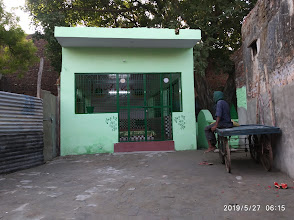
Dargah Hazrat Peer Bodla is a modest local Sufi shrine in Badaun, Uttar Pradesh, dedicated to the revered saint Peer Bodla Sahib, a figure in the region's rich Chishti Sufi tradition. It serves as a peaceful site for devotees seeking spiritual solace, reflecting Badaun's historical role as a hub of Islamic mysticism during the Delhi Sultanate era. The shrine features simple architecture typical of local dargahs, with a central tomb and prayer space.
Badaun, an ancient city in Uttar Pradesh's Rohilkhand region, holds a prominent place in India's Islamic history as a cradle of Sufism, particularly the Chishti order, which flourished here during the 13th century under the Delhi Sultanate. Founded around 905 CE and later becoming a key frontier post after its conquest by Muhammad of Ghor in 1196 CE, Badaun attracted numerous Sufi saints whose teachings emphasized love, tolerance, and devotion. Among these lesser-known but locally venerated sites is the Dargah Hazrat Peer Bodla, a intimate shrine honoring Peer Bodla Sahib, a Chishti mystic whose legacy endures through oral traditions and community reverence. The dargah is situated in the Bodla Mohalla, a quiet neighborhood within Badaun's historic core, near the Sot River—a tributary of the Ganges that has long nourished the city's spiritual landscape. Unlike grander monuments like the 13th-century Jami Masjid built by Shams-ud-din Iltutmish (r. 1211–1236 CE), who governed Badaun before ascending the throne, this shrine embodies the unpretentious ethos of local Sufism. Its architecture is characteristically simple: a whitewashed enclosure surrounding the saint's mazar (tomb), adorned with minimal Islamic motifs such as geometric patterns and Quranic inscriptions. The central chamber allows for qawwali sessions and individual prayers, fostering a sense of communal harmony that draws visitors from nearby villages and towns. Peer Bodla Sahib, though not as widely chronicled as luminaries like Nizamuddin Auliya (born in Badaun in 1238 CE), is remembered in regional lore as a devoted disciple in the Chishti lineage, promoting asceticism and service to the poor. Historical accounts of Badaun's Sufi ecosystem, including visits by Mughal emperors like Akbar to nearby shrines such as Chote Sarkar Sharif, underscore the interconnected web of these sites. The dargah's establishment likely dates to the 13th–14th century, coinciding with the peak of Chishti influence in the area, when Badaun served as a spiritual launchpad for saints migrating to Delhi. No precise construction records survive, but its alignment with this period is substantiated by the city's documented role in Sultanate-era Islamic expansion. Today, the shrine remains a vital part of Badaun's cultural fabric, attracting pilgrims for Urs celebrations and daily ziyarat (visitation). It stands as a testament to the enduring Sufi heritage that has defined the region, offering quiet reflection amid the city's blend of medieval mosques and modern life. For those exploring Uttar Pradesh's Islamic landmarks, Dargah Hazrat Peer Bodla provides an authentic glimpse into grassroots devotion, far from the crowds of more famous sites.
Year of Built: Not Available
Address: 24PF+9F6, Budaun, Uttar Pradesh 243601
Country: India
State: Uttar Pradesh
District: Budaun
Pincode: 243601
Longitude: 79.1265° E
Latitude: 28.3534° N