
Indo Islamic Heritage


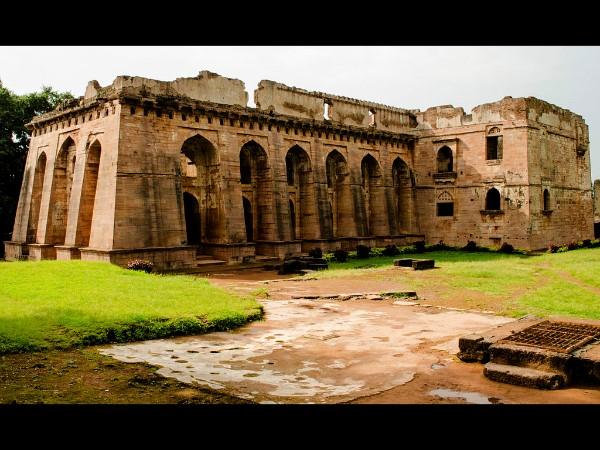
Discover the architectural marvel of Hindola Mahal, also known as the "Swinging Palace," located in Mandu, Madhya Pradesh. Built around 1425 CE during the reign of Hoshang Shah, this T-shaped edifice is renowned for its distinctive sloping walls, creating an illusion of a swing. Serving as a royal audience hall, the palace exemplifies the Malwa architectural style, characterized by simplicity and bold structural design. Explore its massive ogee arches, minimal ornamentation, and historical significance through detailed descriptions and high-quality images. Ideal for history enthusiasts, architecture students, and travelers seeking to delve into India's rich heritage.
Hindola Mahal, translating to "Swinging Palace," stands as a testament to the architectural ingenuity of the Malwa Sultanate in the 15th century. Situated in the ancient city of Mandu, Madhya Pradesh, this monument is part of the royal palace complex, which includes notable structures like Jahaz Mahal, Tawil Mahal, and Nahar Jharokha. Commissioned during the reign of Hoshang Shah around 1425 CE, Hindola Mahal served as a royal audience hall, reflecting the grandeur and sophistication of the era. Architectural Features: Design and Structure: The palace boasts a T-shaped layout, with the main hall measuring approximately 30 by 18 meters and soaring to a height of 12 meters. The lateral walls, about 3 meters thick, are reinforced by massive inclined buttresses angled at over 77 degrees, giving the structure its "swinging" appearance and its name. Arches and Openings: The interior features five massive ogee arches that once supported a flat roof. Each long side of the main hall has six recessed arches, incorporating doors and open-work stone windows that allow natural light and ventilation. Minimal Ornamentation: True to the Malwa architectural style, Hindola Mahal emphasizes structural boldness with minimal decorative elements. This simplicity enhances its grandeur, making it a unique example of medieval Indian arHistorical Significance: Hindola Mahal is a prime example of the Malwa period's architectural style (1400?1550), characterized by boldness and well-proportioned structures. The palace's design reflects the influence of Delhi's architectnt in its pointed arches and structural elements. Serving as an audience chamber, it was a hub of royal activities and gatherings, playing a pivotal role in the administrative and cultural proceedings of the time. Visiting Hindola Mahal: Today, Hindola Mahal is a prominent tourist attraction in Mandu, drawing history enthusiasts, architects, and travelers. Its proximity to other historical monuments makes it a central point in exploring Mandu's rich heritage. Visitors can marvel at its architectural brilliance, explore the royal palace complex, and gain insights into the grandeur of the Malwa Sultanate. Preservation Efforts: Preserving Hindola Mahal is crucial for maintaining the cultural and historical fabric of the region. Efforts by archaeological departments and heritage or protect and restore the monument, ensuring that future generations can appreciate its historical significance and architectural splendor. Conclusion: Hindola Mahal stands as a monumental representation of India's rich architectural heritage. Its unique design, historical importance, and cultural significance make it an essential destination for those interested in exploring the depths of India's medieval history. A visit to this "Swinging Palace" offers a glimpse into the architectural prowess and cultural richness of the Malwa Sultanate era.
Year of Built: 1425 CE
Address: 994V+P5F Mandav, Madhya Pradesh, India
Country: India
State: Madhya Pradesh
District: Dhar
Pincode: 454010
Longitude: 75.3903
Latitude: 22.3668