
Indo Islamic Heritage


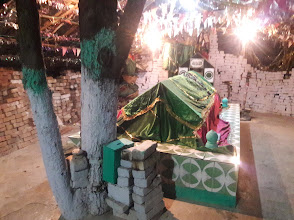
Dargah Pahelwan Sahab is a modest local Sufi shrine in Badaun, Uttar Pradesh, dedicated to a revered saint known for his physical prowess and spiritual devotion. Nestled in the heart of this historic city—famed for its Sufi heritage—it serves as a serene spot for devotees seeking blessings, reflecting Badaun's legacy as a center of Islamic mysticism since the 13th century.
Nestled in the heart of Badaun, a city renowned as the "Land of Sufi Saints" with roots tracing back to the Delhi Sultanate, Dargah Pahelwan Sahab stands as a humble yet poignant testament to the region's enduring Islamic spiritual legacy. Badaun itself gained prominence in the 13th century under Sultan Iltutmish, who briefly made it the capital of the Delhi Sultanate from 1210 to 1214 CE, fostering an environment where Sufi orders flourished alongside grand mosques like the Jama Masjid, constructed in 1223 CE from materials of ancient structures.This historical backdrop of syncretic Indo-Islamic culture set the stage for numerous shrines, including this local dargah, which embodies the personal piety and communal devotion central to Sufism in northern India. The dargah honors Pahelwan Sahab (also referred to as Pahalwan Shah in some oral traditions), a saint celebrated for his exceptional strength—earning him the title "Pahelwan" (wrestler)—coupled with profound humility and service to the faith. Local lore, preserved through generations of Badaun's Sufi community, describes him as a 17th- or 18th-century figure who embodied the Chishti ideals of physical discipline and spiritual renunciation, much like the more famous Nizamuddin Auliya, born in Badaun in 1238 CE. Unlike larger pilgrimage sites such as Bade Sarkar (Dargah of Hazrat Sheikh Shahi) or Chhote Sarkar (Dargah of Hazrat Syed Vilayat Shahi, visited by Emperor Akbar), Pahelwan Sahab's shrine remains a neighborhood sanctuary, drawing primarily local Muslims for quiet prayers, Urs observances, and vows for protection and healing. Its architecture is unpretentious: a simple mazar (tomb) enclosed by whitewashed walls, adorned with minimal Islamic motifs like geometric patterns and verses from the Quran, evoking the austerity of early Sufi khanqahs. Situated near Qazi Sarai in Badaun's old quarter, the dargah's location underscores the city's dense network of over 100 Sufi shrines, earning it the moniker "Madina-e-Auliya" (City of Saints). Devotees visit especially during the annual Urs, marked by qawwali recitations and communal iftar meals, fostering a sense of unity in a town where Islamic history intertwines with the Sot River's flow, just a mile east of the site. While not as documented as the Qadri Dargah or Sheikh Ahmad Farooqi's shrine, Pahelwan Sahab's enduring appeal lies in its role as a grassroots emblem of Badaun's Sufi ethos—emphasizing inner strength over grandeur—continuing to offer solace in the shadow of the city's 13th-century minarets.
Year of Built: Not Available
Address: 24WJ+GMP, Budaun, Uttar Pradesh 243601
Country: India
State: Uttar Pradesh
District: Budaun
Pincode: 243601
Longitude: 79.1250° E
Latitude: 28.2360° N