
Indo Islamic Heritage


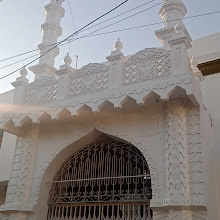
Peerji Wali Masjid, also known as Jama Masjid Shamsi or the Great Mosque of Badaun, is a historic congregational mosque constructed during the Delhi Sultanate era. Renowned for its Persian and Afghan architectural influences, it features a towering red marble main gate, a massive central dome—the largest in any Indian mosque—and white marble flooring. Once the largest mosque in India before Delhi's Jama Masjid expansion, it accommodates up to 23,500 worshippers and stands as a protected monument of national importance.
The Peerji Wali Masjid in Badaun represents a pinnacle of early Indo-Islamic architecture, erected in 1223 AD by Sultan Shams-ud-din Iltutmish, the third ruler of the Delhi Sultanate, during the governorship of his son Rukn-ud-din Firuz. Construction began around 1210 AD, marking it as one of the earliest surviving mosques from the Sultanate period and the third oldest in India. Located on an elevated platform in Sotha Mohalla, the mosque was built as a grand congregational site (Jama Masjid) to serve the growing Muslim community in Badaun, an important northern outpost captured by Qutb-ud-din Aibak in 1196 AD. Architecturally, the mosque embodies Persian and Afghan styles adapted to local materials. Its main entrance, facing Shakeel Road, is a 100-foot-tall structure crafted from red marble, flanked by three gates that lead into a spacious courtyard. The prayer hall is crowned by a prominent central dome, recognized as the largest dome in any mosque across India, surrounded by two secondary domes and five additional smaller ones. The interior floor is paved with white marble (Sang-e-MarMar), providing a serene and reflective surface for worship. Supporting facilities include a hauz (ritual ablution pond) and three wuzu khanas (washing and seating areas). Flanking the mosque are residential quarters known as Jama Masjid Quarters, integrating it into the local community fabric. As a monument of national importance under the Archaeological Survey of India, the mosque has undergone restorations in the 14th, 16th, and 19th centuries to preserve its structural integrity. Its elevated position makes it the tallest edifice in Badaun, symbolizing spiritual elevation amid the city's historical landscape. The mosque continues to host daily prayers five times a day, fostering a peaceful atmosphere that underscores its enduring role as a center of Islamic devotion and architectural heritage.
Year of Built: 13th Century
Address: 24P8+C5G, Budaun, Uttar Pradesh 243601
Country: India
State: Uttar Pradesh
District: Budaun
Pincode: 243601
Longitude: 79.1317° E
Latitude: 28.0339° N