
Indo Islamic Heritage


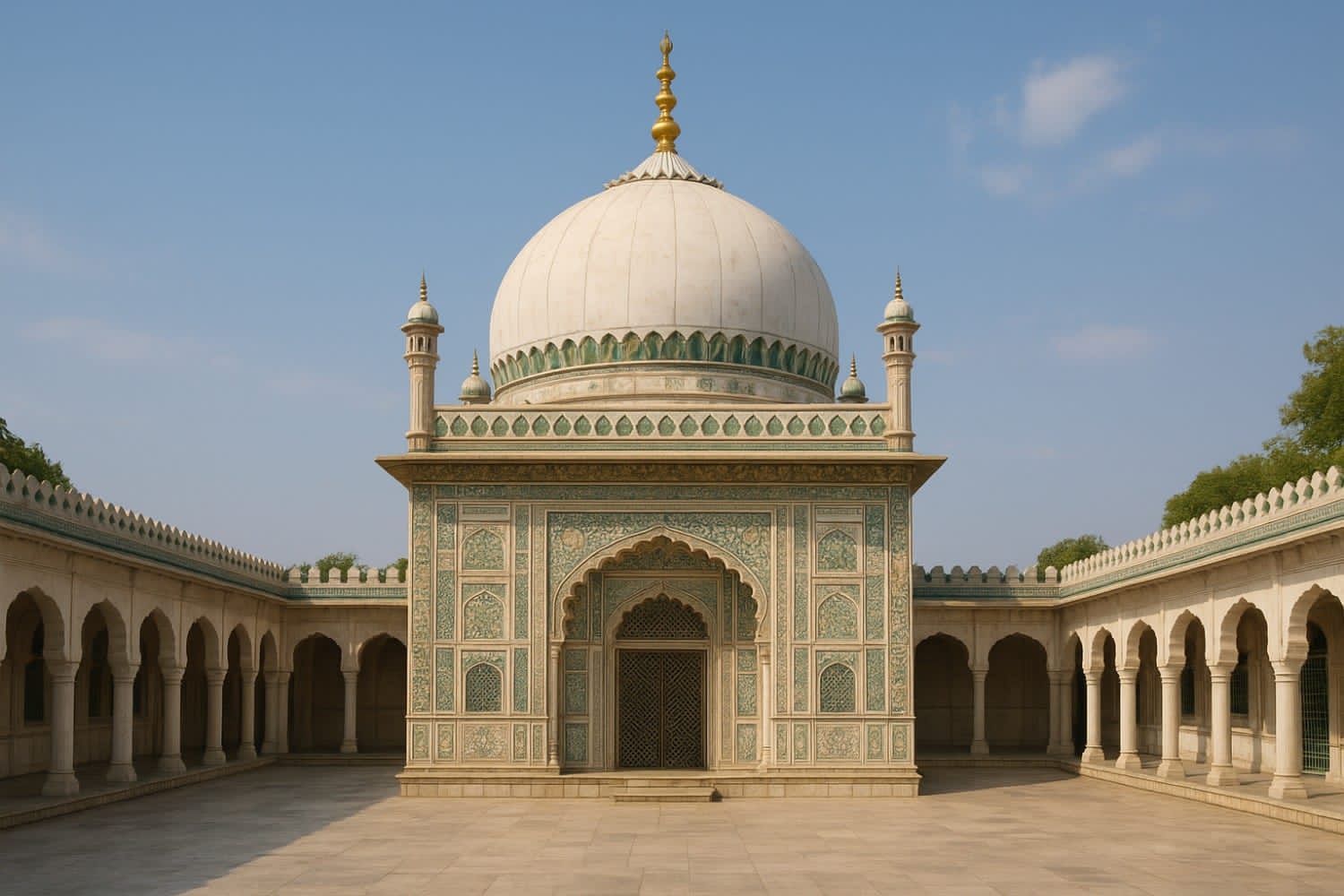
Dargah Dulhe Miya Sahab is a local Sufi shrine in Ujhani, Badaun district, Uttar Pradesh, dedicated to a revered saint known for his spiritual legacy. It serves as a modest place of worship and pilgrimage for devotees seeking blessings, featuring a simple tomb structure typical of regional Islamic shrines. The site reflects the Sufi traditions prevalent in the Rohilkhand region, attracting local visitors for prayers and Urs celebrations.
The Dargah Dulhe Miya Sahab, nestled in the historic town of Ujhani within Badaun district, stands as a quiet testament to the enduring Sufi heritage of Uttar Pradesh's Rohilkhand region. Ujhani, a municipal board town with an elevation of approximately 192 meters above sea level, has long been a hub of Islamic spiritual activity, influenced by the broader Chishti and other Sufi orders that flourished under Mughal patronage. The dargah honors Dulhe Miya Sahab (also referred to as Dulhe Raja Sahab in local lore), a saint whose life and teachings emphasized devotion, humility, and intercession for the faithful, aligning with the core tenets of Sufism in India. Historical records on the shrine are sparse, as it remains a grassroots local site rather than a grand imperial monument. Badaun district itself traces its Islamic roots to the 12th century, with the arrival of Sufi missionaries during the Delhi Sultanate, but Ujhani's specific Sufi landmarks, including this dargah, emerged prominently in the post-Mughal period. The saint's tomb, the central feature of the dargah, is housed in a compact enclosure with traditional arched doorways and a small courtyard, allowing for congregational prayers and quiet reflection. Adjoining the main structure is a modest mosque where daily namaz is observed, underscoring the site's role as an active place of worship rather than mere commemoration. Devotees, primarily from surrounding villages and the town of Ujhani (population around 126,000 as per the 2011 census), visit the dargah for personal supplications, especially during the Urs (annual death anniversary) observed in the Islamic lunar calendar. The shrine's architecture is unadorned yet functional, with whitewashed walls and minimal ornamentation—hallmarks of local Indo-Islamic design adapted to the agrarian landscape. It lacks the opulent marble or domes of larger dargahs like Ajmer Sharif but embodies the intimate, community-focused spirituality that defines many Uttar Pradesh shrines. Geographically, the dargah's location at 28.0003° N, 79.0052° E places it amid Ujhani's bustling markets and farmlands, accessible via State Highway 18 (Badaun-Meerut Road), about 40 km west of Badaun city and 200 km from Delhi. The pincode 243639 covers the broader Ujhani area, facilitating postal and logistical connections for pilgrims. While no precise construction date is verified, the shrine's establishment aligns with the 18th-19th century wave of local Sufi endowments under Nawabi rule in nearby Rampur and Bareilly, when many such tombs were built to honor regional saints. Today, it remains a serene oasis for spiritual solace, preserving the unpretentious essence of India's diverse Islamic traditions.
Year of Built: Not Available
Address: 2234+HQ2, Bilsi Rd, Ujhani, Uttar Pradesh 243639
Country: India
State: Uttar Pradesh
District: Budaun
Pincode: 243639
Longitude: 79.0052° E
Latitude: 28.0003° N