
Indo Islamic Heritage


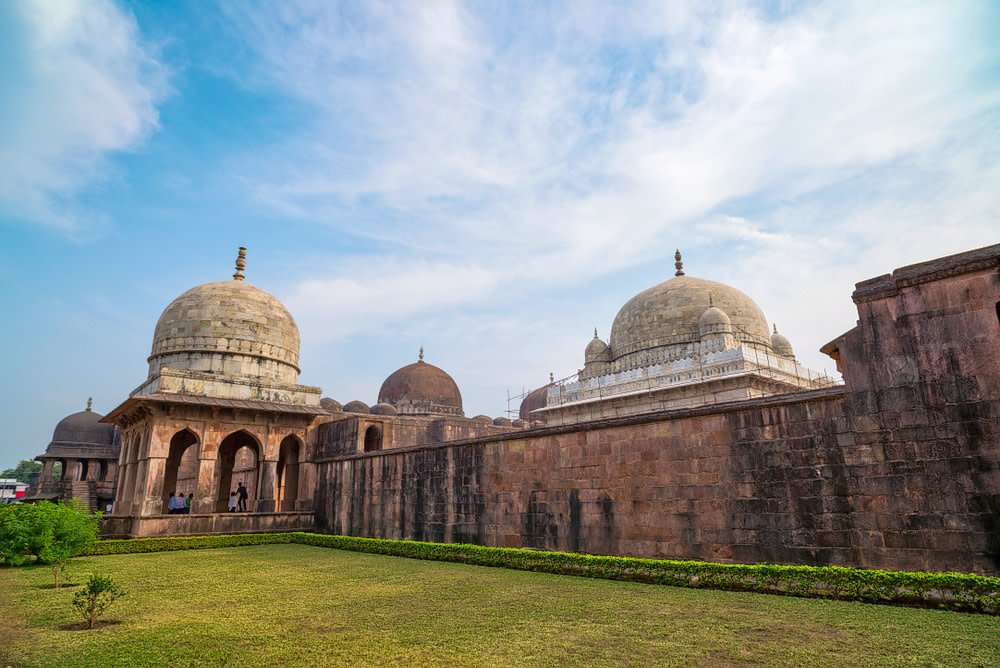
Dilawar Khan's Mosque in Mandu, Madhya Pradesh, is an architectural marvel built by Dilawar Khan, the founder of the Mandu Sultanate, in the 14th century. Known for its exquisite Indo-Islamic style, the mosque showcases the fusion of Islamic and Hindu architectural elements. It features large, impressive arches, intricate carvings, and a grand central courtyard. The mosque remains an important part of Mandu's architectural heritage, reflecting the cultural and historical significance of the region. With its serene atmosphere and rich history, it continues to attract tourists and historians alike.
Dilawar Khan's Mosque, located in Mandu, Madhya Pradesh, is one of the most important historical monuments of the region. Constructed in the 14th century, it was built by Dilawar Khan, a noble under the Delhi Sultanate and the founder of the Mandu Sultanate. The mosque is a significant example of Indo-Islamic architecture and marks a pivotal point in the architectural evolution of the region. Dilawar Khan's Mosque reflects a harmonious blend of Islamic and local Hindu architectural elements, which was typical of the period. The structure is simple yet grand, showcasing the use of large arches, intricate carvings, and a central courtyard. The mosque is built with local sandstone and has an impressive layout that adheres to traditional Islamic mosque architecture, with a prayer hall facing Mecca, a courtyard for ablution, and an open area for the congregation. One of the defining features of the mosque is its robust and grand arches, which support the structure and provide a sense of openness. The use of these arches is symbolic of Islamic architectural traditions, where arches were not only structural elements but also aesthetic features. The mosque?s design also incorporates elements from Hindu architecture, seen in the detailed carvings and motifs that decorate its walls and columns. This blend of Islamic and Hindu design influences is characteristic of many buildings from the Sultanate period, illustrating the cultural amalgamation that was common in medieval India. The mosque is situated in a tranquil location, surrounded by a serene environment that adds to its historical significance. Despite the passage of centuries, the mosque has retained much of its original charm and continues to be a place of worship and reflection. The grandness of the mosque is evident, but its understated elegance gives it a unique character compared to other more elaborately decorated mosques in India. The Dilawar Khan Mosque has an important historical context as it represents the beginning of the Mandu Sultanate, which was an important kingdom in central India. Dilawar Khan, the founder of this sultanate, was an influential ruler who contributed to the establishment of Mandu as a prosperous and culturally rich region. The mosque is thus not only a religious structure but also a symbol of the rise of the Mandu Sultanate and its political, cultural, and architectural contributions to the region. The mosque stands as a fine example of how religious and cultural influences merged during the Sultanate period. Its historical and architectural value makes it an essential site for historians, architecture enthusiasts, and tourists interested in exploring India?s rich Islamic heritage. Today, the Dilawar Khan Mosque remains a quiet and peaceful place for visitors, offering a glimpse into the glorious past of Mandu and the architectural splendor of the 14th century.
Year of Built: 14th Century
Address: Jahaj Mahal Internal Rd, Mandu, Mandav, Madhya Pradesh 454010, India
Country: India
State: Madhya Pradesh
District: Dhar
Pincode: 454010
Longitude: 75.4095
Latitude: 22.3365