
Indo Islamic Heritage


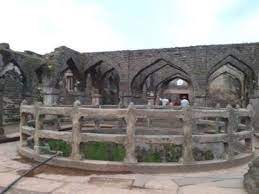
Champa Baoli, located in Mandav, Madhya Pradesh, is a remarkable stepwell reflecting Mughal architectural brilliance. Inspired by Turkish bath designs, it features interconnected vaulted rooms, known as taikhanas, that remained cool even during scorching summers. According to folklore, the well's water exuded a fragrance reminiscent of the Champa flower, hence its name. Serving both as a water reservoir and a natural air conditioner, Champa Baoli stands as a testament to the ingenuity of ancient engineering and design.
Champa Baoli is a significant historical monument situated in Mandav (also known as Mandu), within the Dhar district of Madhya Pradesh, India. This intricately constructed stepwell exemplifies the architectural prowess of the Mughal era, drawing inspiration from Turkish bath (hammam) designs. The structure is renowned for its ingenious design, which maintained cool temperatures in its subterranean chambers, providing respite from the intense heat of the Indian summers. The term "Baoli" refers to a stepwell, a traditional water storage system prevalent in India, designed to access groundwater through a series of steps. Champa Baoli stands out due to its unique features and the folklore associated with it. The name "Champa" is derived from the Champak flower, as local legends suggest that the water in the well emitted a fragrance similar to that of the Champa blossom. One of the most remarkable aspects of Champa Baoli is its taikhanas?vaulted underground rooms meticulously connected to the stepwell. These chambers were strategically designed to remain cool, even during the peak of summer, effectively serving as natural air-conditioned spaces. This clever utilization of architectural design for climate control highlights the advanced understanding of environmental adaptation by the builders of that era. The construction of Champa Baoli reflects the Mughal architectural style, characterized by intricate carvings, symmetrical designs, and the incorporation of functional aesthetics. The stepwell not only served as a reliable water source but also as a communal gathering place, emphasizing its social and cultural significance during the Mughal period. Visitors to Champa Baoli can observe the harmonious blend of utility and artistry. The stepwell's design ensures that it captures and stores rainwater efficiently, while the taikhanas provide a cool retreat from the heat, showcasing the thoughtful integration of form and function. The site offers a glimpse into the historical ingenuity of water management and architectural excellence. Located at coordinates 22.3667? N latitude and 75.3833? E longitude, Champa Baoli is accessible to tourists and history enthusiasts. Its proximity to other historical sites in Mandav makes it a noteworthy stop for those exploring the rich cultural heritage of the region. The monument's enduring structure and the legends surrounding it continue to captivate visitors, making it a testament to the enduring legacy of India's historical architecture.
Year of Built: Mughal Era (Exact year unknown)
Address: 994V+P5F, Sulibardi, Madhya Pradesh 454010, India
Country: India
State: Madhya Pradesh
District: Dhar
Pincode: 454010
Longitude: 75.3833
Latitude: 22.3667