
Indo Islamic Heritage


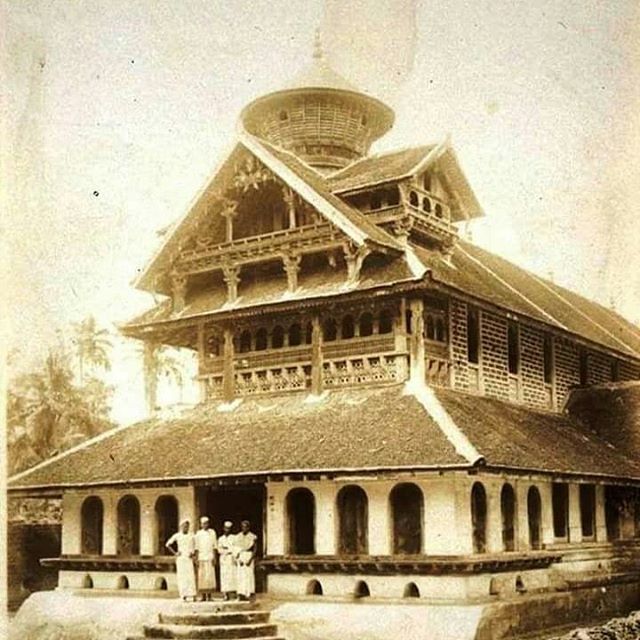
Odathil Palli, a 200-year-old mosque located in Thalassery, Kerala, stands as a testament to the region's rich cultural and religious heritage. Constructed around 1806 by Moosakaka, a respected member of the Keyi family and a contractor for the East India Company, the mosque was built on a former Dutch sugarcane plantation. Its architecture showcases traditional Kerala style, featuring copper plate roofing and a distinctive golden dome, symbolizing the harmonious coexistence of different communities during that era. The mosque remains an active place of worship and a significant historical landmark in Thalassery.
Odathil Palli, also known as Odathil Mosque, is a historic mosque situated in the heart of Thalassery, a coastal town in Kerala, South India. Established around 1806, the mosque has been a symbol of religious harmony and architectural splendor for over two centuries. Historical Background: The land on which Odathil Palli stands was originally a sugarcane garden owned by the Dutch. It later came under the possession of the British East India Company. Moosakaka, a Muslim Keralite and a trusted contractor for the East India Company, acquired the land from the British. Hailing from the prominent Keyi family of Thalassery, known for their trading prowess, Moosakaka purchased the land at a nominal price, choosing not to accept it for free as a mark of his integrity. He constructed the mosque in the 'Karimbin-odam' (sugarcane plantation), leading to its name 'Odathil Palli,' with 'Odam' meaning 'garden' in Malayalam, thus translating to 'mosque in the garden.' Architectural Significance: Odathil Palli is renowned for its traditional Kerala architectural style. The mosque features copper plate roofing and a distinctive golden dome, elements typically associated with Hindu temples, reflecting the syncretic culture of the region. Initially, there was opposition to the installation of the dome?a privilege traditionally reserved for temples. However, the Zamorin, the regional ruler, granted special permission, highlighting the communal harmony and tolerance prevalent during that period. Cultural and Religious Importance: The mosque serves as a place of worship open to all Muslims. Adjacent to the mosque is the 'Kabaristan' (graveyard), where only members of the Keyi family are interred, signifying the family's enduring legacy in the region. Odathil Palli stands as a testament to the peaceful coexistence and mutual respect among different religious communities in Kerala. Visitor Information: Located centrally in Thalassery, Odathil Palli is accessible to visitors interested in exploring Kerala's rich cultural and religious history. The mosque's serene ambiance and architectural beauty make it a noteworthy destination for tourists and devotees alike. Visitors are advised to respect the sanctity of the place, adhering to appropriate dress codes and customs. Conclusion: Odathil Palli is not merely a place of worship but a monument that encapsulates the historical and cultural ethos of Thalassery. Its unique architectural features and the story of its inception reflect the harmonious blending of different cultural and religious traditions in Kerala. The mosque continues to be a beacon of communal harmony and a cherished heritage site in the region.
Year of Built: 1806
Address: Thalassery - Coorg Hwy, Pilakool, Thalassery, Kerala, India
Country: India
State: Kerala
District: Kannur
Pincode: 670104
Longitude: 75.4920
Latitude: 11.7480