
Indo Islamic Heritage


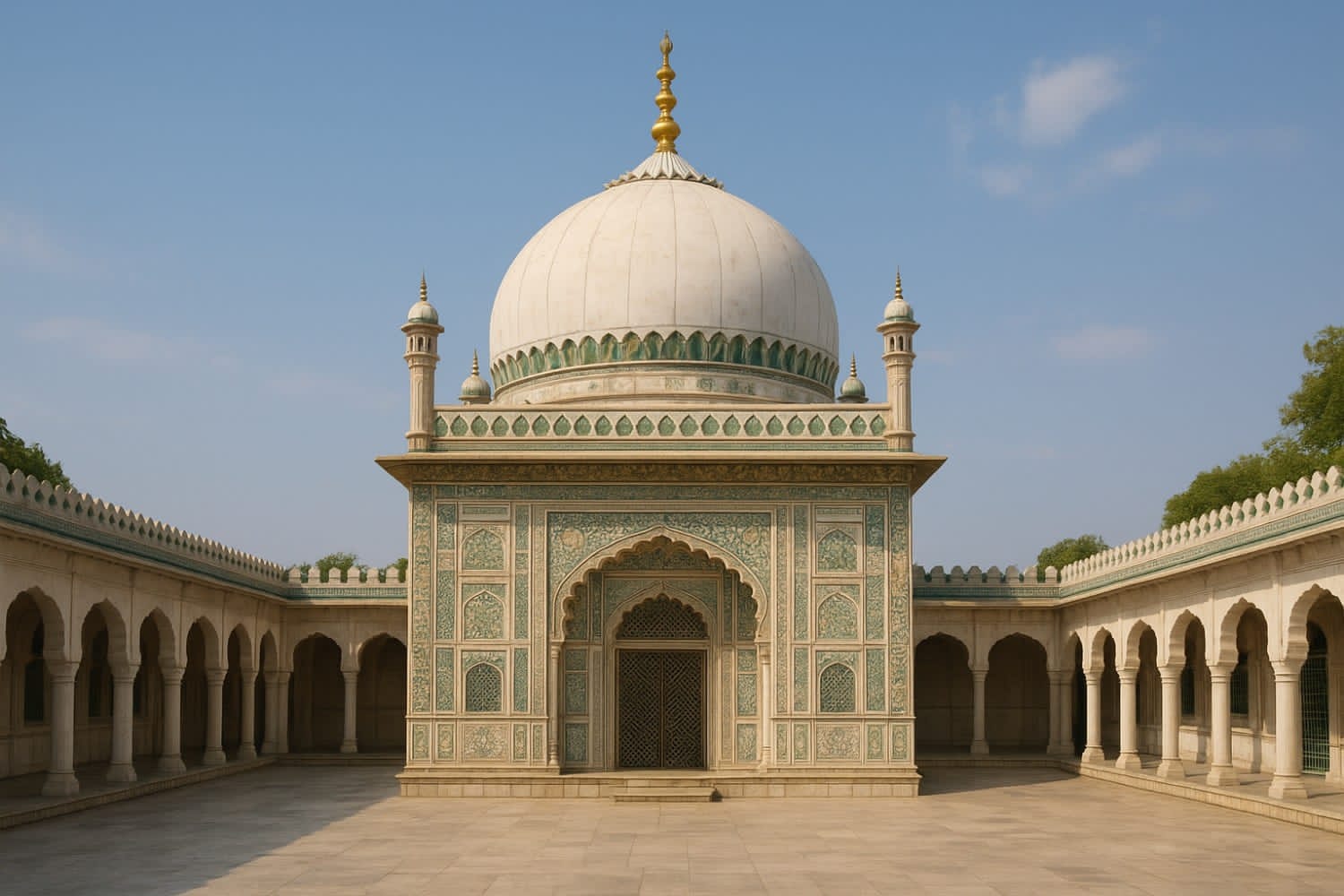
Kale Shah Baba Dargah is a modest local Sufi shrine in the Moti Bagh area of Bulandshahr, dedicated to the revered saint Kale Shah Baba, also known as Peer Baba Kale Shah. This unassuming mazar sharif (holy tomb) serves as a site of quiet devotion for the local Muslim community, reflecting the Sufi tradition of spiritual reflection and interfaith harmony prevalent in western Uttar Pradesh. It is situated near the Kala Aam Chauraha, a historical landmark in the neighborhood.
Nestled in the historic Moti Bagh locality of Bulandshahr—a city with roots tracing back to the Mahabharata era and later flourishing under Mughal influence—Kale Shah Baba Dargah stands as a poignant emblem of Sufi spirituality in Uttar Pradesh. Bulandshahr, meaning "High City," lies on elevated ground between the Ganga and Yamuna rivers, fostering a landscape dotted with ancient Islamic sites like the nearby Agha Mosque and Sain Sufi Tomb. The dargah, a simple yet sacred enclosure honoring Kale Shah Baba, embodies the essence of local Islamic devotion, where devotees seek solace through ziyarat (pilgrimage) and quiet prayers. The shrine's architecture is characteristically understated, typical of regional Sufi mazars: a low-domed tomb structure with whitewashed walls, adorned minimally with green chadar (cloth coverings) symbolizing the saint's piety. Kale Shah Baba, revered as a "Peer Baba" (spiritual guide), is believed to have been a humble Sufi figure whose life exemplified tawhid (unity with the divine) and service to the community. Though detailed hagiographies remain oral and localized, his legacy draws from the Chishti and Qadiri orders that spread across Uttar Pradesh, promoting universal brotherhood amid diverse faiths. Devotees, primarily from Bulandshahr's Muslim quarters, visit for personal supplications, especially during evenings when the adhan (call to prayer) echoes softly from adjacent mosques. Historically, Moti Bagh emerged as a gated residential enclave in the 19th century under British oversight, with its Garden Gate (dating to the 1880s) serving as an entrance to communal spaces like the Town Hall. The dargah, positioned near this gate and the Kala Aam (a Mughal-era mango grove remnant), integrates seamlessly into the area's Indo-Islamic fabric. No grand expansions or royal patronage mark its timeline, unlike prominent shrines such as Ajmer Sharif; instead, it thrives as a grassroots site, underscoring the decentralized nature of Sufism in rural-urban Uttar Pradesh. Annual observances, though not formally documented, likely include modest urs (death anniversary) gatherings with qawwali recitations and langar (communal meals), fostering intercommunity ties in a district known for its syncretic heritage. As a protected local heritage spot, the dargah invites reflection on Bulandshahr's role in India's Islamic tapestry—bridging ancient Baran (its pre-Mughal name) to modern NCR life. For those exploring Uttar Pradesh's lesser-known sacred spaces, it offers an intimate encounter with faith's quiet power, far from the crowds of grander monuments.
Year of Built: Not Available
Address: CR4X+JQ4, Kala Aam Chauraha, Moti Bagh, Kotiyat, Bulandshahr, Uttar Pradesh 203001
Country: India
State: Uttar Pradesh
District: Bulandshahr
Pincode: 203001
Longitude: 77.8495° E
Latitude: 28.4068° N