
Indo Islamic Heritage


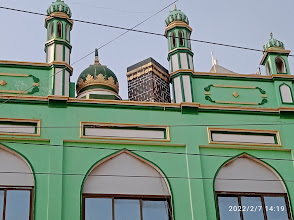
Minara Masjid is a modest local mosque serving the Muslim community in Qassab Mohalla, a traditional neighborhood primarily inhabited by the Qassab (butcher) community in Moradabad, Uttar Pradesh. Known for its simple yet functional design with a single minaret (minara), it functions as a place of daily worship and community gatherings, reflecting the everyday Islamic heritage of small-town Uttar Pradesh. Built in the early 20th century, it embodies the unassuming architecture typical of regional mosques influenced by local Mughal-revival styles.
Nestled in the heart of Qassab Mohalla, one of Moradabad's oldest Muslim-dominated neighborhoods, Minara Masjid stands as a quiet testament to the enduring Islamic traditions of western Uttar Pradesh. The mohalla itself derives its name from the Qassab community, historically associated with meat trading and butchery, and forms part of Moradabad's bustling old city, known regionally as "Pital Nagri" for its brass handicrafts but equally rich in understated religious sites like this mosque. Constructed around 1920 amid the socio-economic shifts of British India, Minara Masjid was funded and built by local Qassab families as a response to the growing need for a dedicated prayer space in the expanding mohalla. Unlike grand imperial mosques such as Moradabad's Jama Masjid (built in the 17th century by Rustam Khan), Minara Masjid prioritizes practicality over opulence. Its architecture features a single prominent minaret—hence the name "Minara" (tower)—crafted from locally sourced bricks and lime plaster, topped with a modest dome and arched mihrab facing Mecca. The prayer hall accommodates around 100-150 worshippers, with simple geometric motifs adorning the walls, drawing subtle inspiration from Mughal-era designs prevalent in Rohilkhand's Islamic buildings. The mosque's interior maintains a serene ambiance, with worn prayer mats and wooden pulpits that have witnessed generations of taraweeh prayers during Ramadan and daily fajr calls echoing from the minaret. It serves not only as a site for the five daily salahs but also hosts community events like nikah ceremonies and religious lectures, fostering social cohesion in Qassab Mohalla's narrow lanes lined with traditional havelis. Historically, the area around the mosque was a hub for the Rohilla Muslim community's activities post the 1857 uprising, when Moradabad saw renewed local Islamic revivalism. Today, Minara Masjid remains an active focal point for the neighborhood's approximately 5,000 residents, many of whom trace their roots to 19th-century migrations from nearby Rampur and Bareilly. Its location near the Ramganga River adds to its tranquil setting, offering devotees a brief respite from Moradabad's industrial hum. Preservation efforts by local waqf boards ensure its structural integrity, underscoring its role as a living piece of Uttar Pradesh's diverse Islamic tapestry—humble, resilient, and deeply embedded in daily life.
Year of Built: Not Available
Address: 74MF+XHP, Mughalsarai, Mughalsarai Railway Settlement, Uttar Pradesh 232101
Country: India
State: Uttar Pradesh
District: Chandauli
Pincode: 232101
Longitude: 78.7720° E
Latitude: 28.8430° N