
Indo Islamic Heritage


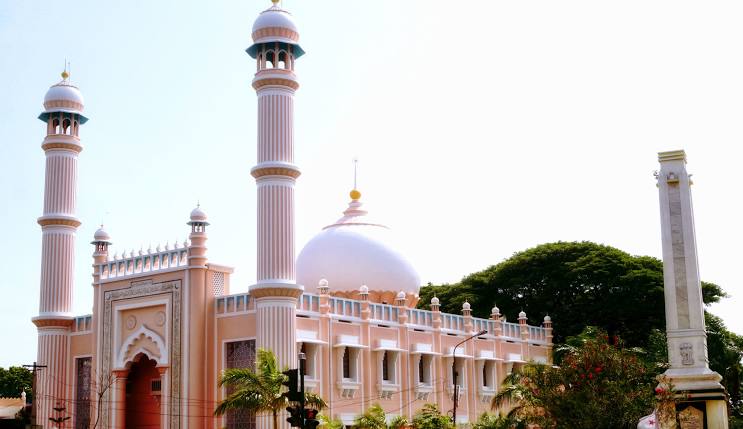
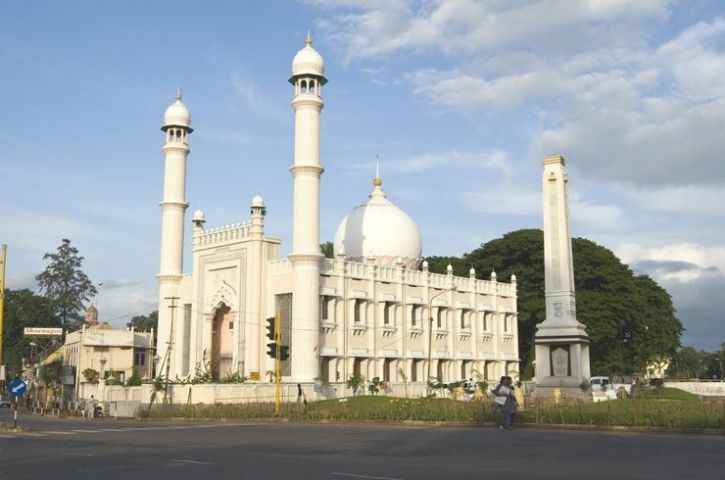
Palayam Juma Masjid, located in Thiruvananthapuram, Kerala, stands as a symbol of communal harmony, situated alongside a Hindu temple and a Christian church. Established in 1813 AD during the British colonial period, it was initially a modest structure serving the Muslim soldiers of the British Indian Second Regiment. The mosque underwent significant renovation in the 1960s, incorporating Indo-Persian architectural elements, including minarets and a dome, a departure from traditional Kerala mosque designs. Inaugurated in 1967 by then-President Dr. Zakir Hussain, the mosque continues to be a central place of worship and a testament to Kerala's inclusive cultural ethos.
Palayam Juma Masjid, situated in the heart of Thiruvananthapuram, Kerala's capital city, holds a prominent place in the religious and cultural landscape of the region. Its unique location, flanked by a Hindu temple dedicated to Lord Ganesha and a Christian church, exemplifies the spirit of communal harmony that Kerala is renowned for. The mosque's origins trace back to 1813 AD, during the British colonial era, when the British Indian Second Regiment was stationed in the area. To cater to the spiritual needs of Muslim soldiers, a small mosque, referred to as "Pattalappalli," was constructed, featuring an open space designated for Eid prayers. Over time, as the local Muslim community grew, the need for a more substantial structure became evident. In the 1960s, a concerted effort by local businessmen and government officials led to the mosque's renovation. The reconstruction introduced Indo-Persian architectural features, notably the inclusion of minarets and a dome?elements not traditionally present in Kerala's mosque architecture, which typically featured tiled roofing akin to local temples. The architectural redesign was spearheaded by Govindan Gopalakrishnan, a Hindu architect who later became renowned for designing numerous mosques across Kerala. His involvement in the Palayam Juma Masjid's renovation marked the beginning of his illustrious career in Islamic architecture, highlighting the interfaith collaboration that characterized the project. The renovated mosque was officially inaugurated in 1967 by Dr. Zakir Hussain, the then-President of India, further cementing its significance as a landmark of national importance. Today, Palayam Juma Masjid serves as a central place of worship for the Muslim community in Thiruvananthapuram. Its strategic location near key institutions, such as the University of Kerala Senate House Campus, makes it a focal point for both religious and cultural activities. Beyond its religious functions, the mosque stands as a testament to Kerala's inclusive cultural ethos. The proximity of the mosque to a Hindu temple and a Christian church is not merely a matter of geography but a reflection of the state's longstanding tradition of religious tolerance and mutual respect among different faith communities. Visitors to Palayam Juma Masjid can appreciate its architectural grandeur, characterized by the harmonious blend of traditional Kerala and Indo-Persian design elements. The mosque's serene ambiance, coupled with its historical and cultural significance, makes it a noteworthy destination for those interested in exploring the rich tapestry of Kerala's communal harmony.
Year of Built: 1813 AD
Address: GX32+C7F, University of Kerala Senate House Campus, Palayam, Thiruvananthapuram, Kerala, India
Country: India
State: Kerala
District: Thiruvananthapuram
Pincode: 695033
Longitude: 76.95061092433235
Latitude: 8.503523444878475