
Indo Islamic Heritage


.jpg)
.jpg)
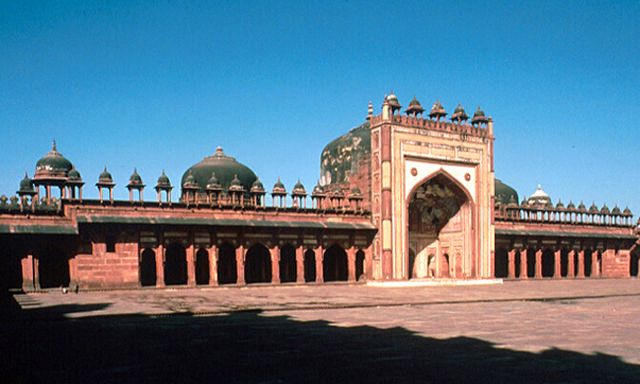
Jama Masjid, Fatehpur Sikri: A Timeless Marvel of Mughal Architecture Nestled in the heart of the majestic city of Fatehpur Sikri, the Jama Masjid stands as a brilliant testament to the grandeur of Mughal architecture and the cultural opulence of the 16th century. Nearest Bus Stop: Fatehpur Sikri Bus Stand (Approximately 2 km away) Nearest Railway Station: Fatehpur Sikri Railway Station (Approx. 4 km away) Nearest Metro Station: There is no metro station in Fatehpur Sikri, but the nearest metro station is in Agra, about 37 km away. Nearest Airport: Agra Airport (Kheria), approximately 40 km away. Delhi's Indira Gandhi International Airport is about 220 km away, providing international connectivity.
Nestled in the heart of the majestic city of Fatehpur Sikri, the Jama Masjid stands as a brilliant testament to the grandeur of Mughal architecture and the cultural opulence of the 16th century. The mosque, built under the reign of Emperor Akbar, invites travelers from across the world to experience its serene beauty, historical significance, and artistic splendor. Historical Significance Completed in 1571, the Jama Masjid is a symbol of Emperor Akbar?s inclusive vision and his deep reverence for all faiths. This grand mosque was not only a place of prayer but also a crucial part of Akbar's strategic plans to create a harmonious blend of different cultures. Fatehpur Sikri itself was built as the Mughal Empire's capital for a short period, and the Jama Masjid was one of the central elements of the city's architectural masterpiece. The mosque is dedicated to Salim Chishti, a revered Sufi saint, whose tomb is located nearby within the mosque?s complex. His spiritual presence has made the site a pilgrimage destination, further enhancing the mosque's historical importance in the context of Mughal religious and political history. Architectural Features The Jama Masjid is a masterpiece of Mughal architecture, characterized by its grandeur and intricacy. It is constructed entirely of red sandstone, with detailed carvings and intricate designs that represent the fusion of Persian, Turkish, and Indian architectural styles. The Entrance Gate (Bara Darwaza): The grand entrance gate, known as the Bara Darwaza, is an imposing structure adorned with elegant arches and motifs that set the tone for the majestic structure beyond. The Prayer Hall: Inside, the prayer hall stands tall with its impressive marble flooring, intricately carved pillars, and lofty arches. The central dome is a striking feature of the mosque, symbolizing the vastness and grandeur of the Mughal empire. The Courtyard: The expansive courtyard of the mosque is surrounded by colonnaded galleries, with a large central platform where the emperor would offer prayers. The entire complex exudes an aura of tranquility and harmony, inviting visitors to reflect on both its spiritual and architectural significance. The Jama Masjid at Fatehpur Sikri is not just an architectural wonder but a monument steeped in history, representing an era of Mughal glory. For those with an appreciation for art, history, and architecture, it offers a profound glimpse into the past, set against the backdrop of one of India?s most iconic historical cities. Whether you are an avid historian, an art lover, or a pilgrim, this sacred space offers an experience that is as enriching as it is awe-inspiring.
Year of Built: 16th CENTURY
Address: 3MV6+WV9, Dadupura, Fatehpur Sikri, Uttar Pradesh 283110
Country: India
State: Uttar Pradesh
District: Agra
Pincode: 283110
Longitude: 77.6623? E
Latitude: 27.0970? N