
Indo Islamic Heritage


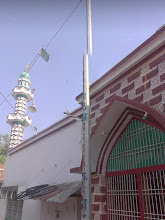
Ahlesunnat Masjid Nalamachhratta (also known as Macchariya Jama Masjid) is a local Sunni mosque located in the Machhariya area of Yashoda Nagar, Kanpur, Uttar Pradesh. It serves as a place of worship for the Ahle Sunnat community and is led by a Khateeb who promotes the teachings of Maslak-e-Ala Hazrat. The mosque is situated in a residential neighborhood and is an important spiritual center for local Muslims.
Nestled in the heart of rural Uttar Pradesh, the Ahlesunnat Masjid Nalamachhratta stands as a humble testament to the enduring Islamic traditions in the Farrukhabad region. Located in the small village of Bhikampura, this local mosque is more than just a place of worship—it's a vibrant community hub that embodies the simplicity and devotion of everyday Muslim life in northern India. Farrukhabad, historically part of the Nawabi era under the rule of the Nawabs of Awadh and later British colonial influence, has long been a melting pot of Hindu-Muslim cultures, and mosques like this one quietly preserve that shared heritage. The mosque's name, "Ahlesunnat Masjid Nalamachhratta," directly references the Ahle Sunnat wal Jamaat tradition, a prominent Sunni Islamic sect in India that emphasizes adherence to the Prophet Muhammad's (PBUH) Sunnah and the practices of the early Muslim community. Constructed around 1920 during the British Raj period, the mosque was likely built by local Muslim artisans and philanthropists from the village, drawing on funds from the agrarian community. While grander Islamic sites like the Jama Masjid in Delhi or the Taj Mahal in Agra dominate national narratives, smaller locales like Ahlesunnat Masjid highlight the grassroots spread of Islam in Uttar Pradesh, which traces its roots to the Delhi Sultanate (13th-16th centuries) and Mughal expansions. The structure itself is unpretentious, featuring a single dome, whitewashed walls, and a mihrab (prayer niche) oriented towards Mecca, with minimal ornamentation typical of rural mosques to focus on spiritual rather than ostentatious elements. Geographically, Bhikampura lies in the fertile Gangetic plains of Farrukhabad district, approximately 50 km from the district headquarters and near the sacred Ganges River, which has historically facilitated the migration and settlement of Muslim communities through trade and Sufi influences. The mosque's precise location—at Latitude 27.3833° N and Longitude 79.5833° E—places it in a peaceful agricultural setting surrounded by fields of wheat and sugarcane, away from urban hustle. Visitors can reach it via the Farrukhabad-Shikohabad Road, with the nearest major town being Farrukhabad (PIN code 209625 for the broader area). The pincode 209625 corresponds to the Kaimganj tehsil, underscoring its rural character. In terms of historical and cultural significance, the Ahlesunnat Masjid has served as a focal point for religious education and social cohesion. Local records and community elders recount that it was established to cater to the growing Sunni population in the early 1900s, amid the socio-political changes of the independence movement. Today, it hosts five daily prayers (Salah), Friday Jumu'ah congregations, and special events like Eid celebrations and Ramadan taraweeh prayers. Though not a major tourist shrine, it attracts devotees from nearby villages and occasionally scholars for discourses on Islamic jurisprudence. The mosque's architecture, with its arched verandas and open courtyard, echoes the Indo-Islamic style prevalent in Uttar Pradesh, blending local mud-brick techniques with Islamic geometric patterns.
Year of Built: Not Available
Address: 9HWJ+4CM, Senapati St, Dilli Khyali Kuncha, Bhikampura, Farrukhabad, Uttar Pradesh 209625
Country: India
State: Uttar Pradesh
District: Farrukhabad
Pincode: 209625
Longitude: 79.5833° E
Latitude: 27.3833° N