
Indo Islamic Heritage


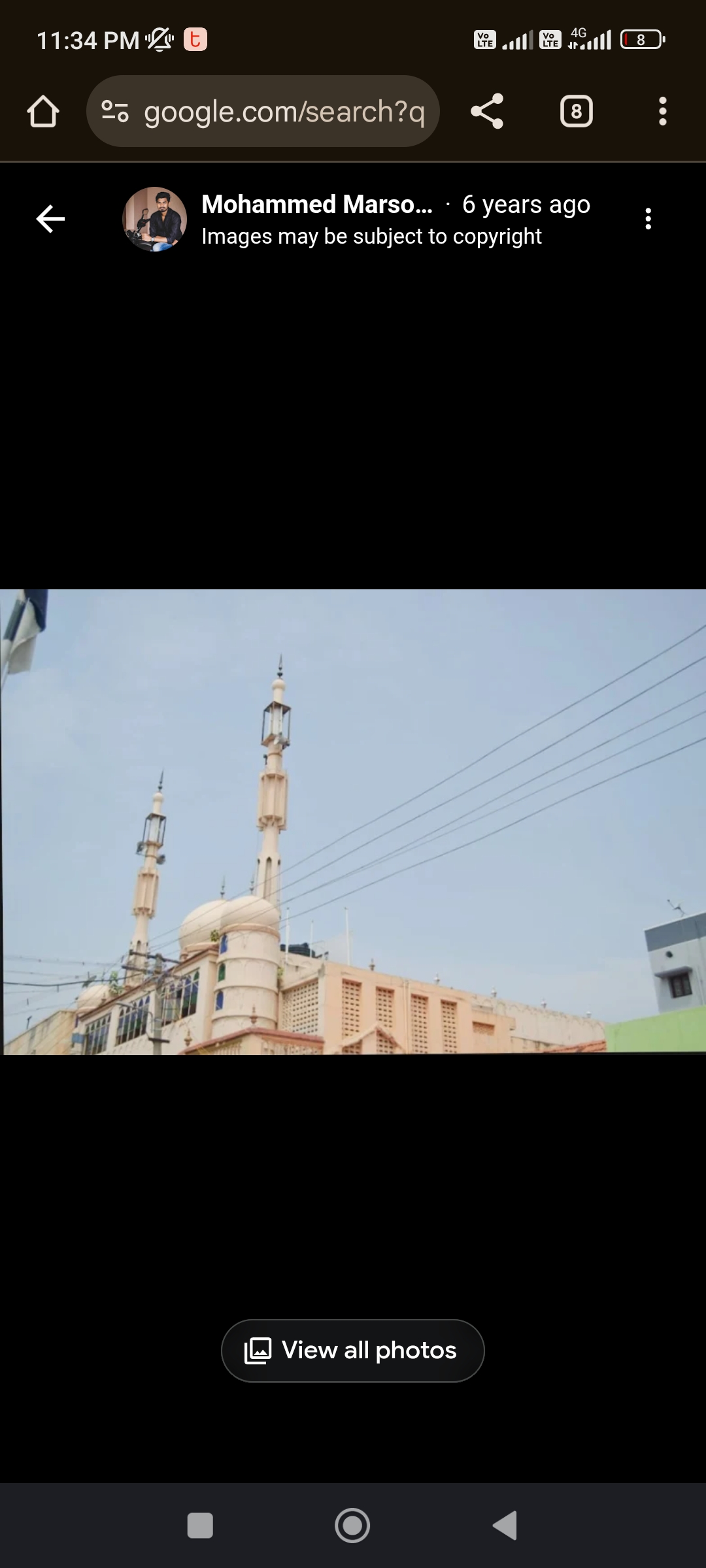
Masjid-e-Noor, located in Azad Nagar, Suramangalam, Salem, is a neighborhood mosque serving the daily religious needs of the local Muslim community. The mosque functions as a regular place of worship for five daily prayers, Friday congregational prayers, and special religious observances during Ramadan and Islamic festivals. Positioned within a residential locality, Masjid-e-Noor plays an important role in fostering religious practice, social unity, and community support among residents of the surrounding area.
Masjid-e-Noor in Azad Nagar, Suramangalam, Salem, is a significant local mosque that reflects the steady growth and settlement of the Muslim community in this part of the city. Suramangalam has developed over time as a mixed residential and commercial area, and the establishment of Masjid-e-Noor corresponds with the need for accessible places of worship within expanding urban neighborhoods. The mosque has become an integral part of daily life for Muslim families living nearby, offering a space for prayer, reflection, and communal gathering. Architecturally, Masjid-e-Noor follows a simple and functional design, prioritizing religious utility over ornamentation. The prayer hall is designed to accommodate regular congregations, with clear orientation toward the qibla and sufficient space for orderly rows of worshippers. Natural ventilation and basic interior arrangements ensure a calm environment conducive to prayer. While the mosque may have undergone minor renovations over the years, its overall structure remains rooted in practical South Indian mosque architecture commonly found in residential areas. The mosque plays a vital role beyond ritual worship. It serves as a center for community interaction, where local residents come together for Friday sermons, religious discussions, and collective observances during significant Islamic occasions such as Ramadan, Eid al-Fitr, and Eid al-Adha. During Ramadan, Masjid-e-Noor becomes particularly active, hosting special night prayers and facilitating communal spiritual practices that strengthen bonds among worshippers. Masjid-e-Noor also contributes to informal religious education within the community. Children and young worshippers often receive basic instruction in Qur’anic recitation, Islamic ethics, and foundational religious practices, helping transmit religious knowledge across generations. The mosque thus supports both spiritual continuity and moral development within the neighborhood. Located in Azad Nagar, the mosque exists within a socially diverse urban setting, reflecting Salem’s broader cultural plurality. Over time, Masjid-e-Noor has come to symbolize stability, faith, and community presence in Suramangalam. Its continued functioning depends largely on local community participation, voluntary management, and collective responsibility for maintenance and religious activities. In the contemporary context, Masjid-e-Noor remains a quietly significant religious institution. While not a major landmark mosque, its importance lies in its everyday role—supporting routine worship, fostering solidarity, and sustaining the religious life of the local Muslim population. The mosque stands as a testament to community-led religious spaces that form the backbone of urban Islamic practice in Tamil Nadu.
Year of Built: Estimated late 20th century (circa 1980–1995)
Address: Azad Nagar, Suramangalam, Salem, Tamil Nadu
Country: India
State: Tamil Nadu
District: Salem
Pincode: 636005
Longitude: 78.1209° E (estimated)
Latitude: 11.6783° N (estimated)