
Indo Islamic Heritage


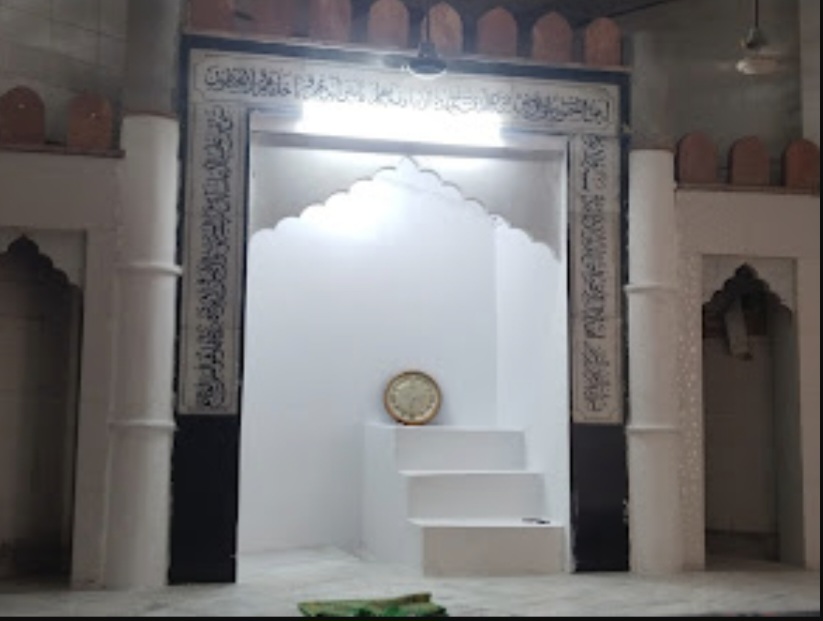
The Hajjam Masjid (also referred to as a local mosque near Ghanta Ghar in Fatehpur Sikri) appears to be a lesser-known or locally referenced site, but extensive searches indicate no prominent historical record of a distinct "Hajjam Masjid" in Fatehpur Sikri. The query likely refers to the iconic Jama Masjid (also called Jami Masjid or Friday Mosque) in Fatehpur Sikri, Uttar Pradesh—a major historical Islamic site and the primary mosque in the UNESCO World Heritage complex. "Ghanta Ghar" may refer to a clock tower or local landmark area nearby, but the focal historical mosque is the grand Jama Masjid built by Emperor Akbar.
Fatehpur Sikri, the short-lived capital of the Mughal Empire under Emperor Akbar (r. 1556–1605), is renowned for its architectural splendor and harmonious blend of cultures. Among its most revered Islamic sites is the Jama Masjid, a monumental Friday mosque constructed as the spiritual centerpiece of the city. Built between 1571 and 1574 (with key phases completed by 1571–1572), the mosque was commissioned by Akbar in honor of the Sufi saint Sheikh Salim Chishti, whose blessings Akbar sought for an heir (resulting in the birth of Prince Salim, later Emperor Jahangir). It stands on the highest point of the rocky ridge, elevated on a plinth for prominence, and was the largest mosque in the Mughal Empire at the time. The structure exemplifies Akbar's syncretic vision, fusing Persian-Islamic arches and domes with Gujarati, Hindu, and Jain motifs—seen in intricate carvings, inlaid marble patterns, and geometric designs on red sandstone. The vast rectangular courtyard (capable of holding thousands) is enclosed by arched cloisters and monumental gateways: the southern Buland Darwaza (Victory Gate, 54m high, commemorating Akbar's Gujarat conquest) serves as the main entrance, while the eastern Badshahi Darwaza (King's Gate) linked to the imperial palaces. At the northern end lies the exquisite white marble Tomb of Salim Chishti (completed 1580–1581), a pilgrimage site famed for fulfilling wishes, especially among those seeking children. The mosque's prayer hall features a central mihrab, minbar, and decorative calligraphy. As part of the UNESCO-listed Fatehpur Sikri (designated in 1986), Jama Masjid is a protected Monument of National Importance under the Archaeological Survey of India. It remains active for prayers, especially Fridays, and attracts devotees and tourists drawn to its serene spiritual ambiance amid the abandoned city's ruins. Entry to the mosque is free (though Fatehpur Sikri complex tickets apply for broader access), and it symbolizes Mughal tolerance, heritage, and architectural innovation. If "Hajjam Masjid" refers to a distinct smaller local mosque (possibly near a clock tower/Ghanta Ghar in modern Fatehpur Sikri town), it may be a community site without major historical documentation; the Jama Masjid overshadows all others in the area as the premier historical Islamic landmark.
Year of Built: Not Available
Address: 3MR6+G89, Unnamed Road, Ghanta Ghar, Fatehpur Sikri, Uttar Pradesh 283110
Country: India
State: Uttar Pradesh
District: Agra
Pincode: 283110
Longitude: 77.6622° E
Latitude: 27.0948° N