
Indo Islamic Heritage


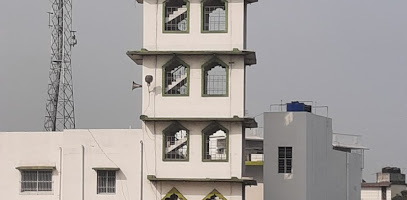
Masjid E Bilal is a well-used local mosque situated in the Siwandih area of Bokaro Steel City in the state of Jharkhand, India. The mosque serves as a community centre of Islamic worship where Muslims in the locality gather for the five daily prayers (Salat), the weekly Friday (Jumu’ah) congregational prayer, and celebrations during major Islamic festivals such as Ramadan, Eid-ul-Fitr, and Eid-ul-Adha. While not listed as a heritage monument, Masjid E Bilal is an important living place of faith for residents.
Masjid E Bilal is a neighbourhood mosque located in the Siwandih locality of Bokaro Steel City, which is an industrial and urban centre in the eastern Indian state of Jharkhand. Bokaro Steel City itself was developed around the Bokaro Steel Plant in the mid-20th century and today forms one of the state’s major metropolitan areas with a diverse population and numerous places of worship for different communities.  The mosque’s permanent address is J4P2+PM8, Siwandih, Bokaro Steel City, Jharkhand 827010, India, and based on mapping database records, its approximate coordinates are 23.6367889° N latitude and 86.1017131° E, placing it squarely within the Siwandih postal region. This neighbourhood is part of the greater Bokaro urban area, where residential zones are interspersed with community institutions like mosques, markets, and schools, making the mosque readily accessible to daily worshippers. Unlike historically prominent Islamic monuments in India — which often have documented founding dates and architectural heritage — there is no authoritative record showing the exact year Masjid E Bilal was established. This pattern is typical for many local community mosques, which are built by residents to meet the spiritual needs of a locality and may not be chronicled by formal historical texts or heritage inventories. Nevertheless, its presence in local mosque listings and mapping platforms attests to its established role within the community.  Functionally, Masjid E Bilal supports the five daily prayers (Salat) — Fajr (dawn), Dhuhr (midday), Asr (afternoon), Maghrib (sunset), and Isha (night). These prayers are central to Islamic devotional life and are observed at prescribed times throughout the day. The mosque’s most significant weekly event is the Friday Jumu’ah congregation, during which a larger number of worshippers gather for a combined prayer and sermon (khutbah). During the holy month of Ramadan, the mosque typically hosts extended evening prayers (Tarawih) and communal iftars (the meal breaking the fast) that bring the local Muslim community together. Special Islamic celebrations such as Eid-ul-Fitr and Eid-ul-Adha also draw congregants for larger prayer services and communal festivities. Architecturally, Masjid E Bilal reflects the functional design ethos common to urban neighbourhood mosques in India: a prayer hall oriented toward the Qibla (direction of Mecca), dedicated spaces for ablution (wudu) prior to prayer, and open areas to accommodate worshippers, especially during busy prayer times and festivals. While it may not be classified among India’s historic architectural monuments, its ongoing function as a lived place of worship and community gathering underscores its cultural and spiritual importance for residents of Siwandih and the surrounding Bokaro Steel City. 
Year of Built: NA
Address: J4P2+PM8, Siwandih, Bokaro Steel City, Jharkhand 827010
Country: India
State: Jharkhand
District: Bokaro
Pincode: 827010
Longitude: 86.1017131° E
Latitude: 23.6367889° N