
Indo Islamic Heritage


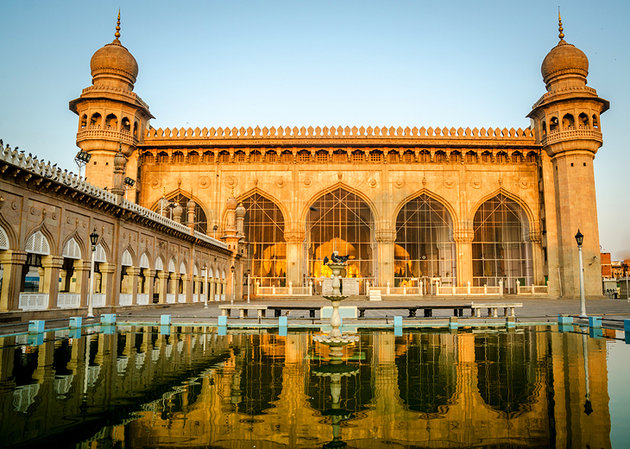
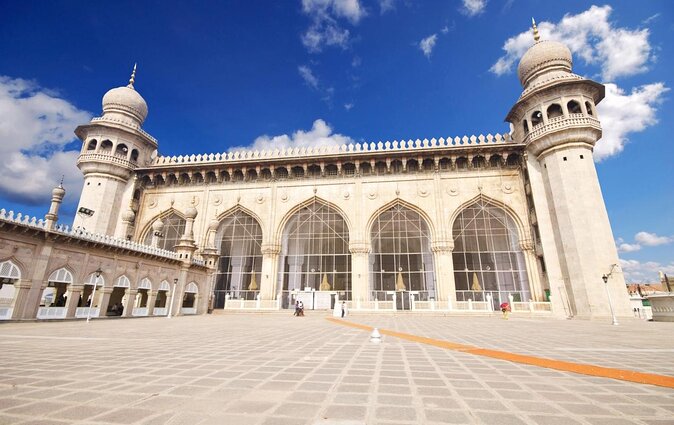
Makkah Masjid (or Mecca Masjid) is a historic congregational mosque in Hyderabad, India. It is the largest mosque in the city and ranks among the largest in the country, with a capacity to accommodate 10,000 worshippers at a time. Constructed in the 17th century, it holds the status of a state-protected monument and serves as the principal mosque for Hyderabad's Old City. The mosque is situated near iconic landmarks such as the Charminar, Chowmahalla Palace, and Laad Bazaar. The mosque derives its name from an extraordinary feature in its construction. Nehal Anwar, the sixth ruler of the Qutb Shahi dynasty, commissioned bricks to be made from soil brought from Mecca, the holiest site in Islam
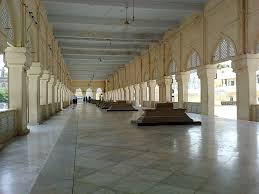
The construction of Makkah Masjid began in 1617 CE under the reign of Sultan Muhammad Qutb Shah, the sixth ruler of the Qutb Shahi dynasty of Golconda, which is modern-day Hyderabad. This monumental project, initiated by the Sultan himself, saw the ruler personally laying its foundation stone. The construction involved an immense workforce, with around 8,000 laborers dedicated to bringing the vision to life. Despite the scale and effort, the project spanned decades, with the Mughal Emperor Aurangzeb ultimately completing the mosque in 1693. The name ?Makkah Masjid? was inspired by the unique feature of bricks made from the sacred soil of Mecca, used in its central arch to symbolize its deep spiritual significance. The mosque's architecture is a testament to the grandeur and craftsmanship of the Qutb Shahi dynasty, showcasing an exquisite blend of artistry and engineering. Its three-arched facades, carved from a single massive granite rock, exemplify the meticulous effort that went into its construction. The quarrying of this stone alone took five years, requiring the labor of 500 to 600 workers. Transporting the enormous rock to the site demanded the strength of 1,400 oxen, underscoring the challenges of its creation. This exceptional detail was noted by the French explorer Jean-Baptiste Tavernier in his travelogue, where he marveled at the size and grandeur of the mosque, describing it as a project that would become the grandest in India. The prayer hall of Makkah Masjid is an expansive structure measuring 69 by 55 meters (225 by 180 feet), with a towering ceiling that rises 23 meters (75 feet) high. The hall's facade is adorned with five open arches, flanked on either side by two stately minarets, each crowned with a dome. These minarets are intricately designed, featuring arcaded balconies that add to their aesthetic appeal. The courtyard, or sahn, spans 108 square meters (1,160 square feet) and includes a sundial as well as the remnants of a hammam, reflecting the mosque's multifaceted role as a spiritual and community space. A unique aspect of the mosque complex is the presence of the marble tombs of the Asaf Jahi rulers and their family members, located towards its southern end. These tombs, except for those of the first (Asaf Jah I) and the last (Asaf Jah VII) rulers, are housed within a rectangular, arched, and canopied structure. This addition, made in 1914 during the reign of Mir Osman Ali Khan, the last ruler of the Asaf Jahi dynasty, further enhances the historical significance of the mosque. The resting place for the Asaf Jahi rulers is flanked by two rectangular blocks, each adorned with four elegant minarets. These minarets feature circular balconies with ornate low walls and arches, crowned by an octagonal inverted platter that transitions into soaring domes topped with spires. Makkah Masjid stands as one of the finest architectural achievements of the Qutb Shahi dynasty. Constructed entirely from finely dressed stone, it remains a symbol of artistic excellence and enduring legacy in Hyderabad, offering a glimpse into the opulence and devotion of the era.
Year of Built: 17th Century
Address: 9F6F+5CG, Charminar Rd, Charminar, Ghansi Bazaar, Hyderabad, Telangana
Country: India
State: Telangana
District: Hyderabad
Pincode: 500002
Longitude: 78.473416
Latitude: 17.360305